
Last updated September 23, 2026
Whole-system duct and dryer vent check with before-and-after photos - you see exactly what came out of your vents
That "$99 whole-house special" is a bait ad - the real number appears once they are in your hallway, or the "clean" is a shop-vac at the register. We photograph the inside of your ducts before and after instead.
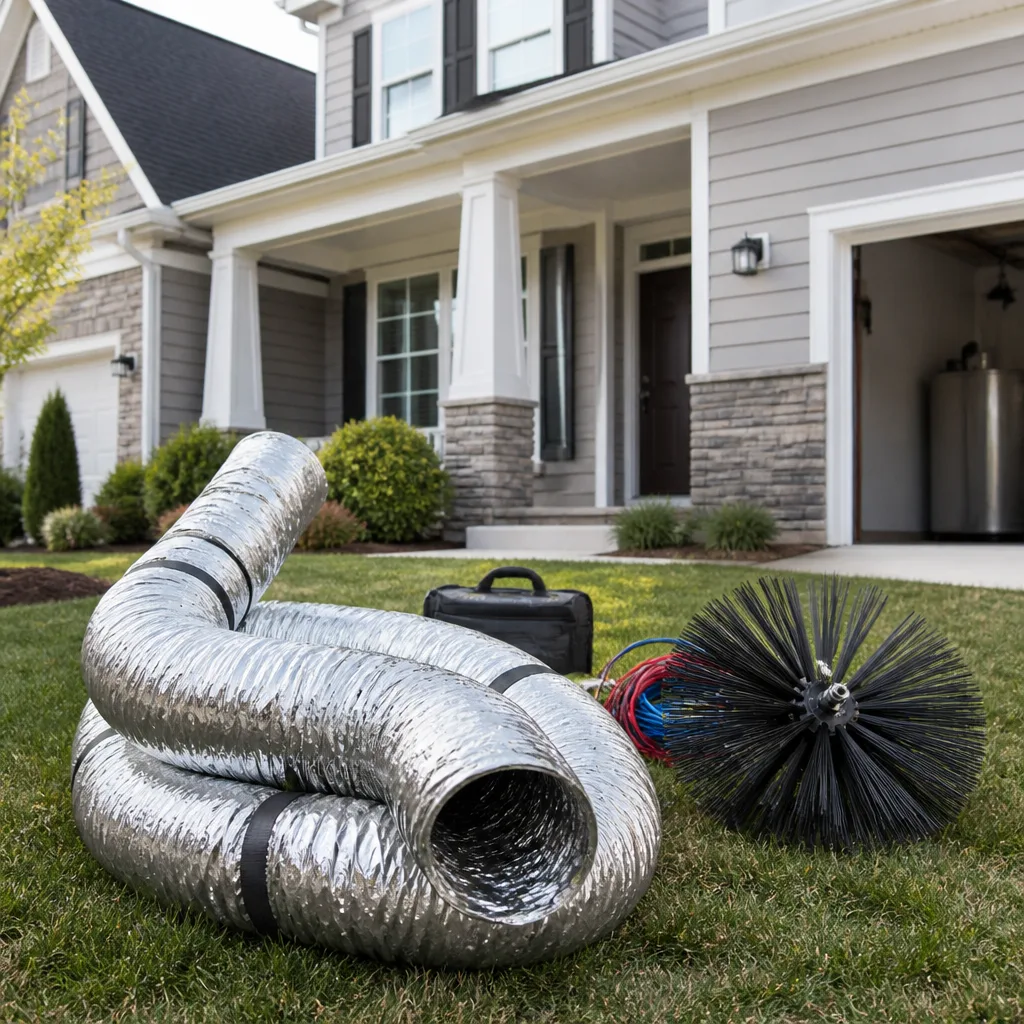
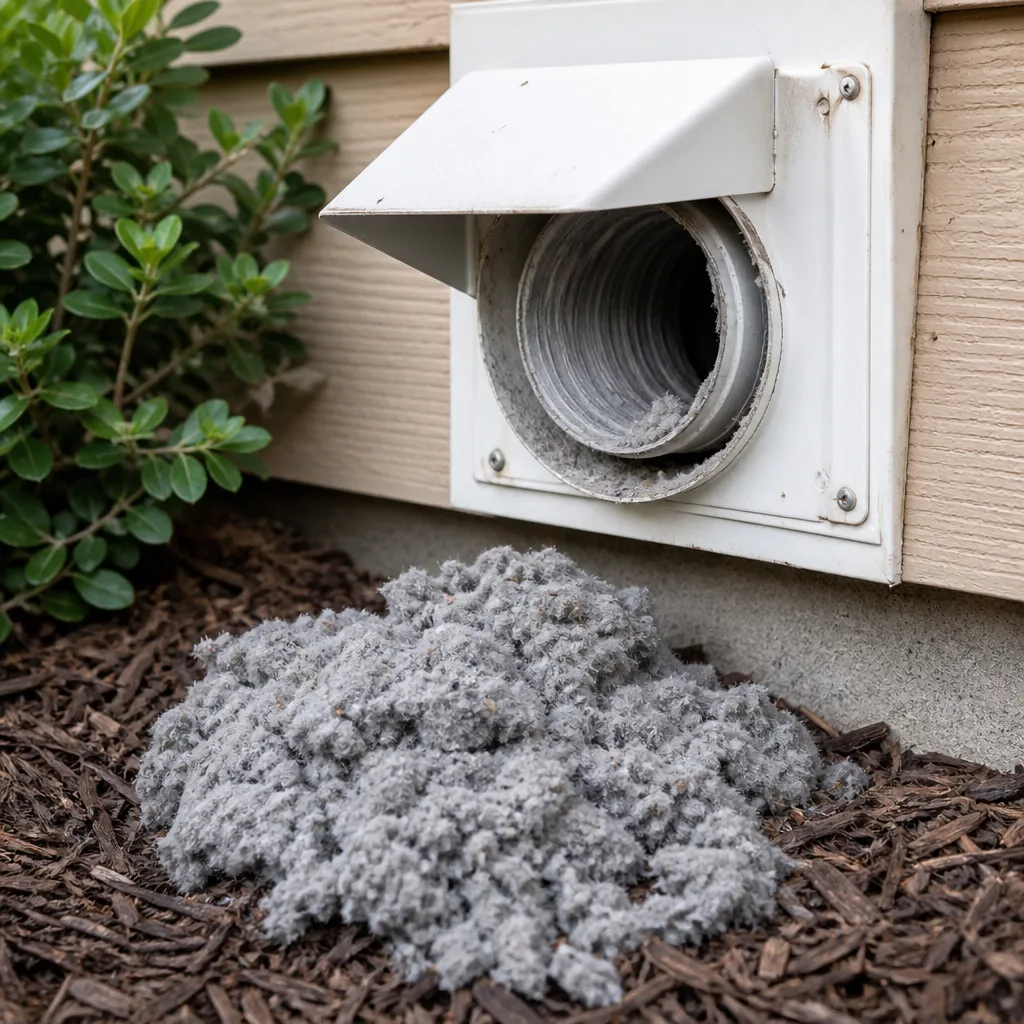
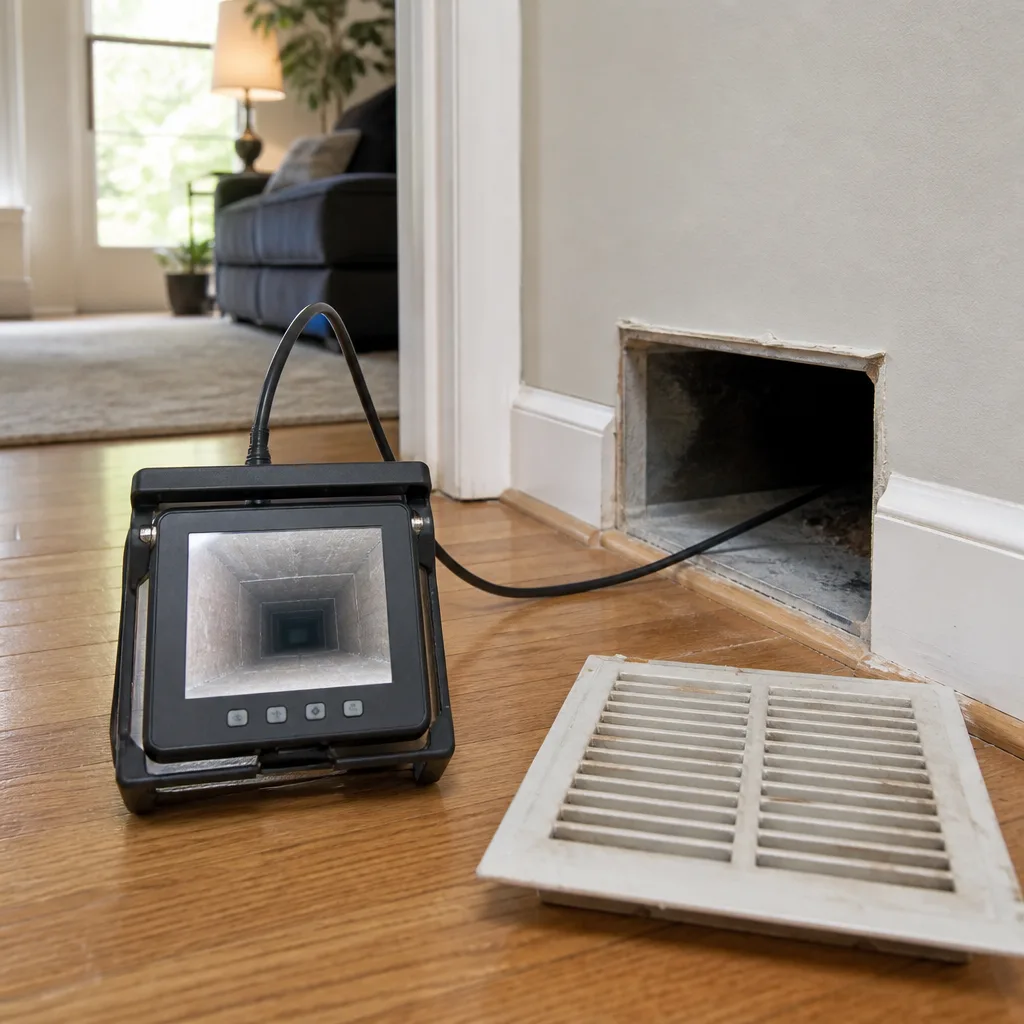

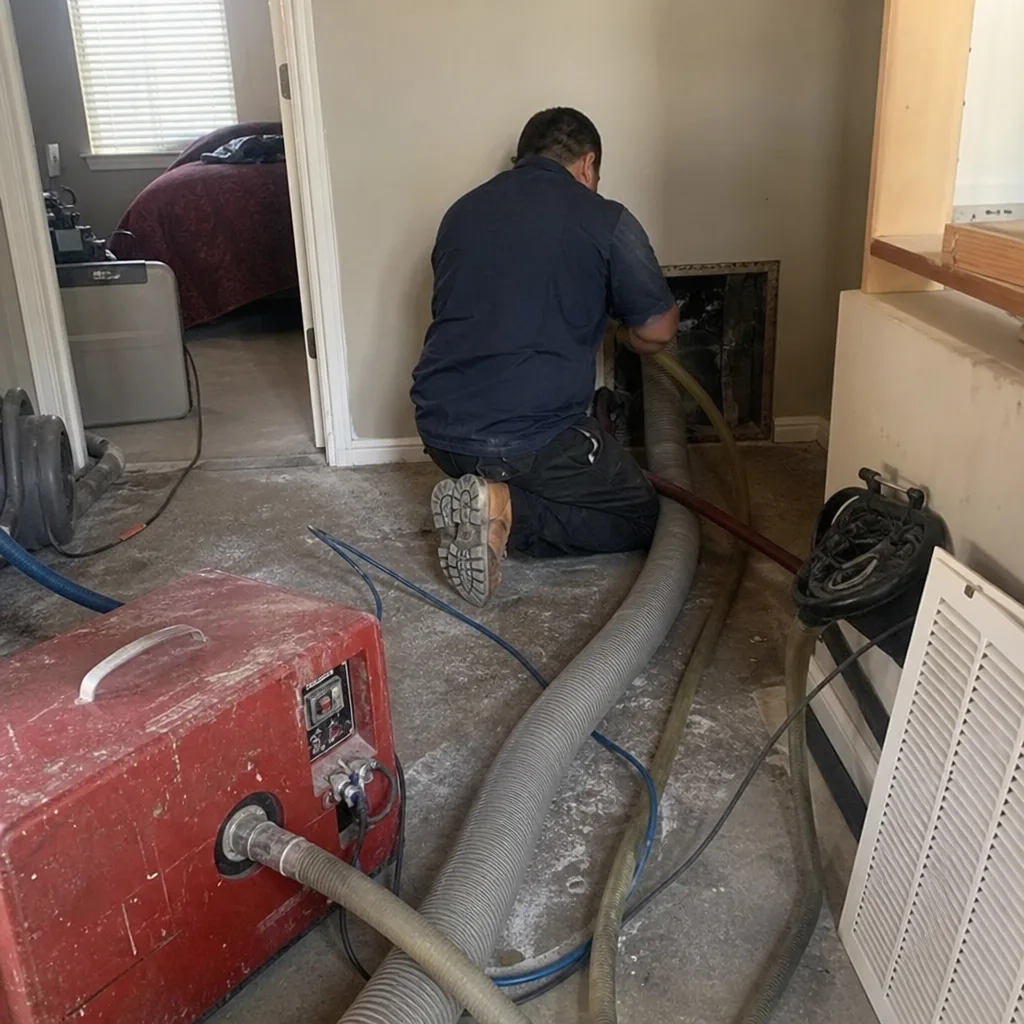 Before
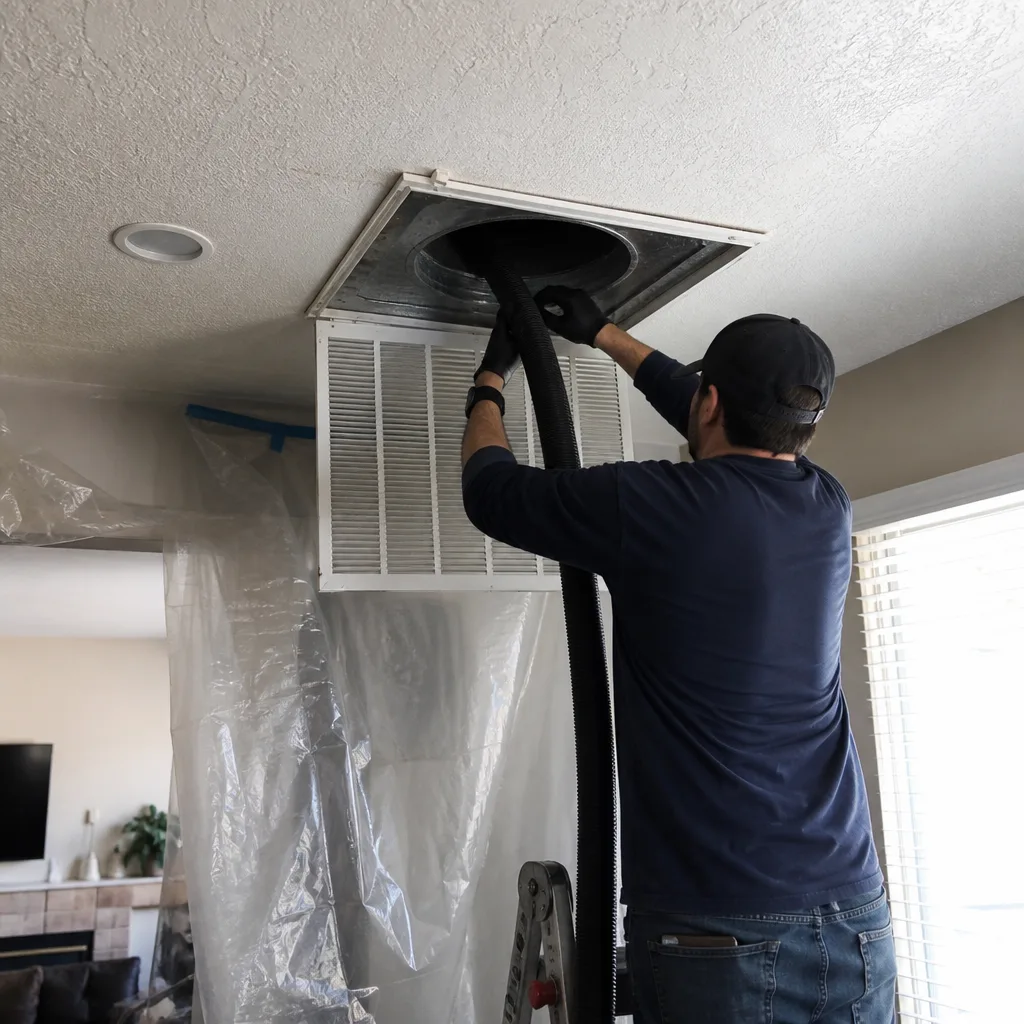 After
After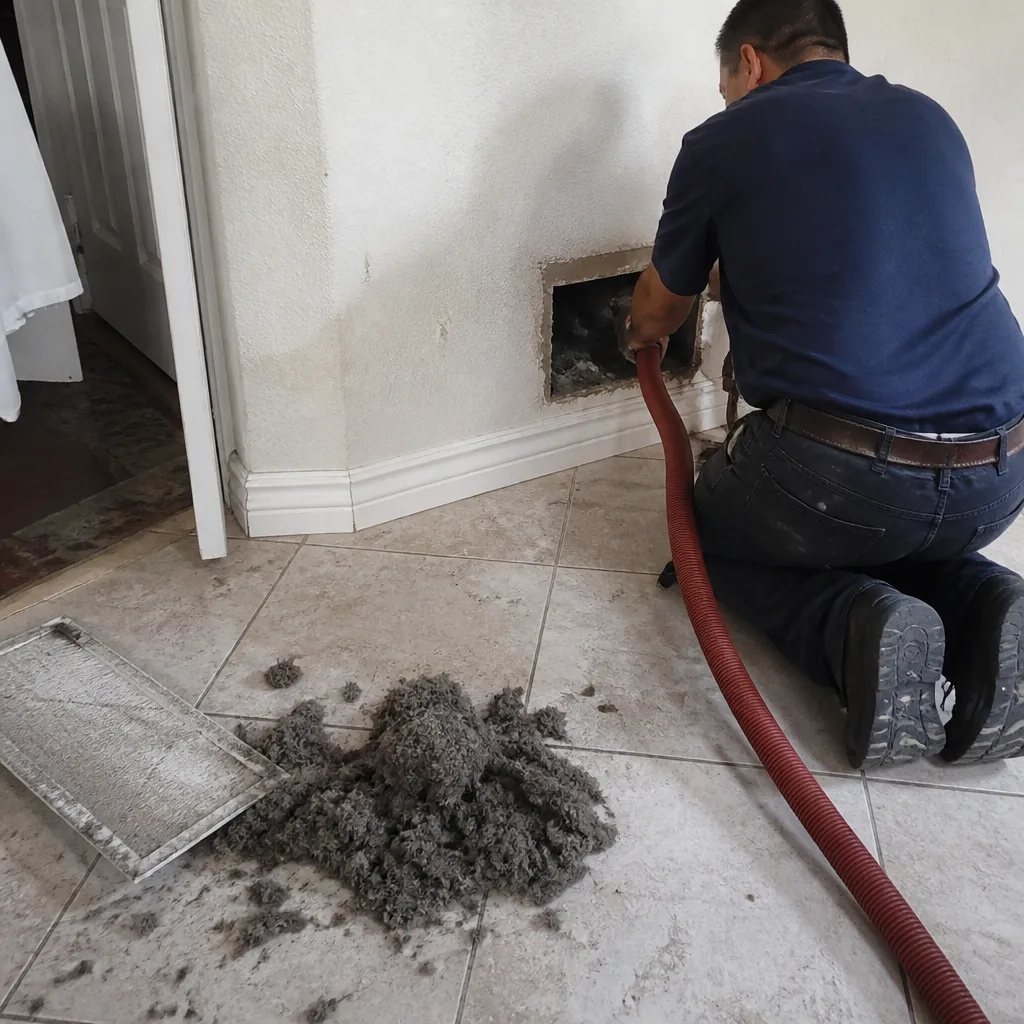 Before
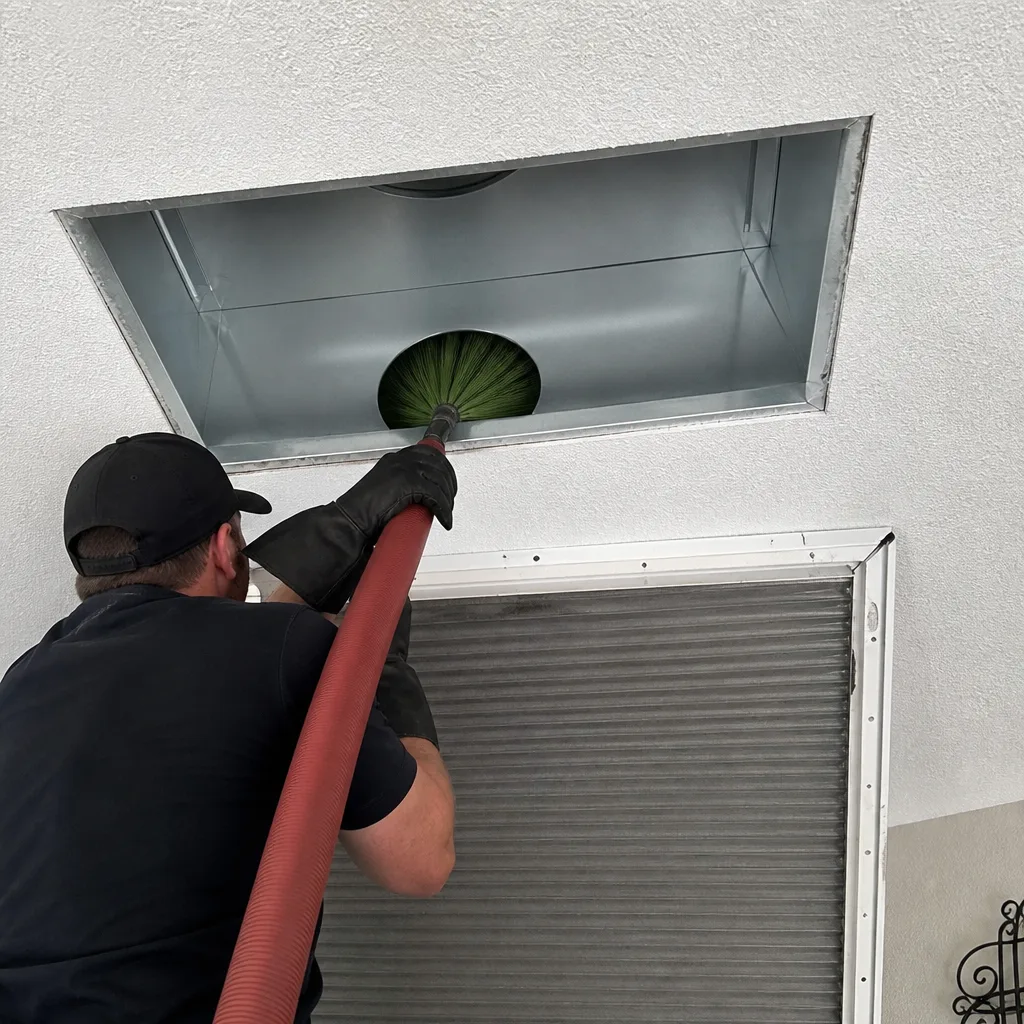 After
After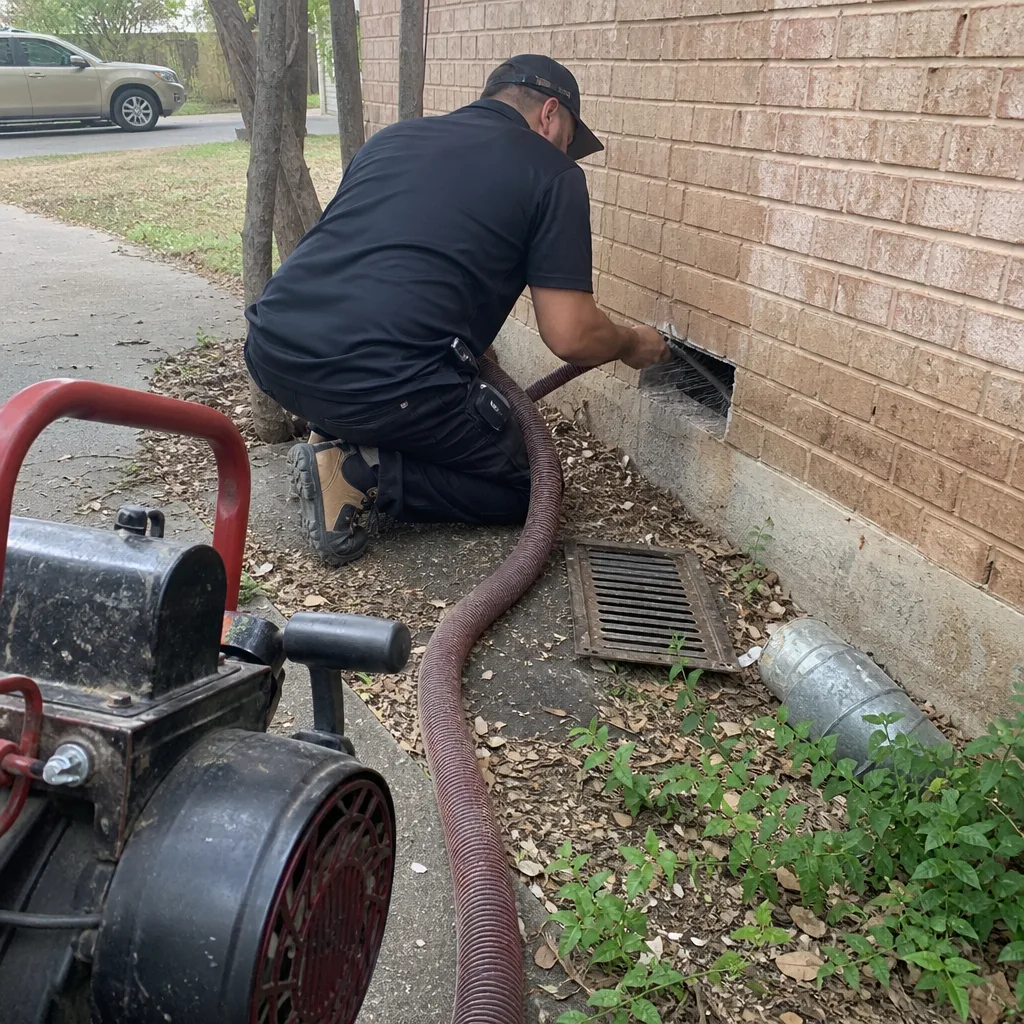 Before
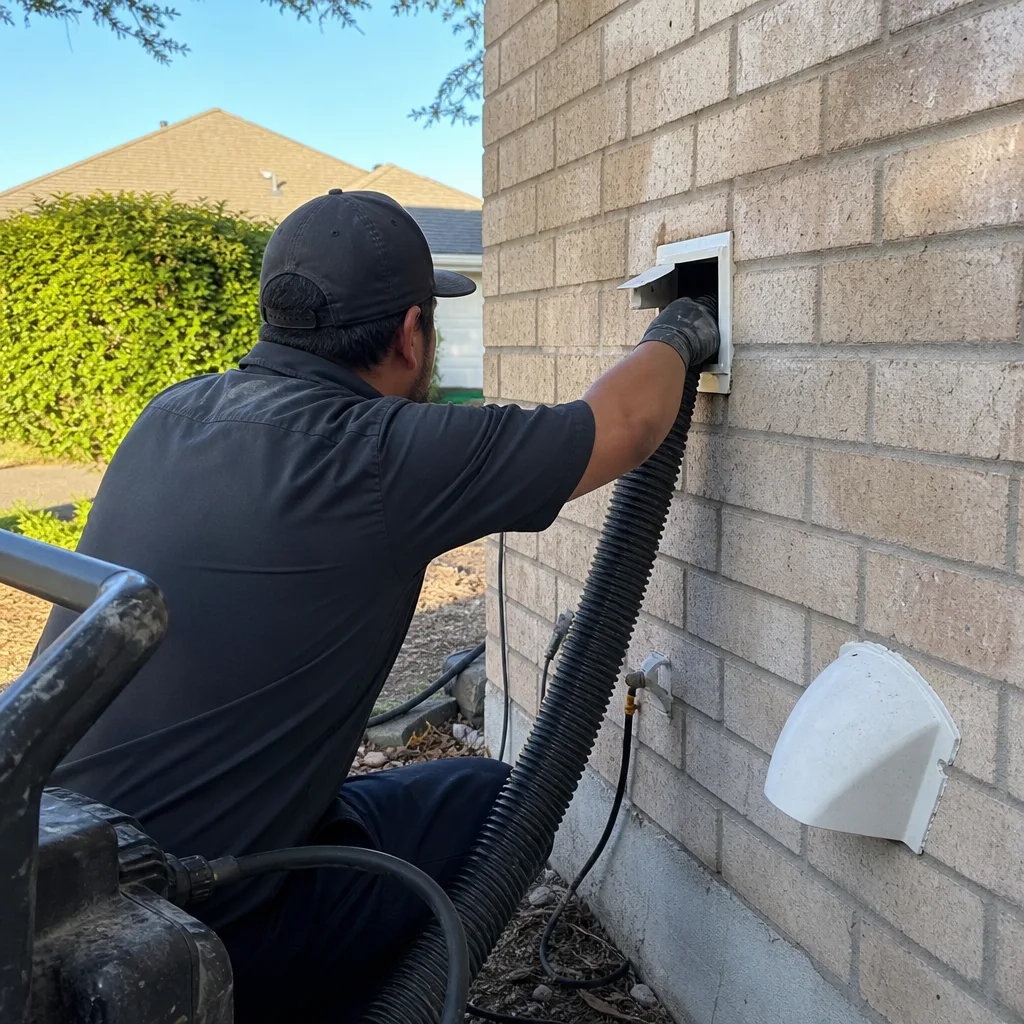 After
AfterAir Duct Cleaning Permits, Codes & Inspections in TX: What You Need to Know
Texas does not license air duct cleaners as a separate trade. The technician cleaning your ducts this afternoon has exactly the same legal standing as one who started last week. What protects you isn’t a state credential hanging on the wall; it’s a written scope of work and a contractor who will put the standard of work in writing before a single panel comes off. In San Antonio, where summer humidity pushes mold spore counts through roof cavities and decades of construction from Alamo Heights to Stone Oak have left every era of ductwork in the same housing stock, this regulatory gap matters more than most homeowners realize. This guide-along with our The Complete Guide to Air Duct Cleaning in San Antonio-maps the actual legal landscape so you know when you need documentation and when you don’t, what permits apply to duct work in Bexar County, and how to protect yourself in a market with no state-level oversight of the cleaning trade itself.
Quick Answer
Air duct cleaning in Texas does not require a state license, permit, or inspection for standard cleaning work. However, mechanical permits from the City of San Antonio or Bexar County are required when duct work involves modification, sealing, replacement, or reconnection to HVAC equipment. NADCA standards provide the only widely accepted benchmark for cleaning quality, though they are voluntary, not legally mandated. Mold remediation found during duct cleaning triggers separate Texas Department of Licensing and Regulation (TDLR) requirements for assessment and documentation.
Table of Contents
- The Real Texas Licensing Framework: What Applies to Duct Cleaners
- When Duct Work Crosses Into Permit Territory
- NADCA Standards: What They Are and How to Use Them
- The Mold Remediation Distinction in Texas Law
- San Antonio and Bexar County Code Specifics
- How to Protect Yourself Without Strong State Oversight
- Common Mistakes to Avoid
- When to Call a Professional
- Frequently Asked Questions
BeforeAfterThe Real Texas Licensing Framework: What Applies to Duct Cleaners
Here’s the fact most homeowners in San Antonio don’t hear until it’s too late: Texas has no license category for “air duct cleaner.” None. The Texas Department of Licensing and Regulation oversees 39 license types, from air conditioning contractors to water well drillers, but duct cleaning sits in the gaps between them.
What does exist is the Texas Air Conditioning and Refrigeration Contractor License, governed by Texas Occupations Code Chapter 1302. This license is required for anyone who “maintains, services, repairs, or replaces” air conditioning or refrigeration systems. The critical distinction: cleaning ducts, by itself, does not constitute maintenance, service, repair, or replacement of the HVAC equipment itself under TDLR’s interpretive framework. A contractor can hold no HVAC license whatsoever and legally operate a duct cleaning business in Texas.
This creates a market reality we’ve documented since 2013. In the San Antonio metro, duct cleaning companies range from established HVAC contractors who also clean ducts, to standalone operations with no licensed HVAC personnel on staff, to single-truck operators who started last month. All three are legal. The difference lies in what happens when the work goes beyond cleaning.
Here’s where the licensing framework becomes relevant to homeowners:
- HVAC Contractor License (TDLR): Required if the company will disconnect, reconnect, or modify HVAC equipment during duct work. Ask for the TDLR license number and verify it at tdlr.texas.gov. CleanRun publishes its license number on every proposal; Haven Standard Clause 2 requires it.
- Registered ACR Technician: HVAC contractors must employ technicians registered with TDLR. This is not the same as a duct cleaning certification.
- Business Registration: Any company operating in Texas needs a standard business registration with the Secretary of State or county clerk. This is not a trade credential.
- Insurance: General liability and workers’ compensation are not mandated by state law for duct cleaners specifically, but any contractor working in your home should carry both. CleanRun maintains both, with certificates available on request under Haven Standard Clause 4.
The practical implication for San Antonio homeowners: when a company advertises “licensed and insured,” ask which license. An HVAC contractor’s license from TDLR carries weight. A business registration from the Bexar County Clerk does not. The photo record we deliver on every job, showing the inside of every duct run before and after, exists partly because this credential gap leaves homeowners with no state board to appeal to if the work is substandard.
When Duct Work Crosses Into Permit Territory
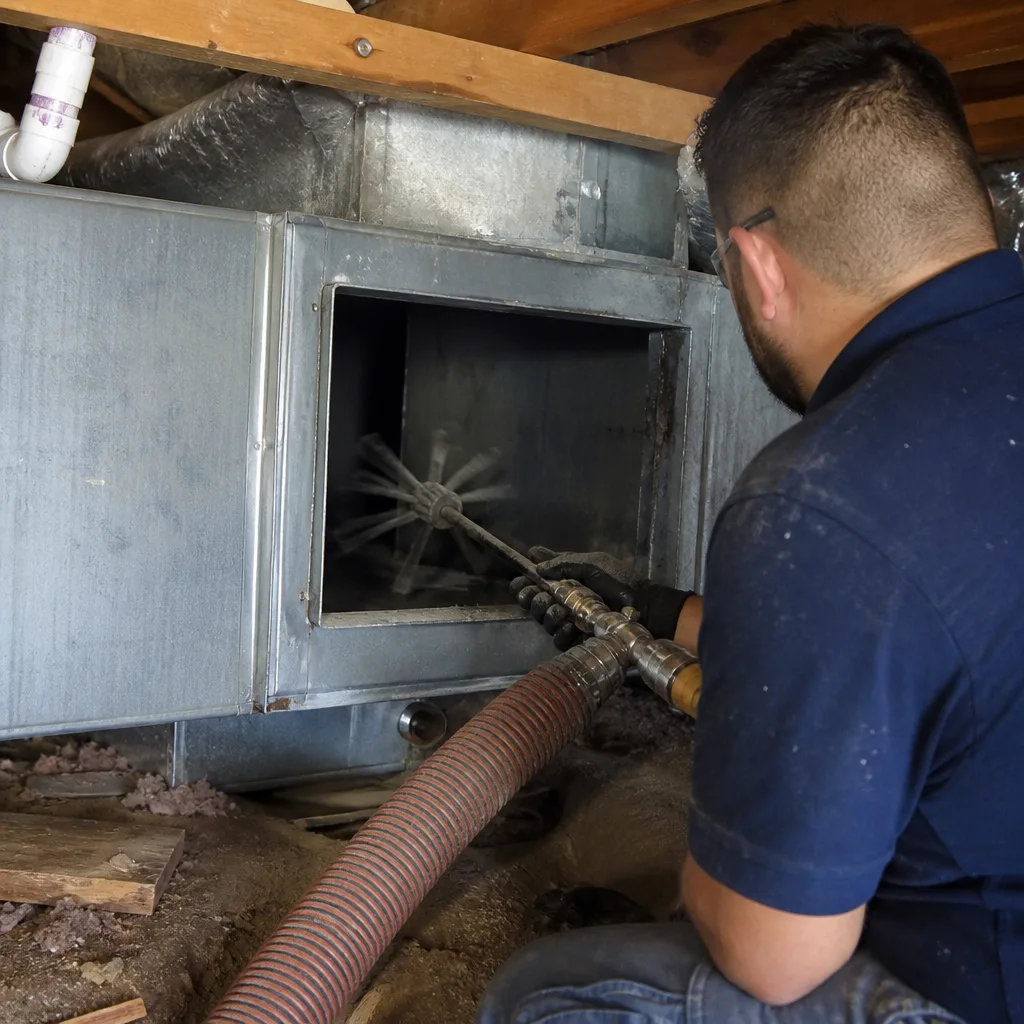
Standard air duct cleaning, defined as mechanical agitation and negative-pressure extraction of existing ductwork without modification, does not require a permit in San Antonio or anywhere in Texas. The moment the work crosses into modification, permitting rules activate, and the distinction matters for both legal compliance and homeowner protection.
The City of San Antonio Development Services Department issues mechanical permits for work that alters, installs, or replaces HVAC duct systems. Bexar County’s unincorporated areas follow similar rules through the Bexar County Development Services office. Here’s the line we’ve learned to walk carefully across thousands of San Antonio homes:
No Permit Required
- Mechanical cleaning of existing ducts using brushes, whips, or compressed air tools
- Negative-pressure extraction of loosened debris
- Visual inspection with cameras or scopes
- Application of EPA-registered sanitizers (non-fogging application to accessible surfaces)
- Register and grille removal for access, with reinstallation to original configuration
Mechanical Permit Required in San Antonio/Bexar County
- Duct sealing with mastic or aerosol sealant that changes system airflow characteristics
- Replacement of any section of rigid ductwork
- Reconnection of ducts to plenum or air handler
- Installation of new duct runs or registers
- Modification of return air pathways
- Any work affecting combustion venting or makeup air for gas-fired equipment
The permit process in San Antonio typically requires a licensed HVAC contractor to pull the permit, submit plans for modifications, and schedule inspection. Fees run $100-$300 depending on scope. Inspection occurs after completion, with the city verifying compliance with the International Mechanical Code as adopted locally.
Here’s where homeowners get caught: many “duct cleaning” jobs in older San Antonio neighborhoods like Monte Vista or Beacon Hill include incidental sealing of disconnected joints found during cleaning. A disconnected flex duct at a plenum connection, common in 1960s-1980s construction, is technically a reconnection requiring permit and inspection if it’s been fully separated. A responsible contractor flags this, explains the permitting requirement, and either handles it properly or documents why the reconnection falls under minor repair exemptions.
CleanRun’s approach, established in our first San Antonio job in 2013: if we find a disconnection during cleaning, we photograph it, show the homeowner, and explain whether permitting applies before touching it. Haven Standard Clause 1 requires the written price before work starts; we extend that to written scope clarification when permit territory approaches.
NADCA Standards: What They Are and How to Use Them
The National Air Duct Cleaners Association (NADCA) publishes the Assessment, Cleaning, and Restoration of HVAC Systems (ACR) standard, currently at the 2021 revision. This is the closest thing to an industry benchmark for duct cleaning quality. It is not a government regulation. It carries no legal force in Texas. It cannot be enforced by any state agency.
This confuses homeowners who see “NADCA certified” on a website and assume it means state-sanctioned. It doesn’t. NADCA is a private trade association. Membership is voluntary. Certification of individual technicians through NADCA’s Air Systems Cleaning Specialist (ASCS) program is voluntary. A company can advertise “NADCA certified” while employing zero certified technicians, because the certification applies to the company membership, not individual staff.
So why do we reference NADCA standards in our proposals and why should homeowners care? Because in the absence of Texas state regulation, NADCA ACR-2021 provides the only documented, peer-reviewed benchmark for what constitutes acceptable duct cleaning. It defines:
- System assessment requirements: Pre-cleaning inspection of the entire HVAC system, not just visible registers. This includes the plenum (the main distribution box attached to your air handler), coil, and blower compartment.
- Cleaning methodology: Mechanical agitation combined with containment and extraction, not just vacuum application. The standard specifies that debris must be dislodged before extraction.
- Post-cleaning verification: Visual or photographic documentation that the system meets cleanliness criteria, with specific debris level thresholds.
- Containment protocols: Protection of occupied spaces during cleaning, including negative air pressure maintenance to prevent cross-contamination.
At CleanRun, we use NADCA ACR-2021 as a contractual benchmark in our written scope of work, even though we exceed several of its minimums. Our photo record requirement, photographing inside every duct run before and after, goes beyond NADCA’s visual verification standard. Our equipment roster, Rotobrush and Nikro agitation systems paired with Abatement Technologies negative-pressure collection units, exceeds the generic “HEPA filtration” mention in the standard. We name these brands so customers can verify specifications independently.
The practical use for homeowners: when comparing San Antonio duct cleaning quotes, ask whether the proposal references any accepted standard. A contractor who says “we follow NADCA guidelines” but won’t put the specific requirements in writing is offering marketing language, not accountability. A proposal that lists “pre-cleaning photo inspection of all duct runs per NADCA ACR-2021 Section 4.2, with post-cleaning verification photos” is offering something you can verify was done.
The Mold Remediation Distinction in Texas Law
This is where Texas regulation actually exists, and where many duct cleaning companies either overstep their legal authority or fail to meet their documentation obligations.
Texas Occupations Code Chapter 1958 and Texas Administrative Code Title 25, Part 1, Chapter 295 govern mold assessment and remediation. The Texas Mold Assessment and Remediation Rules (TMARR) create a strict separation: a mold assessor cannot be the same person or company as the mold remediator on the same job. This prevents the conflict of interest of a company finding mold, then profiting from its remediation.
Here’s how this applies to duct cleaning in San Antonio’s climate. Our summer humidity, regularly exceeding 80% from June through September, creates conditions for microbial growth in duct systems, particularly in homes with oversized AC units that short-cycle without adequate dehumidification. Homes in shaded neighborhoods like Terrell Hills or Olmos Park, with mature tree canopy limiting roof drying, show higher incidence of supply duct condensation and subsequent growth.
When a duct cleaning technician finds visible mold growth during inspection, three legal pathways exist:
- Minor contamination (less than 25 contiguous square feet): The property owner may clean this without a licensed remediator, per TMARR exemptions. However, documentation of the condition, extent, and cleaning method is still required for real estate disclosure purposes.
- Moderate contamination (25-100 contiguous square feet): Requires a licensed mold assessment contractor to evaluate and develop a remediation protocol. The duct cleaning company cannot perform this assessment if it intends to perform or subcontract the remediation.
- Major contamination (over 100 contiguous square feet): Requires licensed mold assessment, protocol development by a Mold Assessment Consultant, and remediation by a licensed Mold Remediation Contractor with third-party post-remediation verification.
The critical point for homeowners: most duct cleaning companies are not licensed mold assessors or remediators. If a technician shows you “mold” in your ducts and immediately offers to treat it with a chemical fog or coating, two questions apply. First, is the substance actually mold? Many duct contaminants, including dust mite debris, pet dander accumulations, and oxidized insulation fibers, resemble mold to untrained eyes. Second, if it is mold, does the company hold a TDLR Mold Remediation Contractor license?
CleanRun’s protocol, established under Haven Standard Clause 6: when our camera shows growth-like material, we stop, photograph, and explain. We do not apply antimicrobial treatments beyond EPA-registered surface sanitizers on accessible non-porous surfaces. For suspected mold exceeding minor contamination thresholds, we refer to independent, TDLR-licensed mold assessors and document the referral in the job record. The photo record we deliver includes these findings so homeowners have documentation for any subsequent assessment.
The San Antonio market has seen repeated enforcement actions against duct cleaning companies performing unlicensed mold remediation. TDLR’s enforcement database, publicly searchable, shows violations including companies applying “mold encapsulant” in duct systems without licensure, failing to provide required post-remediation documentation, and combining assessment and remediation roles. The $79 coupon model particularly incentivizes upselling “mold treatment” without proper licensure.
San Antonio and Bexar County Code Specifics
Beyond state law, local amendments affect duct work in ways that matter for San Antonio homeowners. The City of San Antonio adopts the International Mechanical Code (IMC) with local amendments, currently based on IMC 2021 with 2023 updates pending.
Key local provisions:
- Duct leakage testing: New duct systems and modified duct systems in San Antonio must meet leakage standards under IMC Section 603.2. This applies to permit-triggering work, not cleaning alone, but homeowners replacing ducts should verify the contractor performs duct blaster testing and provides results.
- Flexible duct limitations: San Antonio amendments restrict flex duct runs to 14 feet maximum length without rigid transition, and prohibit flex duct in return air systems in certain applications. We’ve found decades of non-compliant flex duct in Alamo Heights and King William renovations, where previous owners strung flex through attics in ways current code wouldn’t allow.
- Combustion air requirements: Any duct modification affecting furnace rooms or water heater closets triggers makeup air calculations under IMC Chapter 7. This is particularly relevant in older San Antonio homes with converted garages or added HVAC in original utility spaces.
- Historic district review: Properties in local historic districts, including portions of Lavaca, King William, and Monte Vista, may require Historic and Design Review Commission approval for exterior duct modifications or new penetrations, even when mechanical permits are straightforward.
Bexar County’s unincorporated areas, including pockets between San Antonio city limits and surrounding municipalities, follow county-adopted codes that generally mirror city requirements but with different inspection scheduling and fee structures. The county does not maintain the same online permit tracking system as the city, which can delay homeowner verification of permit status.
For San Antonio homeowners in air duct cleaning scenarios, the local code relevance is typically secondary: cleaning doesn’t trigger code compliance review. But when cleaning reveals conditions requiring modification, or when a quote includes “duct sealing” or “minor repairs,” the contractor should know which jurisdiction applies and whether permitting follows. We document this jurisdiction determination in our written scope when relevant.
How to Protect Yourself Without Strong State Oversight
The regulatory gap for duct cleaning in Texas isn’t closing. No bill has advanced in the Texas Legislature to create a duct cleaning license, and the political appetite for new occupational licensing remains low. Homeowners must substitute contractual and documentary protections for the regulatory protections that don’t exist.
Based on 52,000+ homes served since 2013, here’s what actually protects you:
1. Written Scope of Work Before Any Work Starts
Not an estimate. Not a “quote range.” A written scope that specifies: how many duct runs will be cleaned, what equipment will be used, what access points will be created, what the deliverables are (photo record, written report), and what the total price is for that scope. Haven Standard Clause 1 requires this on every CleanRun job; we will not start work without a signed scope and price.
2. Photo Documentation as a Standard Deliverable
The photo record should show inside the ductwork, not just the registers. It should be time-stamped or sequenced. It should be delivered to you, not just “available if you ask.” Our Documented Photo Record on Every Visit, included since 2013, shows every duct run before and after, with images delivered as part of the standard job record, not an upsell.
3. Equipment Specification in Writing
A proposal that says “professional equipment” offers no verification. A proposal that specifies “Rotobrush brush-and-vacuum agitation with HEPA filtration, Nikro portable collection unit, Abatement Technologies negative air machine” gives you brands to research. We name our equipment roster so customers can verify manufacturer specifications independently.
4. Warranty Terms in Writing, Not Marketing Copy
The 365-Day Done Right Promise means something because it’s on every proposal, not just the website. If the work is not right, we make it right. The specific remedy, timeline, and process are documented. Compare this to “satisfaction guaranteed” with no defined remedy.
5. Verification of Credentials Actually Relevant to Your Job
For cleaning alone: business registration, insurance certificate, technician background check documentation (Haven Standard Clause 3: Verified Crews). For jobs involving modification: TDLR HVAC contractor license, permit status, inspection scheduling. Ask for each specifically. A legitimate contractor provides each without hesitation.
6. No Per-Vent or Teaser Pricing
The $79 “whole house special” that becomes $800 on arrival is the most common consumer complaint in Texas duct cleaning. Written upfront pricing for the complete system, with no per-vent add-ons, eliminates this bait-and-switch structure. Our proposals specify one flat price per HVAC system, with line items only for clearly separated additional systems (second AC unit, detached garage mini-split, etc.).
Common Mistakes to Avoid
- Assuming “licensed” means state-vetted for duct cleaning. In Texas, it doesn’t. Ask what license, from which agency, and verify it independently. A business card with a TDLR number that belongs to a different company is a recurring scam in the San Antonio market.
- Accepting verbal scope changes during the job. The technician who finds “a problem” after starting work and offers an immediate fix for cash is operating outside any accountable structure. All scope changes require written amendment to the original proposal, with price and description documented.
- Paying for “mold treatment” without TDLR license verification. We’ve documented cases in Stone Oak and Helotes where homeowners paid $1,200+ for “probiotic mold remediation” in ducts, only to learn the company held no mold remediation license and applied unregistered chemicals. Verify the TDLR Mold Remediation Contractor license at tdlr.texas.gov before any treatment.
- Ignoring permit requirements for “minor” duct modifications. A disconnected return duct reconnected without permit may seem trivial until you sell the home and the buyer’s inspector flags unpermitted HVAC work. The cost of retroactive permitting, or price negotiation from the buyer, exceeds the original permit fee multiple times over.
- Equating NADCA membership with quality guarantee. NADCA membership is a business decision, not a quality certification. A member company can still send an untrained technician with inadequate equipment. Use NADCA ACR standards as a proposal benchmark, not a company selection shortcut.
- Failing to request the photo record before payment. The documentation is your only recourse if the work proves inadequate. A company that won’t show before-and-after photos before invoicing has something to hide. Our photo record is delivered as part of the job completion, with review opportunity before final payment processing.
- Choosing based on lowest price in a market with no price floor. Without state licensing, there’s no minimum equipment, training, or insurance requirement. The $79 operator and the $400 operator are both legal. The difference shows up in whether your ducts were actually cleaned, or whether a shop vac ran for twenty minutes while you weren’t watching.
When to Call a Professional
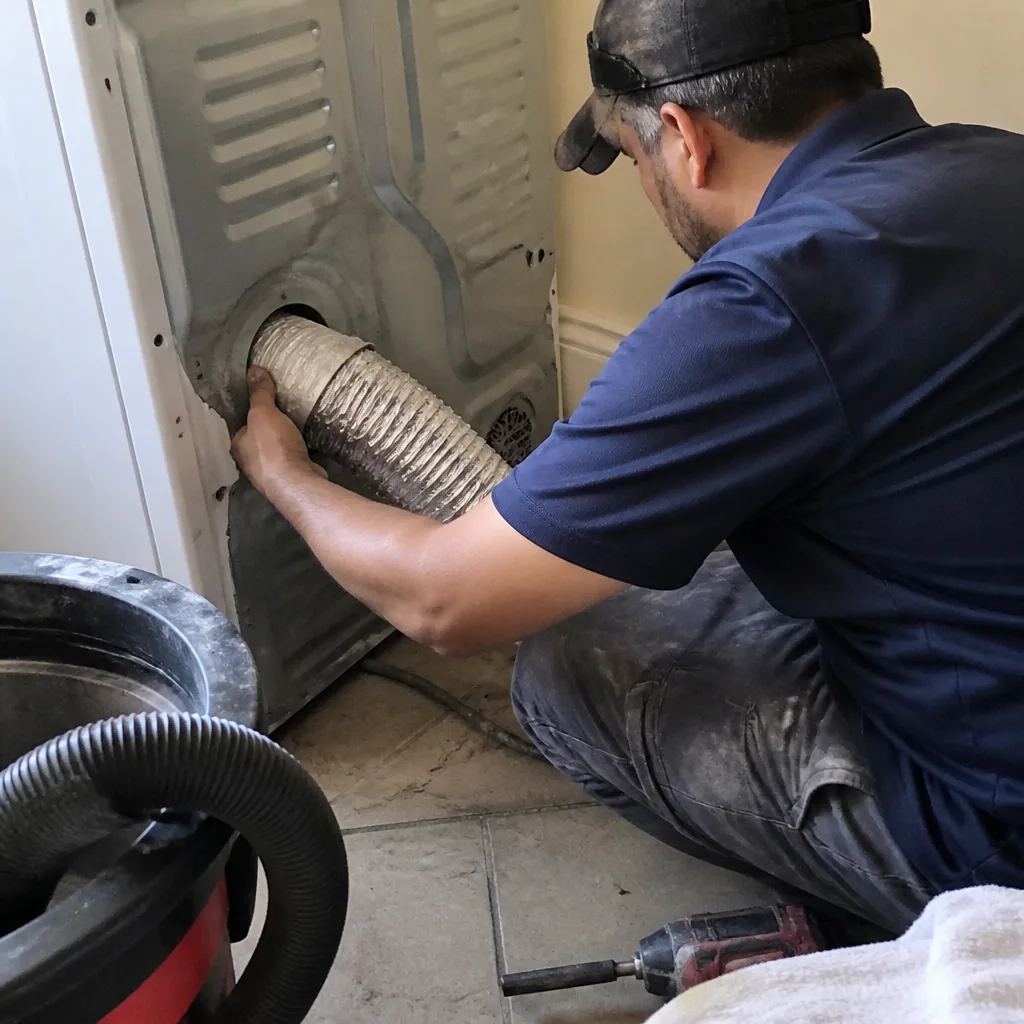
Call a qualified contractor offering our Air Duct Cleaning services when you observe visible debris at registers, persistent dust accumulation after cleaning, musty odors when the system runs, or uneven airflow between rooms. These symptoms indicate duct conditions that DIY methods won’t address. If your home was built between 2015 and 2025 in San Antonio’s rapid development zones like Far West Side or near Potranco Road, construction debris in ducts is common even in new builds, and builder-grade duct sealing often fails within the first two years.
CleanRun Air Duct Cleaning San Antonio offers free estimates in San Antonio and surrounding Bexar County communities. Every estimate includes a written scope and price before any work begins, with no obligation. Call (726) 600-7155 to schedule. For dryer vent cleaning or full HVAC cleaning, we provide the same documented approach with written pricing and photo verification.
Frequently Asked Questions
No. Standard air duct cleaning, including mechanical agitation and debris extraction from existing ductwork, does not require a permit in San Antonio or anywhere in Texas. Mechanical permits are only required when duct work involves modification, replacement, sealing that changes airflow characteristics, or reconnection to HVAC equipment. If a contractor claims your cleaning job requires a city permit, ask specifically which ordinance applies and verify with the City of San Antonio Development Services Department at (726) 600-7155.
Ask for the specific license type and issuing agency. For HVAC-related work, verify TDLR licenses at tdlr.texas.gov using the license number. For mold remediation, verify TDLR Mold Remediation Contractor status separately. For standard duct cleaning with no HVAC modification, no trade license exists to verify; instead, confirm business registration with the Bexar County Clerk, request a certificate of insurance, and ask for equipment brand names and technician background check documentation. See more guides & resources for additional homeowner protections. CleanRun provides all of these under Haven Standard Clause 3: Verified Crews.
A protective proposal specifies: the number of supply and return duct runs to be cleaned, the cleaning methodology and equipment brands, access points to be created and restored, pre-cleaning and post-cleaning documentation to be delivered, total price for the specified scope, and warranty terms with specific remedy language. It should not use per-vent pricing, “starting at” language, or undefined “additional services may be recommended” clauses. Haven Standard Clause 1 requires CleanRun to deliver this written scope and price before any work starts, every time.
The $79-$99 “whole house” quotes typically cover register vacuuming only, without duct run access or agitation equipment. The upsell to actual duct cleaning happens after arrival, with per-vent add-ons that push final prices to $600-$900. Legitimate whole-system cleaning in San Antonio’s market, using professional agitation and negative-pressure extraction with photo documentation, typically ranges $400-$700 for a single residential system depending on home size and accessibility. CleanRun’s written upfront pricing specifies one flat price per system with no per-vent structure, so the quoted price is the paid price.
The technician should stop, photograph the finding, and explain the extent. For contamination under 25 contiguous square feet, the property owner may clean it or hire any contractor; documentation is still required for disclosure. For larger areas, Texas law requires a licensed mold assessor to evaluate and develop a protocol, and a separate licensed mold remediation contractor to perform the work. The same company cannot legally perform both roles. CleanRun refers to independent licensed assessors when thresholds are exceeded, and documents the referral in the job record.
NADCA recommends cleaning every 3-5 years for typical residential systems, with shorter intervals for homes with pets, occupants with respiratory conditions, or recent construction. In San Antonio specifically, our combination of high summer humidity, pollen-heavy spring seasons, and caliche dust from Hill Country construction activity accelerates accumulation in many homes. We’ve documented significant debris buildup in 2-year-old systems in developing areas like Alamo Ranch and near Loop 1604. The photo record from your last cleaning, showing actual duct conditions, is a better guide than any calendar interval.
Require photo documentation showing inside the ductwork before and after, not just register surfaces. The images should be identifiable to specific duct runs, with timestamps or sequence markers. Review these before final payment. CleanRun’s Documented Photo Record on Every Visit, included as standard since 2013, delivers images of every duct run to the customer as part of the job record. If a company won’t provide this or shows only register photos, the work inside the ducts is unverified.
The Bottom Line
Texas leaves air duct cleaning in a regulatory gray zone by design, not accident. No state license exists. No inspection is mandated for standard cleaning. NADCA standards provide benchmarks but no enforcement. What protects San Antonio homeowners is documentary rigor: written scope, written price, photo verification, and warranty terms that can be held to account. The contractor who puts these in writing before work starts is substituting contractual accountability for regulatory absence. The one who won’t, or who offers urgency and discounts instead of documentation, is asking for trust that the law doesn’t require them to earn. In a market where every operator has identical legal standing, the written record is the only difference that matters.
Written by Tomas Reyes, Owner at CleanRun Air Duct Cleaning San Antonio, serving San Antonio since 2013.