
Last updated September 23, 2026
Whole-system duct and dryer vent check with before-and-after photos - you see exactly what came out of your vents
That "$99 whole-house special" is a bait ad - the real number appears once they are in your hallway, or the "clean" is a shop-vac at the register. We photograph the inside of your ducts before and after instead.

 Before
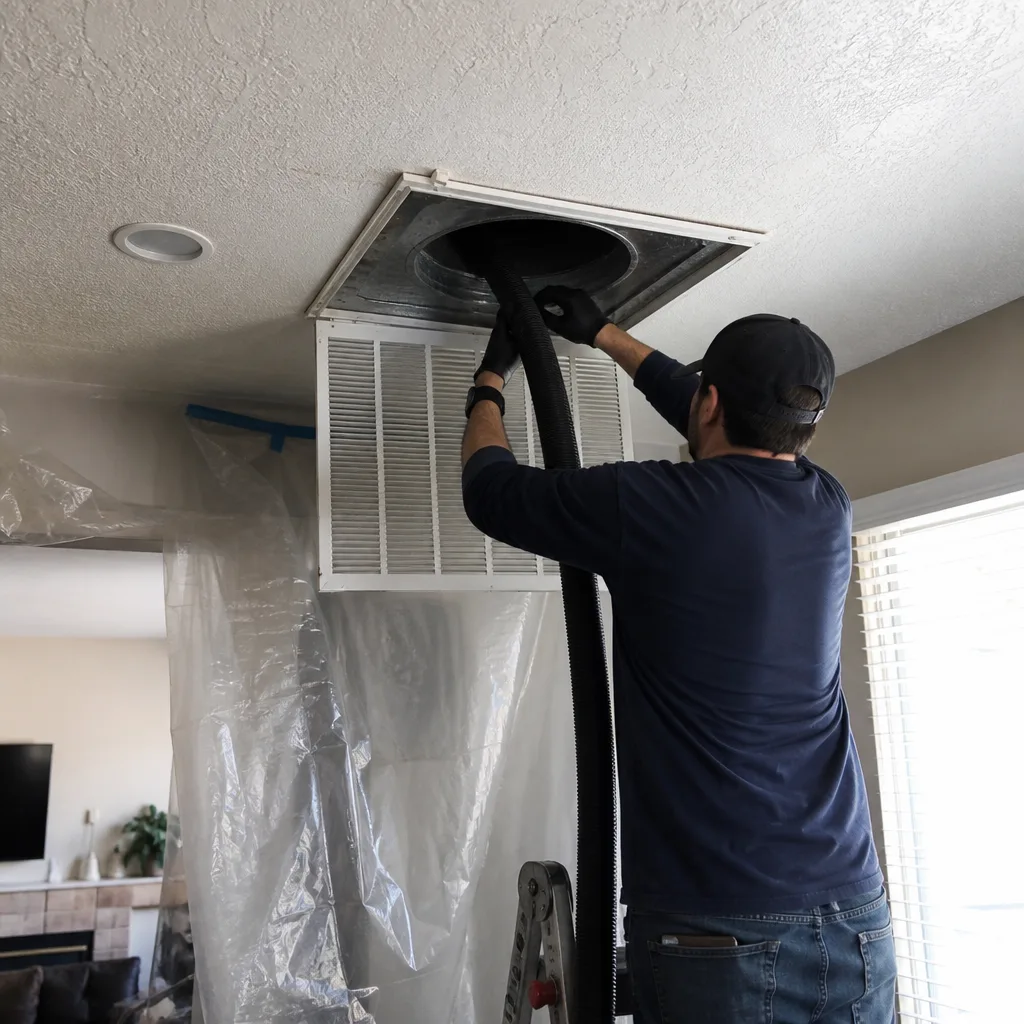 After
After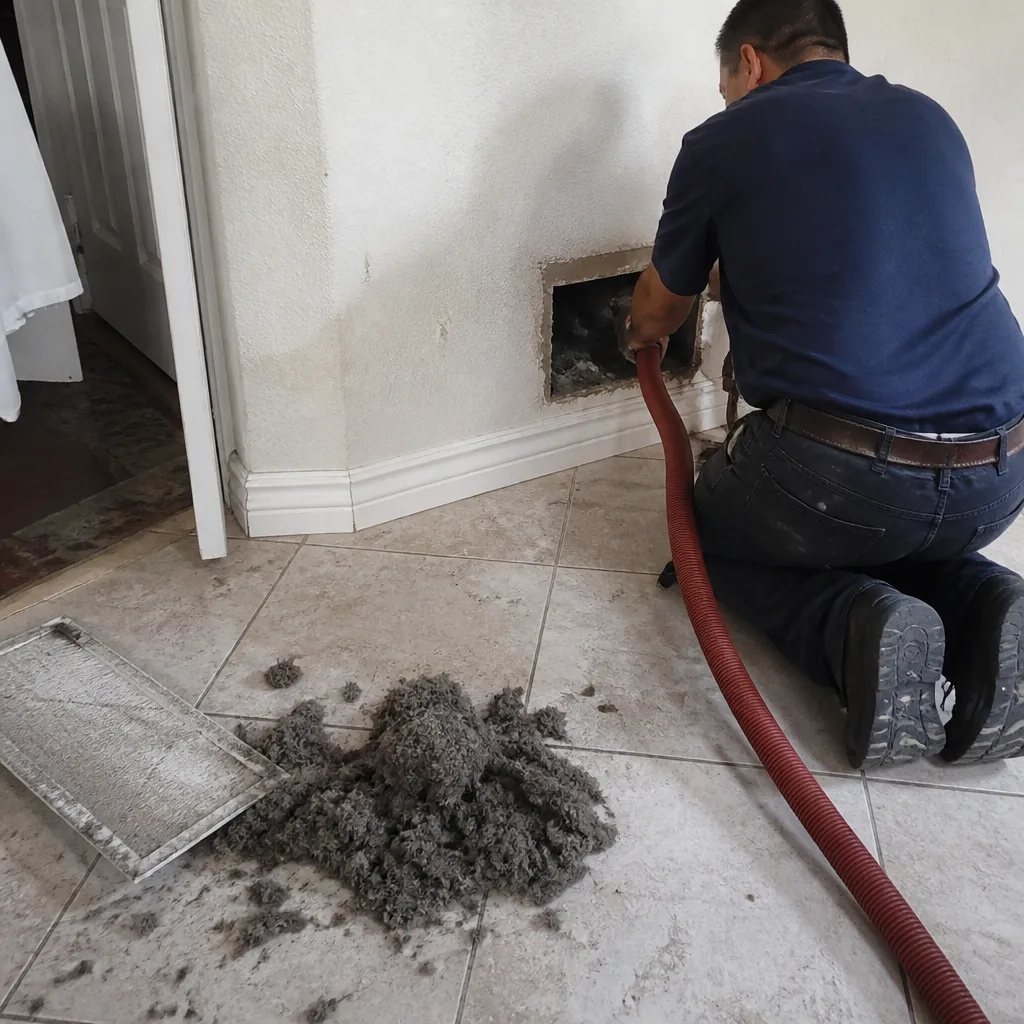 Before
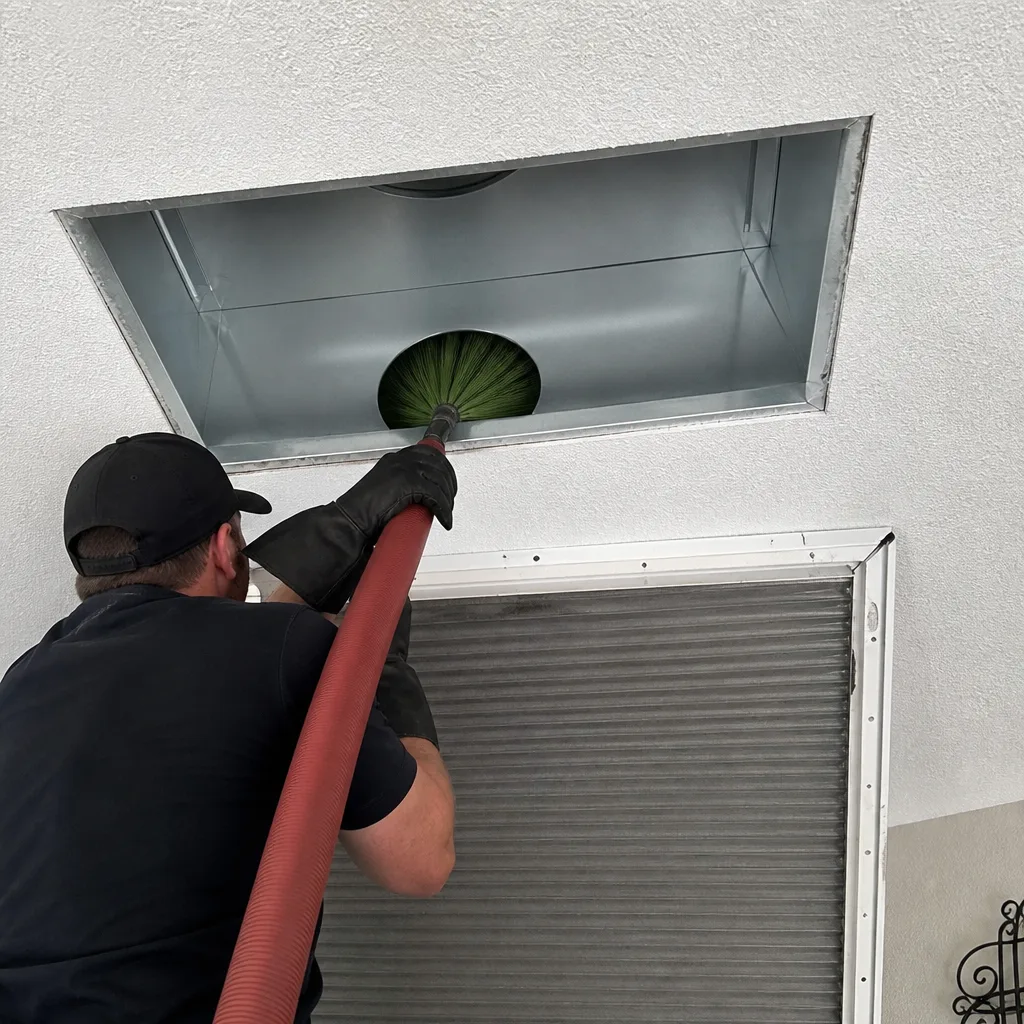 After
After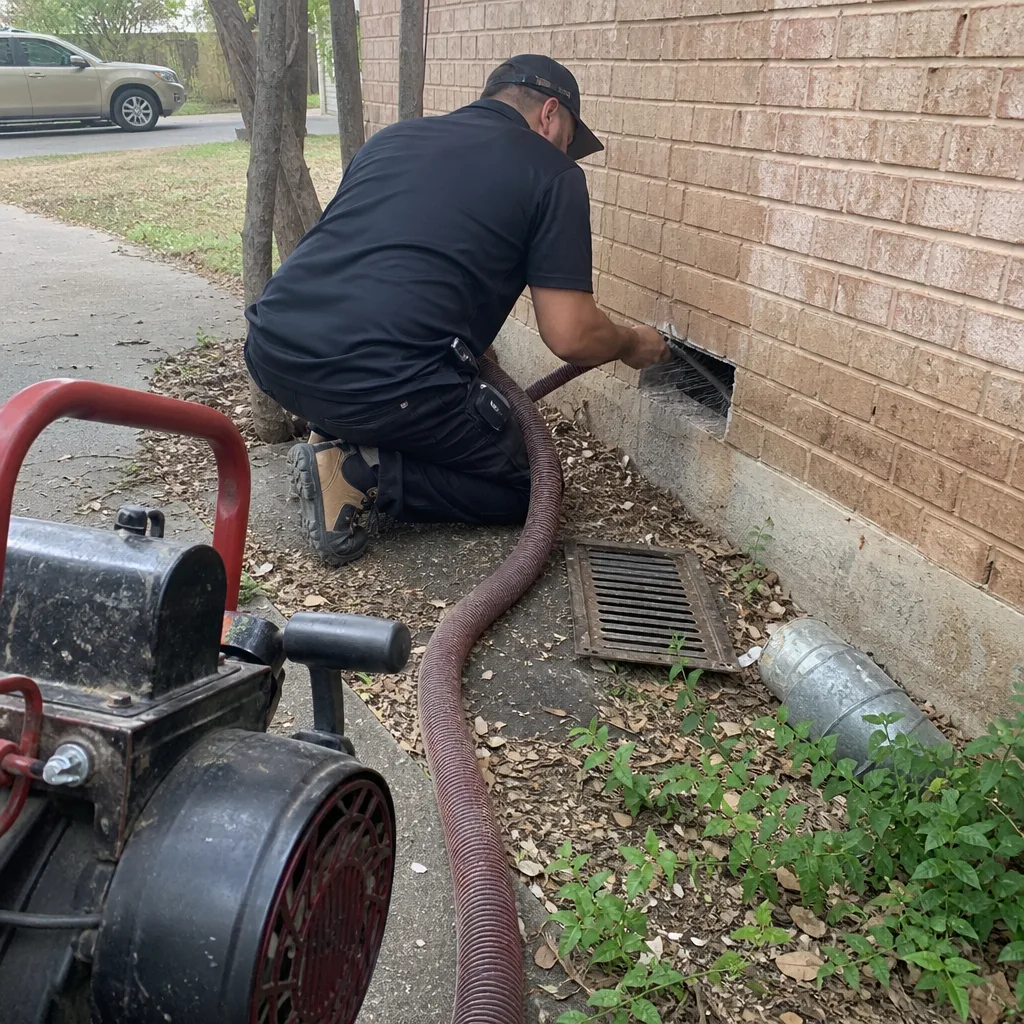 Before
 After
AfterThe Complete Guide to Air Duct Cleaning in San Antonio
A 2,000-square-foot San Antonio home with a single-story slab foundation and a 15-year-old air handler can have more debris in its return plenum than in every supply run combined. Yet most cleanings price by “number of vents” and never touch the plenum at all. In this guide, you’ll learn what a complete our Air Duct Cleaning services actually covers, how San Antonio’s caliche soil and pollen patterns change what’s hiding in your ducts, what documentation proves the work was real, and what a fair written price looks like before anyone touches a screw.
Quick Answer
Professional air duct cleaning in San Antonio typically costs $450-$850 for a complete whole-system cleaning of a 2,000-2,500 square foot home, including supply runs, return runs, plenums, and air handler access. A thorough job takes 3-5 hours, uses negative-pressure extraction equipment, and delivers before/after photos of every duct run. CleanRun Air Duct Cleaning San Antonio provides written upfront pricing and a documented photo record on every job.
Table of Contents
- What a Complete Air Duct Cleaning Actually Covers
- How San Antonio’s Climate and Soil Affect Your Ducts
- Negative-Pressure Extraction vs. Shop-Vac Cleaning: How to Tell the Difference
- What Air Duct Cleaning Should Cost in San Antonio
- The Documentation You Should Request and Keep
- How Often San Antonio Homes Actually Need Duct Cleaning
- Choosing a Duct Cleaning Company in San Antonio
- Common Mistakes to Avoid
- When to Call a Professional
- Frequently Asked Questions
BeforeAfterWhat a Complete Air Duct Cleaning Actually Covers
Most homeowners in Alamo Heights, Stone Oak, and the near-westside neighborhoods we serve assume “duct cleaning” means every inch of the system gets attention. To understand why this matters, read our DIY vs Professional Air Duct Cleaning: The San Antonio Homeowner’s Decision Guide. It rarely does. A complete cleaning addresses five distinct zones. Skip any one, and debris recirculates from the missed section into the cleaned ones within weeks.
The Five Zones of a Complete Cleaning
- Supply runs - the metal or flex ducts that carry conditioned air from your air handler to each room register. These are what most people picture when they think “ducts,” and they’re the only thing some budget services clean.
- Return runs - the larger ducts that pull air back from your living spaces to be reconditioned. Returns run at negative pressure, so they act like vacuums for dust, pet hair, and debris. In San Antonio homes with return plenums built into the slab or framed into wall cavities, these are often the dirtiest part of the system.
- Plenums - the distribution boxes that connect your air handler to the duct runs. The supply plenum sits on top of the furnace or air handler; the return plenum collects air before it enters the blower. Plenums are wide, flat spaces where debris settles in layers. A shop vac with a 2-inch hose cannot reach the corners effectively.
- Air handler cabinet - the metal box containing your blower motor, heat exchanger or coil, and filter rack. The blower wheel itself accumulates dust that reduces airflow and strains the motor. Cleaning here requires opening the cabinet and, on many systems, removing the blower assembly.
- Evaporator coil - the A-shaped coil above the furnace that removes humidity from San Antonio’s thick summer air. A dirty coil restricts airflow, raises energy bills, and can freeze over. Coil cleaning is a separate service at many companies, but it’s inseparable from complete system hygiene.
In our work across San Antonio since 2013, we’ve documented the difference. A home in Terrell Hills had 2.3 inches of compacted debris in the return plenum while the supply runs showed only surface dust. A coupon service pricing by “12 vents” would have cleaned the supplies, collected payment, and left the plenum untouched. The homeowner would have noticed no improvement in air quality or system performance.
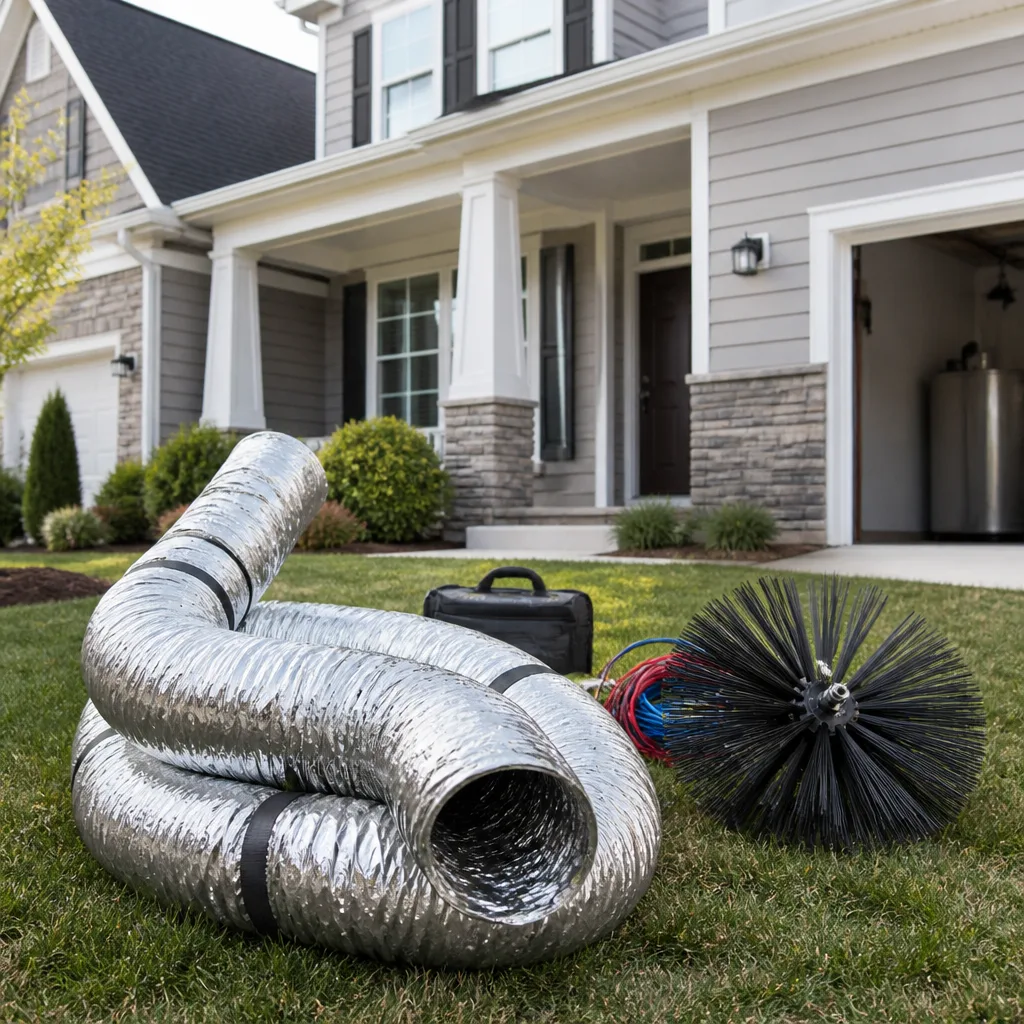
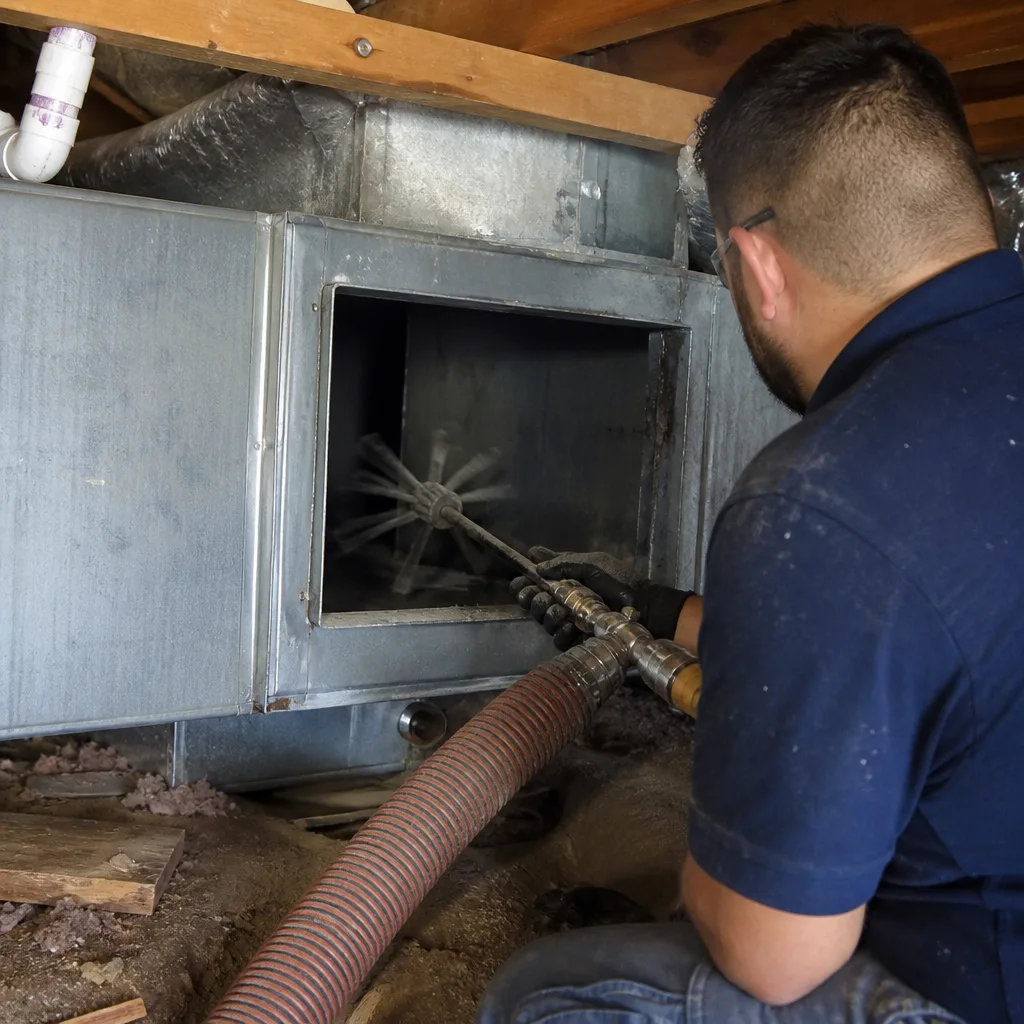
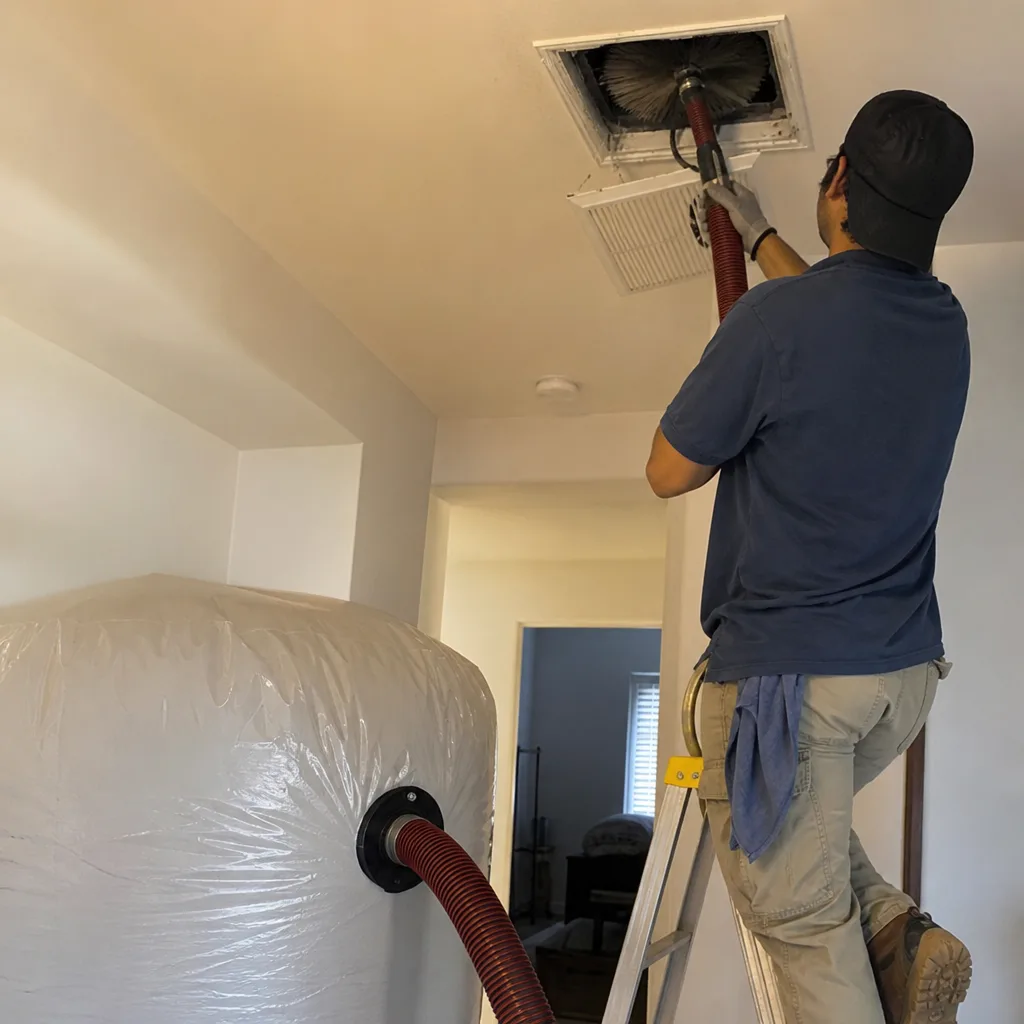
We use Rotobrush and Nikro equipment sized for each zone. The Rotobrush system combines a rotating brush with simultaneous vacuum extraction - the brush loosens debris while negative pressure pulls it into a sealed containment unit. For plenums and large return trunks, we switch to Nikro portable negative-air machines that generate sufficient airflow to capture particles without releasing them into the home.
How San Antonio’s Climate and Soil Affect Your Ducts
National averages for duct cleaning frequency don’t apply cleanly here. San Antonio’s specific conditions create debris profiles we see repeatedly in our documented photo records.
Caliche Soil and Fine Dust Infiltration
San Antonio sits on the Edwards Plateau, where caliche - a cement-like layer of calcium carbonate - lies beneath thin topsoil. Construction activity, foundation settling, and even normal vibration crack slab seals and wall penetrations. The resulting infiltration is not ordinary household dust. Caliche-derived particles are angular, abrasive, and extremely fine. They pass through standard 1-inch pleated filters and accumulate in return plenums and blower cabinets. In homes built during the 2015-2020 construction boom in areas like Far West Side and Alamo Ranch, we’ve found caliche dust layers exceeding 1 inch in returns within three years of occupancy.
Oak Pollen and Seasonal Loading
Live oak and red oak pollen peaks in San Antonio from late February through early April. The yellow-green coating on cars and patios also enters duct systems. Pollen is organic, slightly adhesive, and builds up on duct walls in irregular clumps. Unlike dry dust, pollen deposits attract moisture in humid months and can support microbial growth on organic debris already present. Homes near the Leon Creek Greenway or other tree-dense areas of Northwest San Antonio show heavier seasonal loading than comparable homes in more developed neighborhoods.
Attic Heat and Flex Duct Degradation
San Antonio attic temperatures regularly exceed 140°F in July and August. Flex duct - the insulated flexible tubing common in homes built after 1990 - degrades under thermal cycling. The inner liner becomes brittle and micro-fractured, creating rough surfaces that trap debris. The insulation outer wrap can sag, creating low points where condensation collects. We’ve replaced flex duct in Shavano Park and Hollywood Park homes where the original installation had developed internal mold staining from years of condensation at sag points. Cleaning alone cannot restore degraded flex duct; it must be identified and addressed.
Humidity and Coil Conditions
San Antonio’s average relative humidity runs 65-75% from May through October. The evaporator coil operates below dew point continuously during this period, making it a persistent moisture surface. A dirty coil in this environment becomes a biological reservoir. We document coil conditions with photos, and we’ve shown homeowners in Monte Vista and King William the difference between a cleaned coil and one still harboring biofilm. The visual evidence is unmistakable.
Negative-Pressure Extraction vs. Shop-Vac Cleaning: How to Tell the Difference
The equipment used determines whether debris leaves your home or simply gets redistributed. Understanding the distinction protects you from paying for performance you don’t receive.
What Negative-Pressure Extraction Actually Means
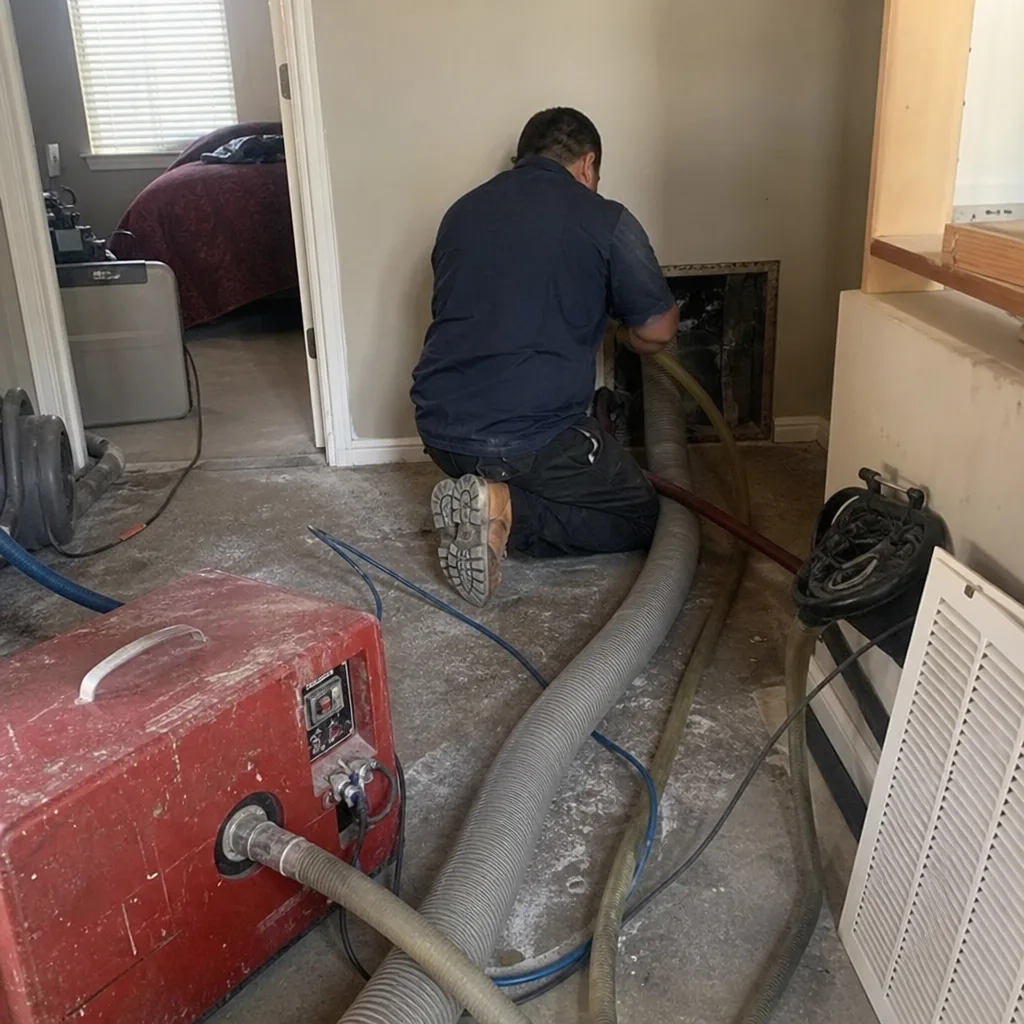
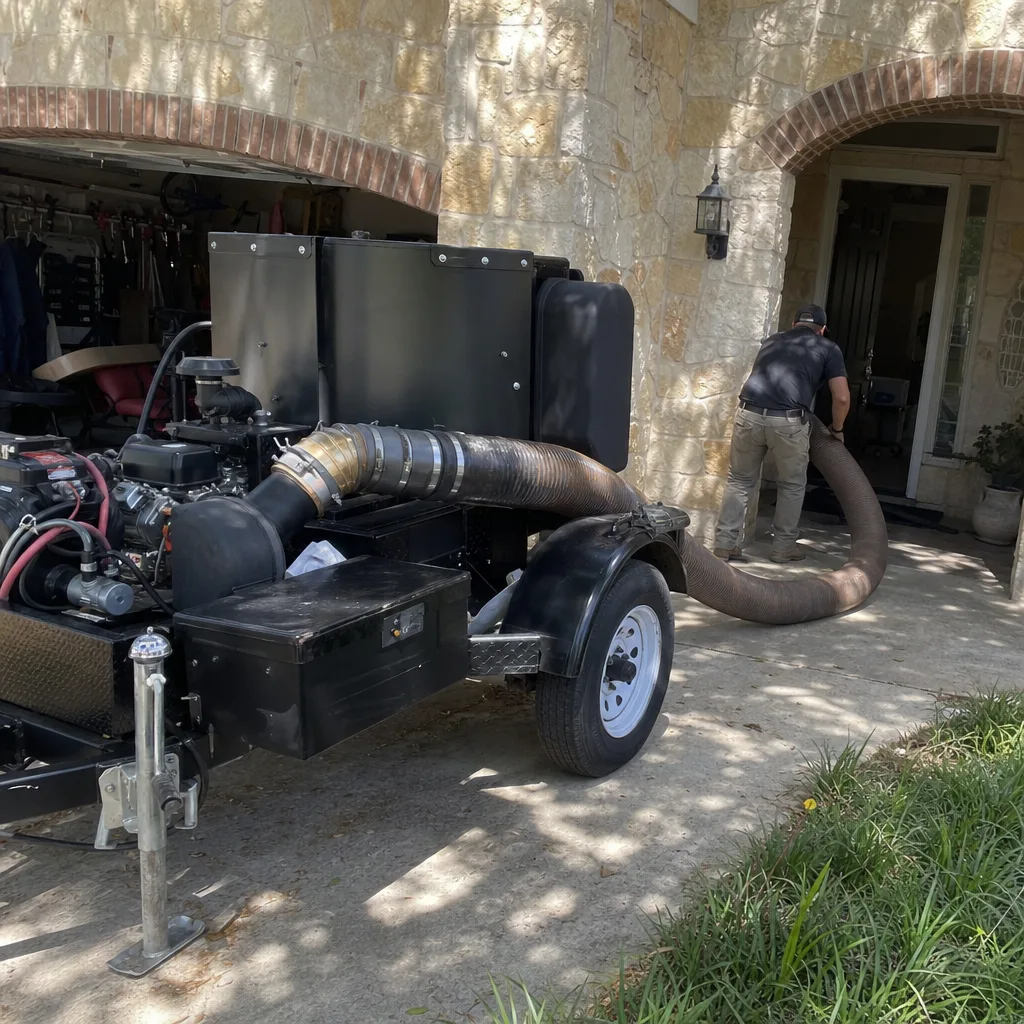
Negative-pressure cleaning, also called source-removal extraction, works like this: a large vacuum unit (typically mounted on a truck or as a portable HEPA-filtered machine) connects to your duct system near the air handler. This unit draws 4,000-6,000 cubic feet per minute of airflow through the ducts, creating suction throughout the entire network. Then, at each register, a technician inserts an agitation tool - a rotating brush, air whip, or skipper ball - that dislodges debris from duct walls. The dislodged material is immediately pulled by the negative pressure toward the collection unit, not pushed into your living space.
The critical element is containment. The system is sealed during cleaning. Air pulled from your home is filtered through HEPA media before exhaust. Debris travels in one direction only: out of your ducts and into the waste container.
What Shop-Vac Cleaning Actually Does
A shop vac or small portable unit generates 100-200 CFM - roughly 1/30th the airflow of negative-pressure equipment. The technician inserts a hose into each register, sometimes with a handheld brush. The limited suction reaches only a few feet into each run. Debris beyond that point is disturbed but not removed. In plenums and main trunks, the hose cannot reach corners or horizontal surfaces where debris settles.
Worse, agitation without sufficient extraction releases particles into your home. We’ve been called to homes in the Medical Center area where a “cleaning” left visible dust settling on furniture for days. The before/after photos from those jobs show clean register openings and untouched duct interiors beyond the first elbow.
How to Tell From Photos Alone
The documented photo record is your proof. Here’s what to look for:
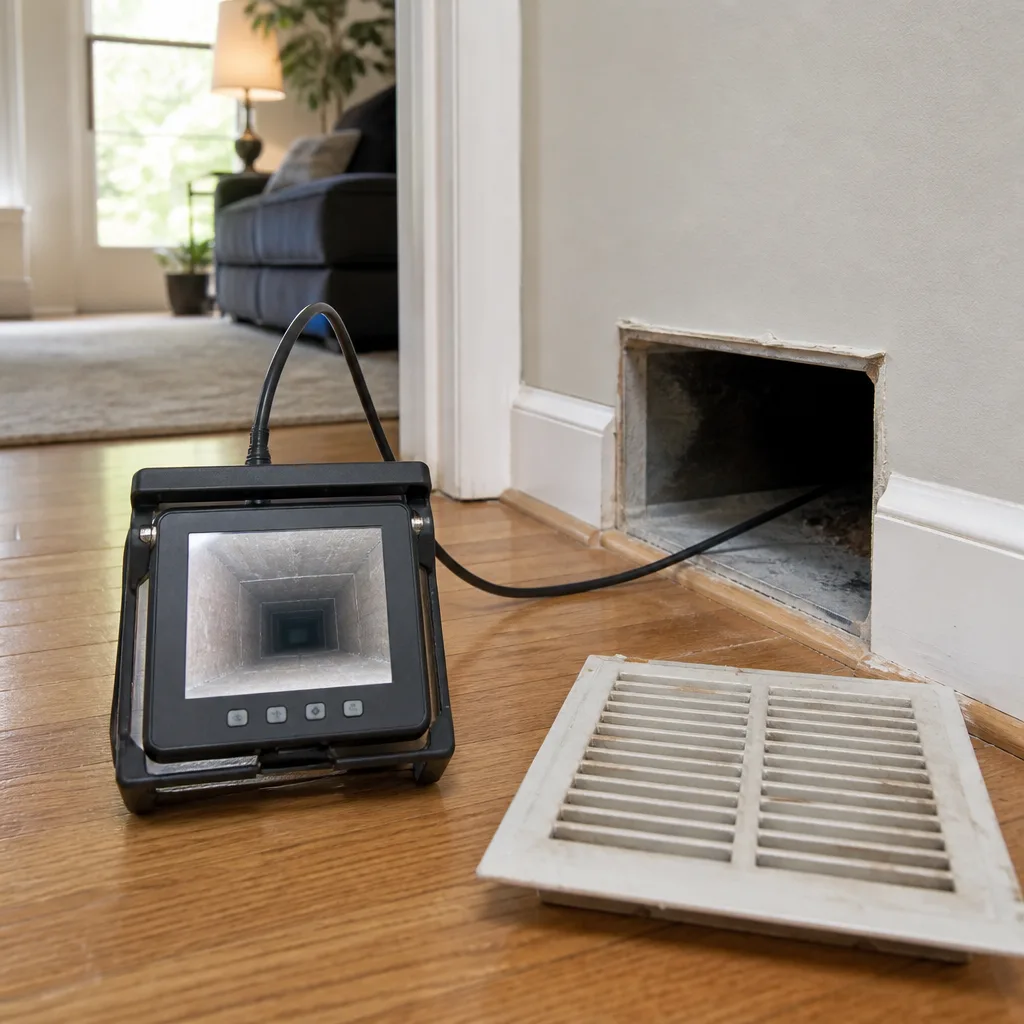
- Depth of view: Negative-pressure photos show the full length of duct runs, often with a fisheye lens or borescope reaching 10+ feet. Shop-vac photos show only the first 12-24 inches from the register.
- Surface coverage: Complete cleaning photos show all four walls of rectangular ducts or the full circumference of round ducts. Partial cleaning shows only the floor or bottom surface where a hose rested.
- Plenum documentation: Any legitimate complete cleaning includes plenum photos. Their absence means the plenum was not accessed.
- Before/after pairing: Each photo should be keyed to a specific duct run - “Master bedroom supply, east wall” - not generic “before” and “after” images that could come from any home.
CleanRun’s documented photo record includes every duct run, before and after, with location labels. Customers receive these as part of the standard job record, not as an extra-cost add-on. We’ve maintained this practice since our first job in 2013.
What Air Duct Cleaning Should Cost in San Antonio
Price transparency is Haven Standard Clause 1. We publish ranges because “call for a quote” invites the exact bait-and-switch behavior that damages this industry’s reputation.
Whole-System Cleaning Price Ranges
| Home Size / System Type | Complete Cleaning Range | Typical Duration |
|---|---|---|
| 1,200-1,800 sq ft, single system | $380-$550 | 2.5-3.5 hours |
| 2,000-2,500 sq ft, single system | $450-$650 | 3-4 hours |
| 2,800-3,500 sq ft, single or dual system | $600-$850 | 4-5 hours |
| 3,500+ sq ft, dual or zoned systems | $750-$1,100 | 5-7 hours |
| Coil cleaning (add-on or separate) | $150-$250 | 1-1.5 hours |
| Dryer vent cleaning (separate service) | $120-$180 | 45-60 minutes |
These ranges reflect San Antonio market conditions in 2024-2025, including labor costs, equipment maintenance, and disposal fees. Prices below $300 for whole-system cleaning indicate either partial service (supplies only, no returns or plenum) or unsustainable business practice that manifests in upsells once the technician arrives.
What Should Appear on Your Written Estimate
Any legitimate estimate should itemize:
- Number and type of supply runs to be cleaned
- Number and type of return runs to be cleaned
- Plenum access and cleaning confirmation
- Air handler cabinet and blower service
- Coil cleaning, if included or available as add-on
- Equipment to be used (brand and method)
- Documentation deliverables (photo record, written scope)
- Total price, with no per-vent calculation
- Warranty terms and duration
CleanRun delivers this as a written price before any work starts, every time. No exceptions. The price is a flat rate per system, not a per-vent calculation that balloons when the technician counts “additional” registers.
Common Upsell Triggers to Recognize
Industry research and customer reports identify these patterns:
- “Mold” claims without laboratory verification: A technician points to dark staining and declares it toxic mold, offering immediate “treatment” for $400-$800. Actual mold identification requires lab analysis. We photograph suspicious areas and, if the homeowner requests, recommend independent testing before any treatment.
- Coil “emergency” cleaning: The coil is presented as dangerously dirty and requiring immediate service not included in the quoted price. A written estimate should state coil condition and pricing upfront.
- Sanitizer fogging as mandatory: EPA-registered sanitizers have specific application protocols and limited efficacy claims. We offer sanitizing as an optional add-on with full documentation of product used and method applied, never as a condition of completing the cleaning.
- “Your ducts are damaged” discoveries: Disconnected or damaged ducts should be noted during the initial inspection and included in the written scope, not “discovered” mid-job with immediate pressure to authorize repairs.
Our Free Second Opinion on Any Written Estimate exists precisely for these scenarios. Bring a competitor’s quote to CleanRun Air Duct Cleaning San Antonio home; we’ll put our number next to it in writing, line item by line item.
The Documentation You Should Request and Keep
The work is only as real as the record proving it. These are the deliverables that separate documented service from undocumented claims.
The Before/After Photo Record
Each duct run should have paired photos, keyed by location. “Living room supply, north wall” before and after. “Master bedroom return, ceiling” before and after. The photos should show the same perspective, same lighting, same depth of view. Generic “before” and “after” images without location labels could be stock photos or from any previous job.
CleanRun’s documented photo record includes every run, delivered digitally as part of the standard job record. We started this practice in 2013 because we believe the customer should see what was in their system, not take our word for it.
The Written Scope of Work
This document states what was done, what equipment was used, and what zones were accessed. It should match the pre-work estimate exactly, with any changes noted and initialed by both parties. The scope becomes the reference if questions arise later.
The 365-Day Done Right Promise
Our written guarantee states: if the work is not right, we make it right. This is not a policy subject to manager approval. It’s a written commitment backed on every job. In practical terms, if a homeowner in Boerne or Helotes calls us six months after service with concerns about a specific duct run, we return, re-inspect with the customer present, and correct any deficiency at no charge. The photo record from the original job provides the baseline for comparison.
Haven Standard Clause 3, Verified Crews, supports this: our technicians are background-checked, uniformed, and identified by name before arrival. Accountability requires knowing who performed the work.
Equipment Documentation
Professional-grade equipment from recognized manufacturers can be independently verified. We use Rotobrush, Nikro, Abatement Technologies, Honeywell, Aprilaire, and Guardsman equipment on jobs. Customers can look up these brands, their specifications, and their intended applications. We name them specifically because equipment transparency is part of evidence-based service.
How Often San Antonio Homes Actually Need Duct Cleaning
National recommendations of “every 3-5 years” assume average conditions. San Antonio’s specific factors modify this.
Indicators That Cleaning Is Needed
- Visible dust emission from registers when the system starts
- Musty or stale odors when the blower activates, especially in humid months
- Uneven heating or cooling that isn’t explained by damper settings
- Recent renovation or construction, particularly in homes built 2015-2025 where post-construction cleanup was minimal
- New pet ownership or increased shedding
- Filter changes more frequent than manufacturer recommendation
- Previous water intrusion or condensation issues in the duct system
San Antonio-Specific Timing Factors
Homes in construction-dense areas - currently the Far West Side, near Potranco Road, and the I-10 corridor toward Boerne - experience more infiltration from ongoing grading and foundation work. We’ve cleaned systems in year-old homes with significant caliche dust loading. These homes benefit from earlier first cleaning, typically 12-18 months after construction completion.
Homes with original flex duct from the 1990s-2000s, common in established neighborhoods like Terrell Hills and Alamo Heights, may need cleaning more frequently as duct degradation creates debris-trapping surfaces. However, cleaning cannot restore degraded duct material; replacement becomes the appropriate service when the duct itself is failing.
Homes with continuous occupancy by allergy-sensitive individuals may schedule cleaning on a 2-3 year cycle as preventive maintenance, paired with upgraded filtration (Aprilaire or Honeywell media filters) to extend intervals.
Choosing a Duct Cleaning Company in San Antonio
The selection process should verify credentials, equipment, and documentation practices before any price discussion. For help with this, see our How to Hire a Air Duct Cleaning Contractor in San Antonio: A Step-by-Step Guide.
Verification Checklist
- License and insurance verification: Texas requires HVAC contractors to hold a TDLR license. Ask for the license number and verify it on the TDLR website. Ask for certificate of insurance. CleanRun publishes its license number and maintains general liability and workers compensation coverage.
- Equipment specificity: The company should name the brands and methods used, not describe “professional equipment” generically. Vague descriptions suggest shop-vac or inadequate tools.
- Photo record commitment: Ask whether before/after photos of every duct run are included as standard. A hesitation or extra charge indicates this isn’t normal practice.
- Written price protocol: Ask how pricing is determined. Per-vent pricing is a red flag. Flat-rate system pricing with itemized scope is the standard that prevents mid-job increases.
- Warranty in writing: Verbal assurances are unenforceable. Request the actual warranty document before scheduling.
- Crew verification: Ask whether technicians are employees or subcontractors, whether background checks are performed, and how technicians are identified at your door. Haven Standard Clause 3 requires verified, uniformed, name-identified crews.
We’ve served over 52,000 homes since 2013. Every one began with a written price and concluded with a documented photo record. This isn’t exceptional service; it’s our standard.
Common Mistakes to Avoid
- Booking by vent count: A 2,500-square-foot San Antonio home might have 8 supplies or 14 depending on design era and zoning. Per-vent pricing incentivizes the company to count creatively and ignores that returns, plenums, and the air handler determine system cleanliness more than register count.
- Accepting phone estimates without inspection: Duct configuration varies enormously in San Antonio’s housing stock, from 1950s ranch homes with metal duct to 2020s builds with extensive flex runs. A legitimate price requires seeing the system.
- Ignoring the return side: Returns are the intake; they’re where debris enters. A service that emphasizes “we clean all your vents” without specifying returns and plenums is cleaning only half the system.
- Skipping documentation: Without photos, you have no proof of what was done. In a dispute or warranty claim, your position is weakened. Always request and retain the photo record.
- Assuming new homes are clean: Construction debris in new San Antonio homes is substantial. Drywall dust, insulation fragments, and caliche particulate enter ducts during construction. We’ve documented significant loading in homes never occupied.
- Delaying after water intrusion: San Antonio’s occasional severe storms and pipe failures can introduce water to duct systems. Delayed cleaning after drying allows microbial colonization. Address within weeks, not months.
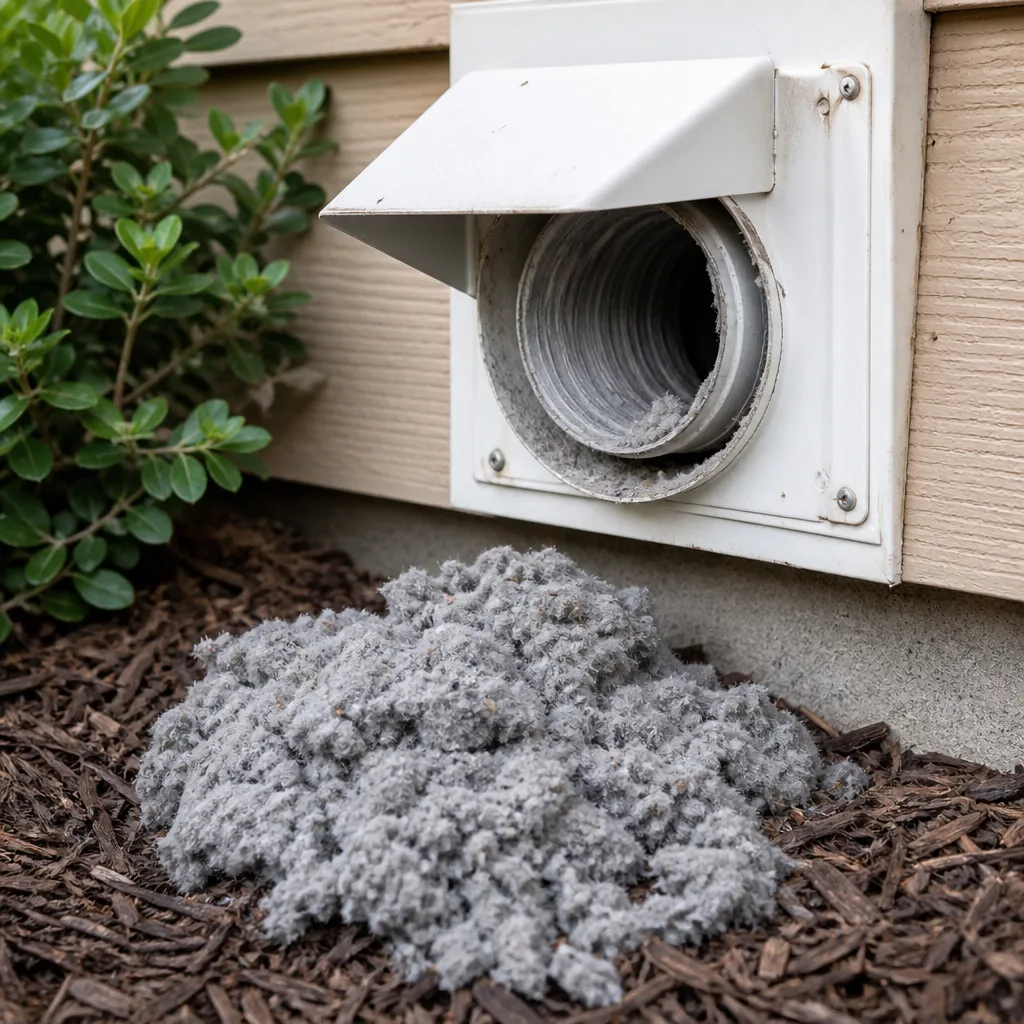
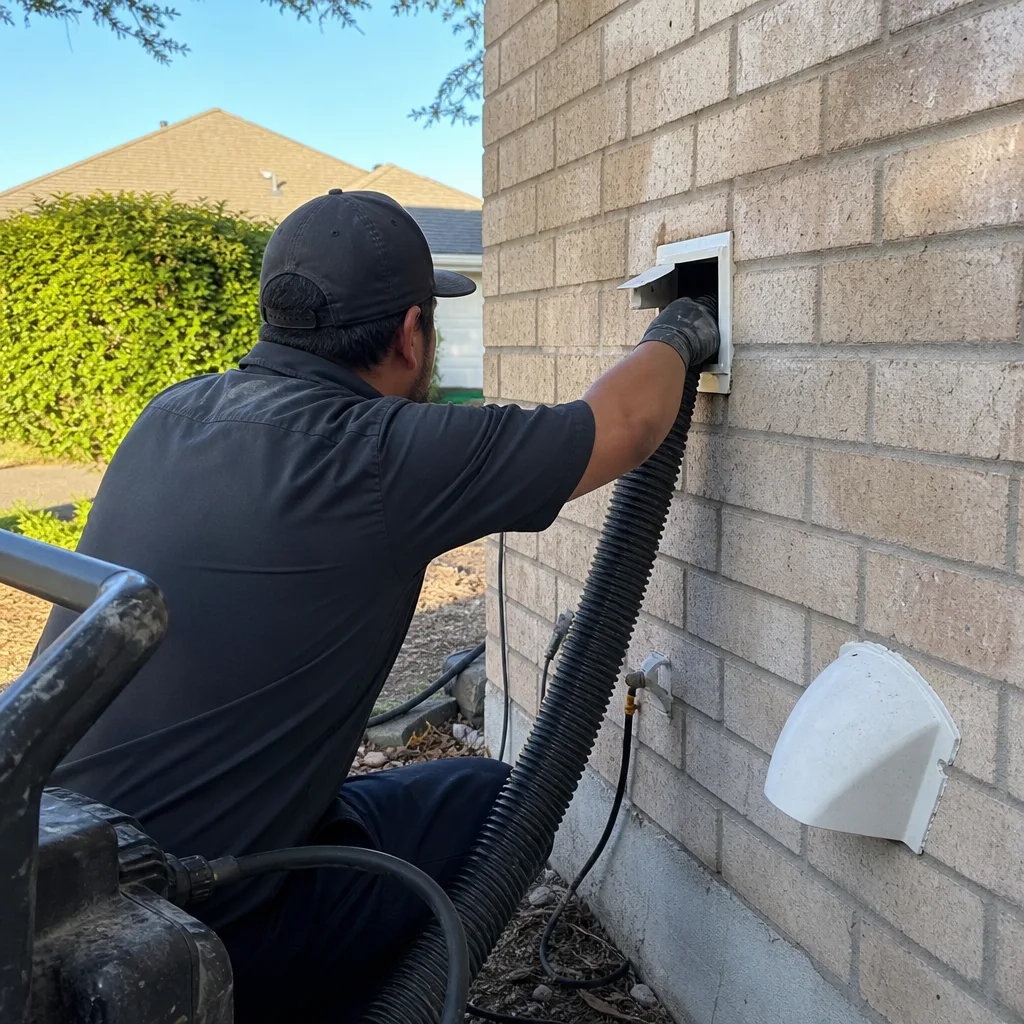
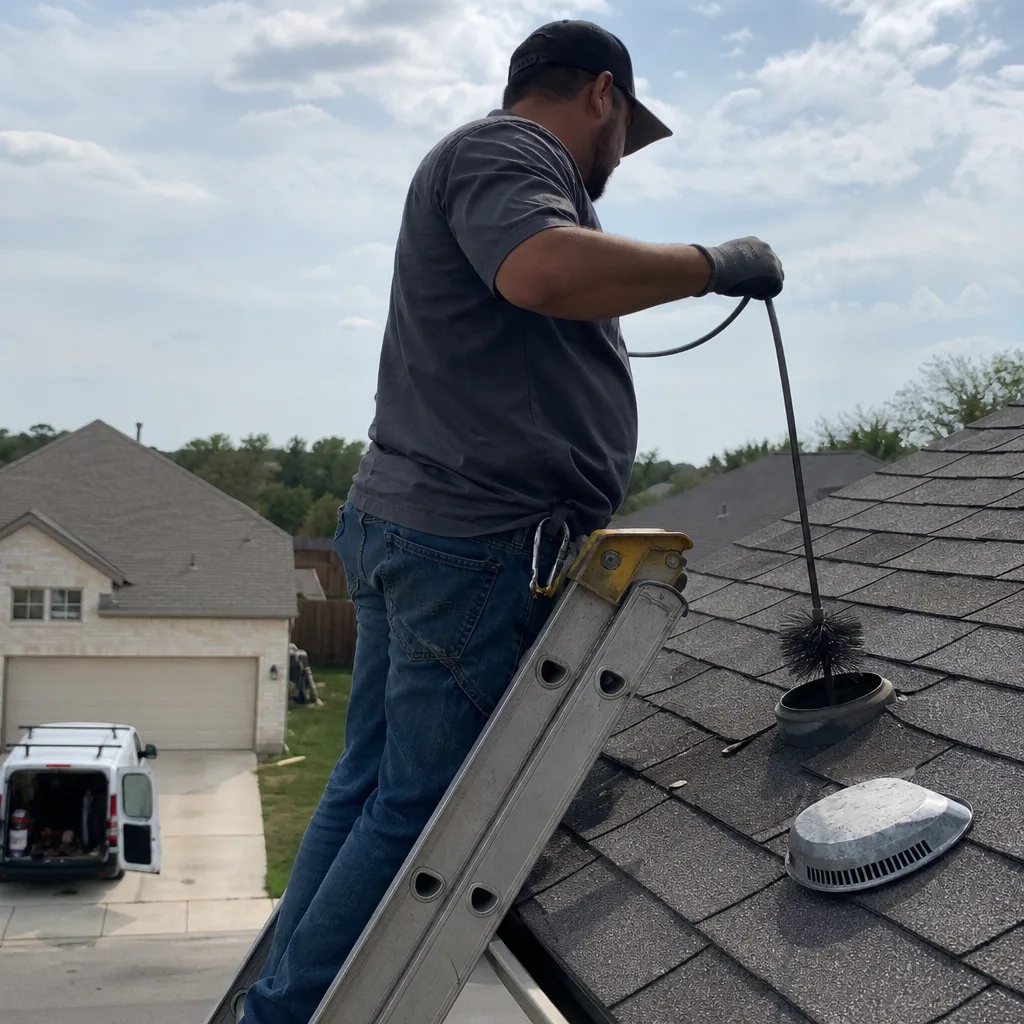
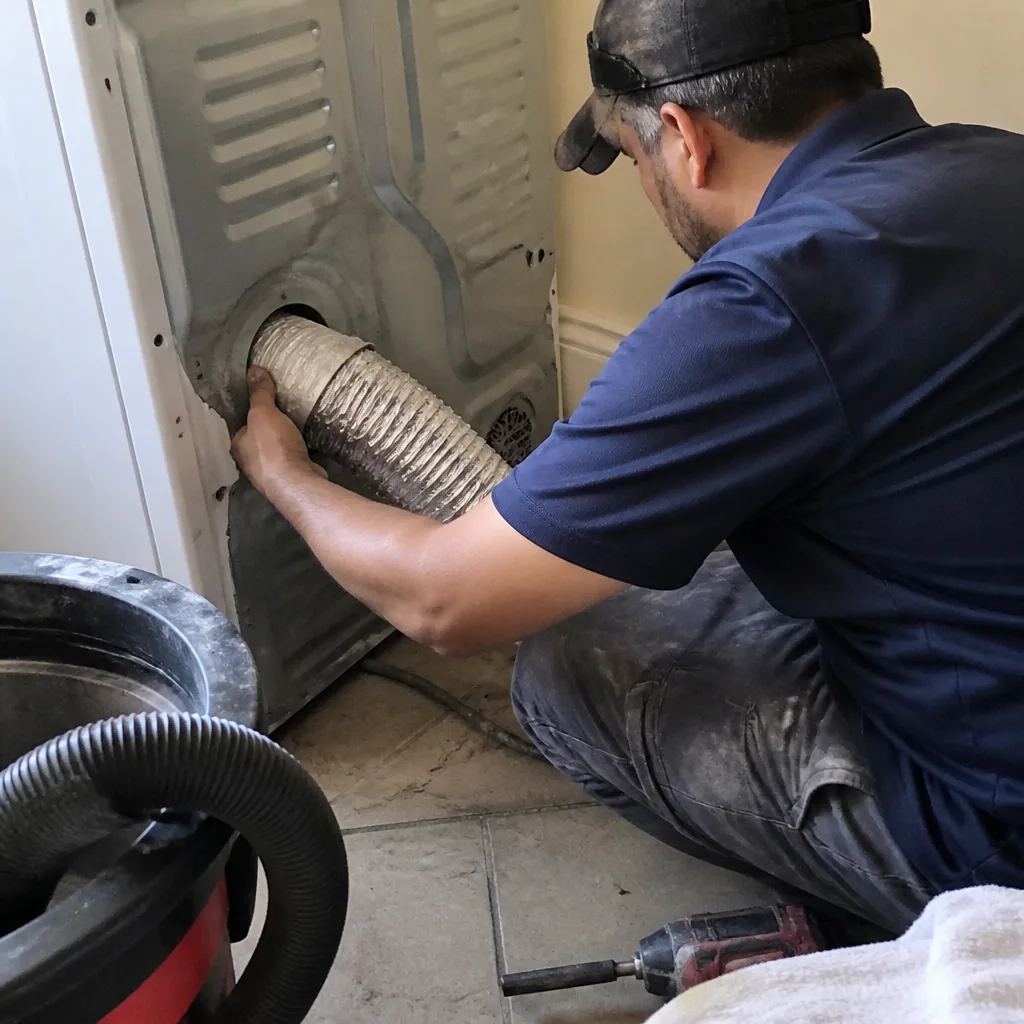
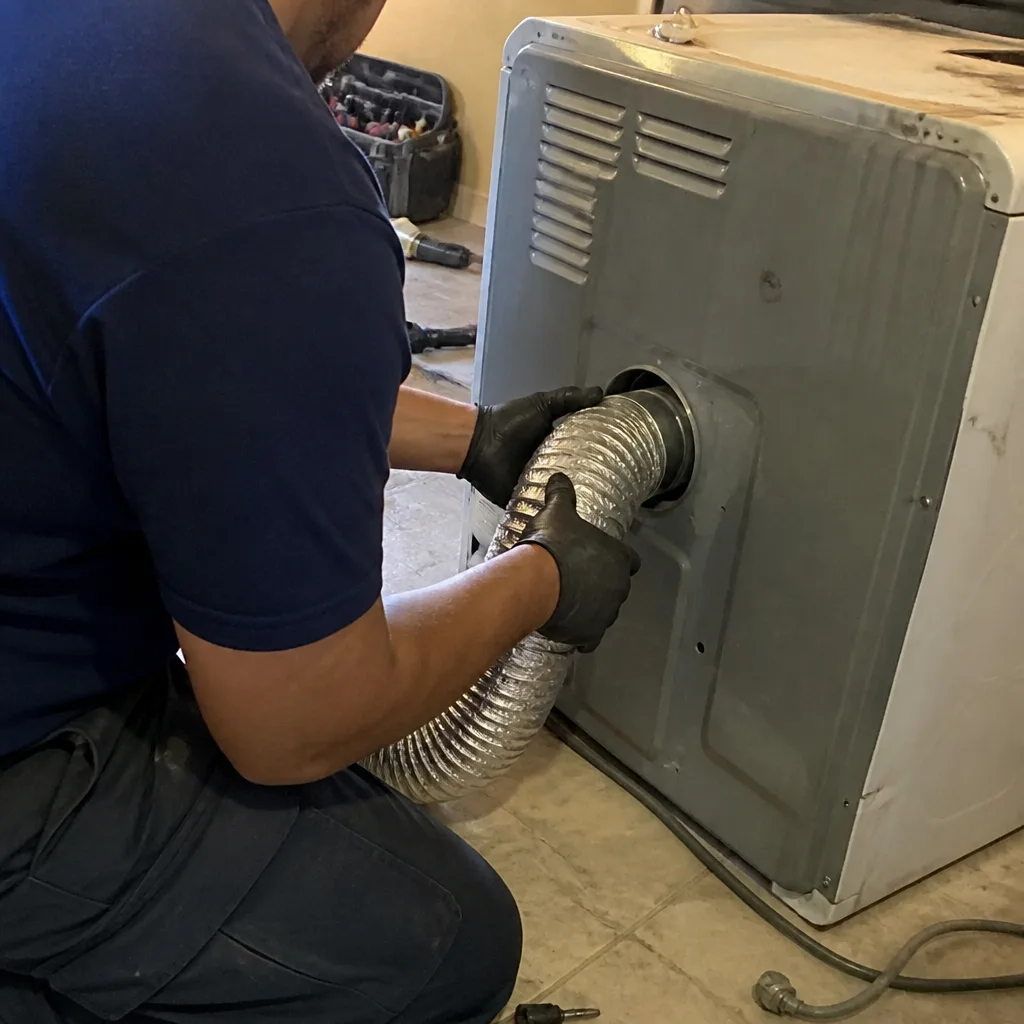
- Treating dryer vent cleaning as optional: Dryer vent cleaning in San Antonio is a distinct service from duct cleaning but equally critical for fire safety. Lint accumulation in long vent runs, common in modern San Antonio home designs with centrally located laundry rooms, creates genuine fire hazard.
When to Call a Professional
Call for professional assessment when you observe visible dust from registers, persistent odors, uneven system performance, or after any construction, water intrusion, or pest activity in duct areas. If you’ve received a written estimate that seems unclear or pressures you toward immediate add-ons, our Free Second Opinion service puts CleanRun’s written number next to theirs.
CleanRun Air Duct Cleaning San Antonio offers free estimates in San Antonio. For more guides & resources, visit our blog. All calls are answered by a live person, 24/7. Technicians are background-checked, uniformed, and identified by name before arrival. Call (726) 600-7155.
Frequently Asked Questions
Complete whole-system cleaning for a typical 2,000-2,500 square foot San Antonio home ranges from $450-$650, with larger homes or dual systems running $600-$850. Prices below $300 typically indicate partial service or unsustainable pricing that converts to upsells on arrival. Call (726) 600-7155 for a written estimate with exact pricing for your system.
Low quotes usually exclude returns, plenums, or the air handler; use shop-vac equipment instead of negative-pressure extraction; or employ per-vent pricing that increases once the technician counts registers. The written estimate should itemize every zone to be cleaned and the equipment to be used. CleanRun provides this itemization under Haven Standard Clause 1 before any work starts.
Request a documented photo record of every duct run, before and after, keyed to specific locations in your home. Without this, you have only the technician’s word. CleanRun includes this as standard on every job, delivered digitally as part of the job record. We’ve done so since 2013.
Most San Antonio homes benefit from cleaning every 3-5 years, but homes in active construction areas, homes with original flex duct from the 1990s-2000s, or homes with allergy-sensitive occupants may need service every 2-3 years. New construction homes often need initial cleaning within 12-18 months due to construction debris loading.
HVAC cleaning in San Antonio encompasses the full heating, ventilation, and air conditioning system: ducts, coils, blower, and sometimes the outdoor condenser. Duct cleaning addresses only the distribution network. A complete HVAC cleaning is more extensive and appropriate when the entire system needs attention, not just the ducts.
Moderately, when the system was significantly obstructed. A blower wheel caked with dust or a coil coated in debris works harder to move air. Cleaning restores design airflow, which can reduce runtime and energy use. However, duct cleaning is not a primary energy-saving strategy; sealing duct leaks and upgrading insulation have larger impacts. We document coil and blower conditions so homeowners can see whether efficiency gains are likely.
EPA-registered sanitizers have specific labeled uses and limited efficacy claims. They are not a substitute for physical debris removal. We offer sanitizing as an optional add-on with full product documentation, applied after cleaning, not as a mandatory upsell. For most homes, thorough negative-pressure extraction is sufficient.
The Bottom Line
Air duct cleaning in San Antonio is worth doing when it’s done completely, documented honestly, and priced transparently. The complete job covers five zones, not just visible registers. San Antonio’s caliche soil, oak pollen, and attic heat create conditions that national averages don’t capture. Negative-pressure extraction with professional equipment from manufacturers like Rotobrush and Nikro removes debris; shop-vac methods redistribute it. The proof is in the documentation: before/after photos of every run, a written scope, and a warranty you can hold in your hand. Anything less leaves you paying for performance you cannot verify.
Written by Tomas Reyes, Owner at CleanRun Air Duct Cleaning San Antonio, serving San Antonio since 2013.