
Last updated September 23, 2026
Whole-system duct and dryer vent check with before-and-after photos - you see exactly what came out of your vents
That "$99 whole-house special" is a bait ad - the real number appears once they are in your hallway, or the "clean" is a shop-vac at the register. We photograph the inside of your ducts before and after instead.

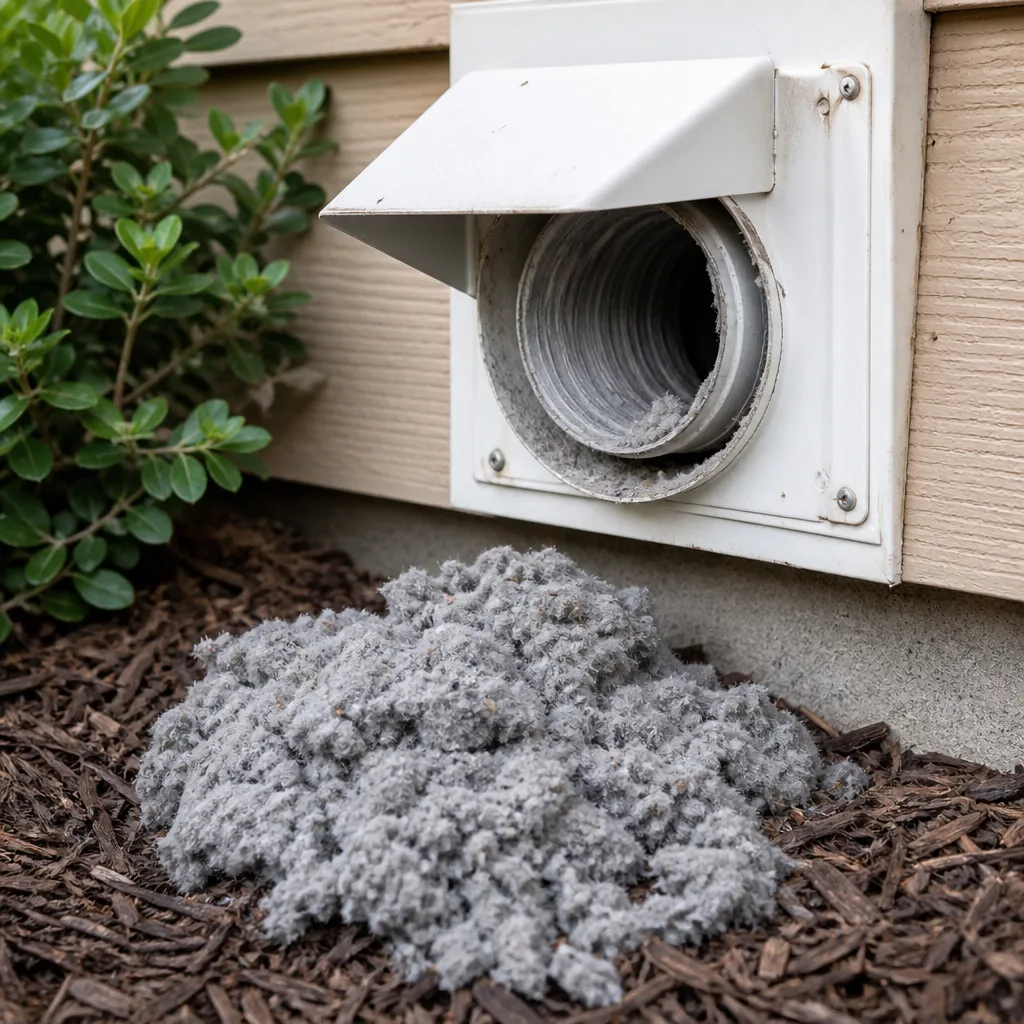
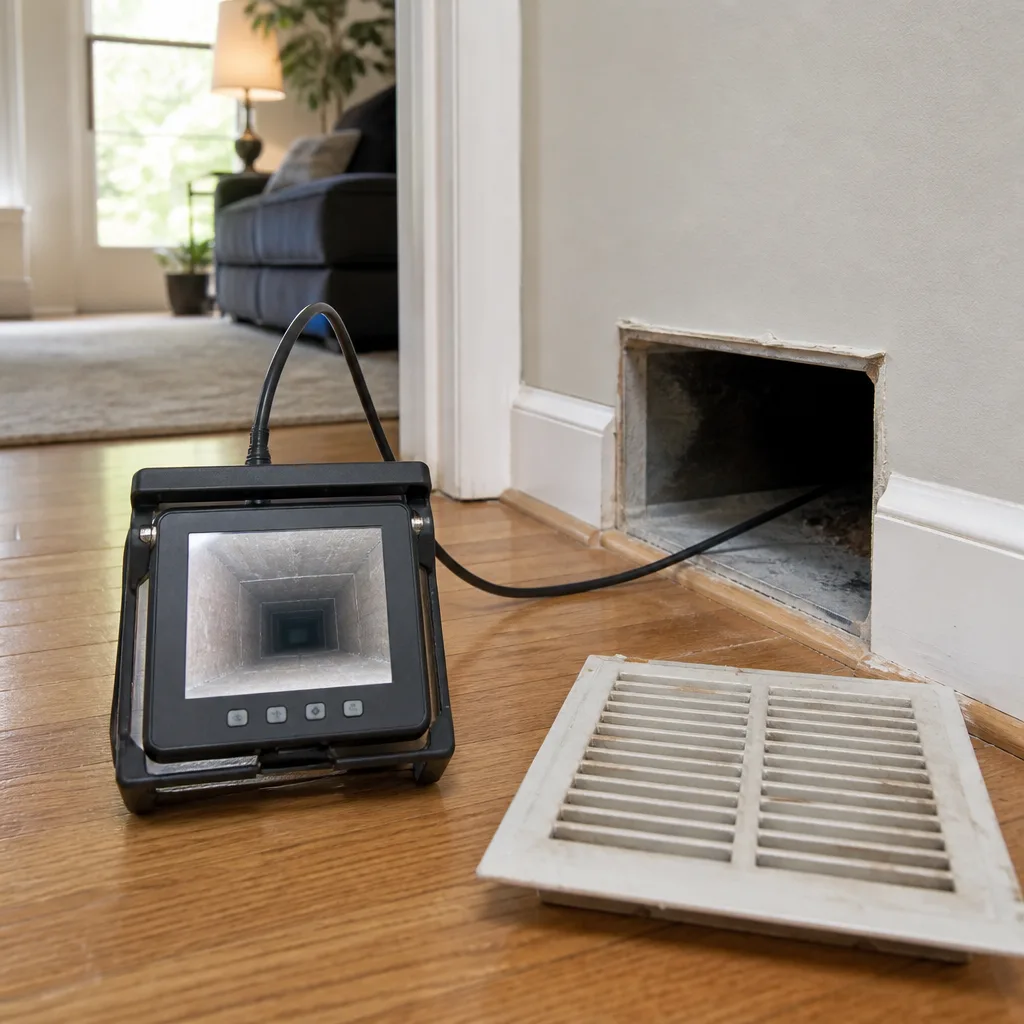

 Before
 After
After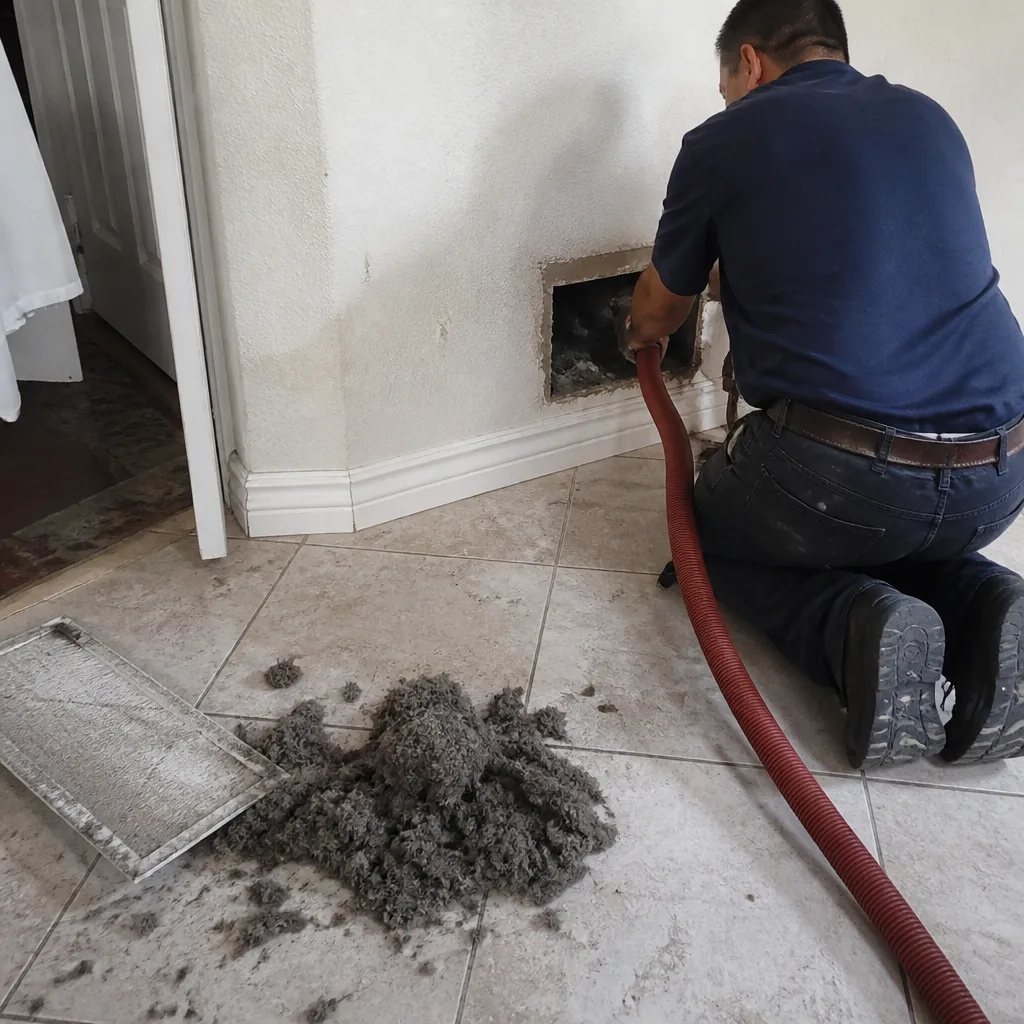 Before
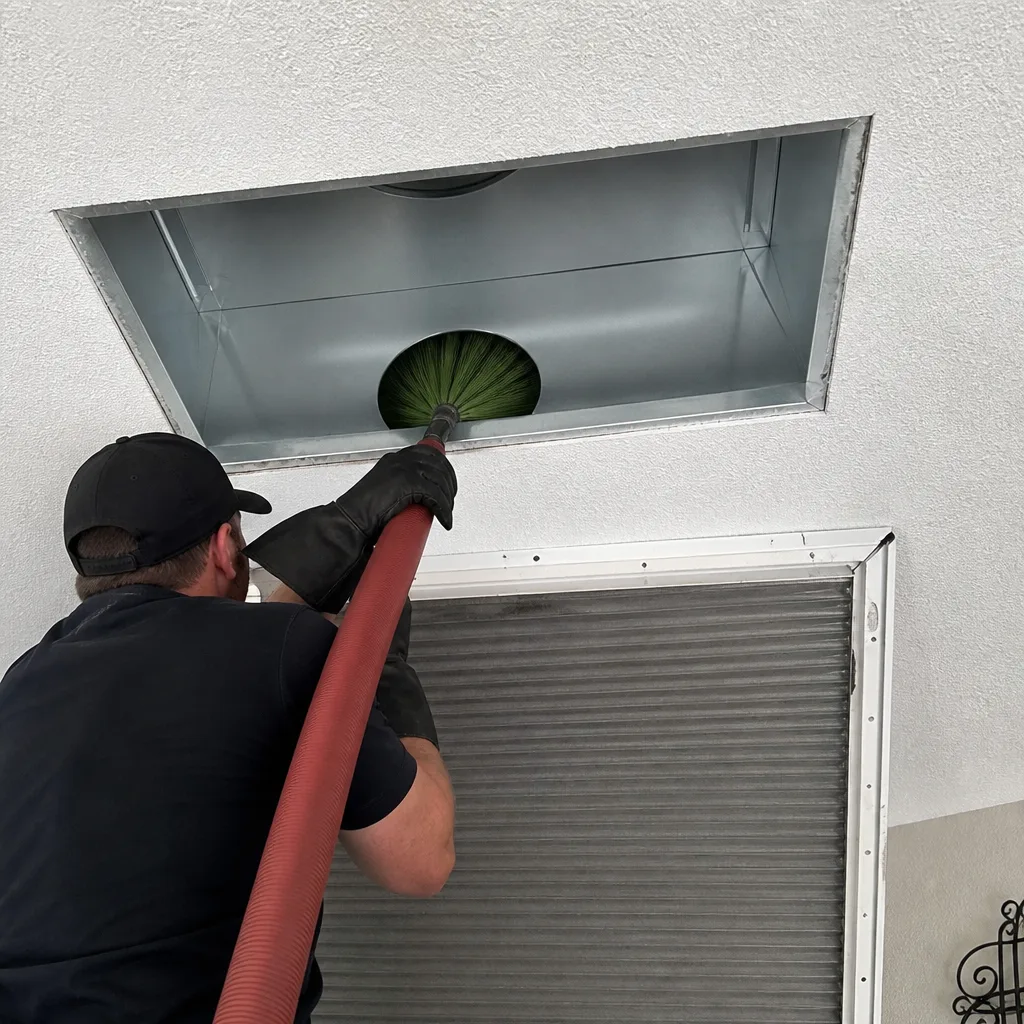 After
After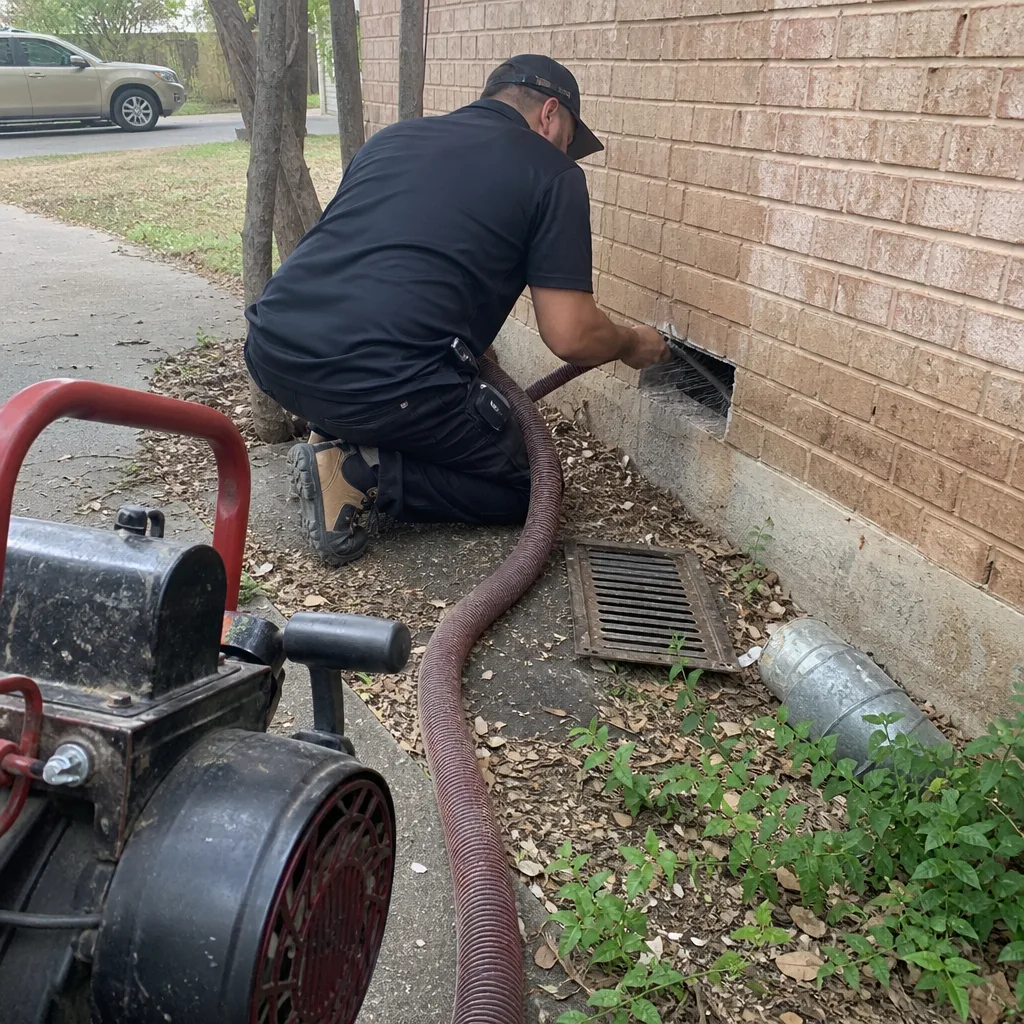 Before
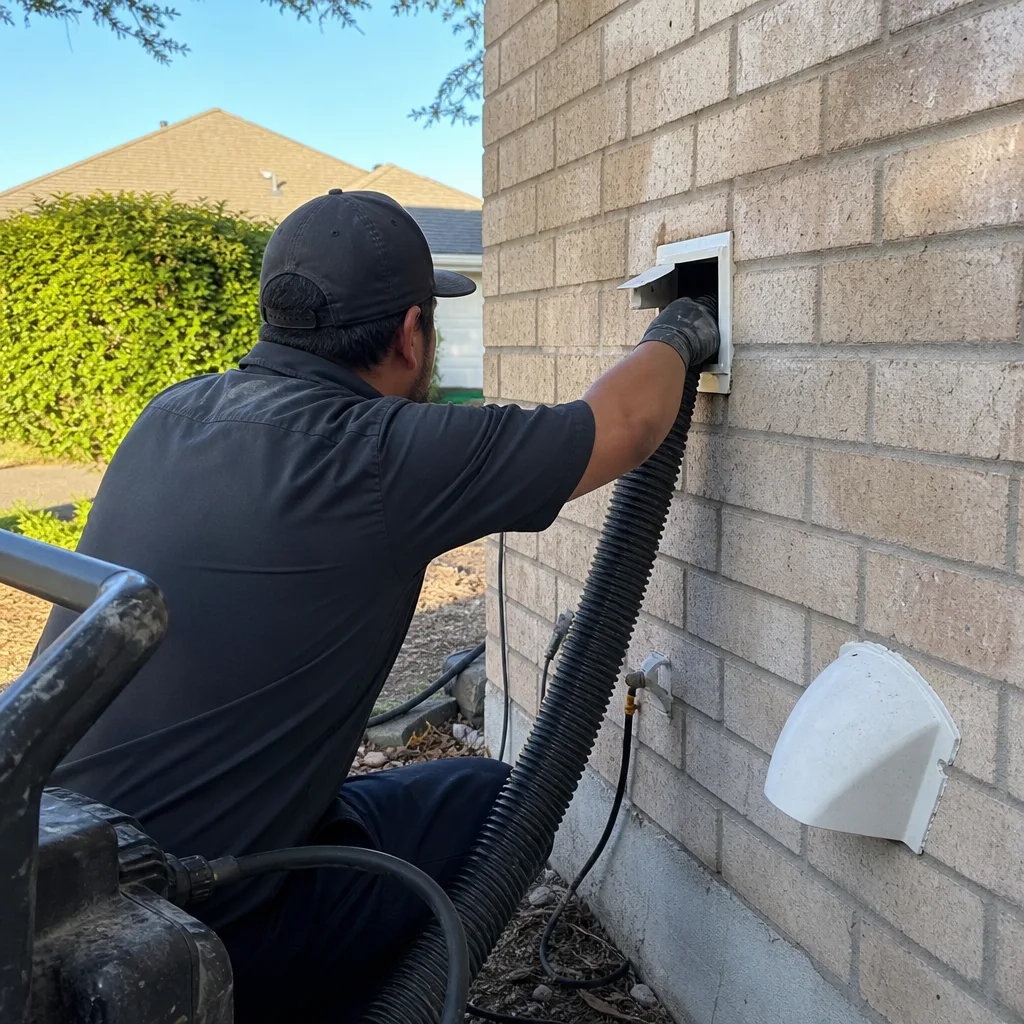 After
AfterAir Duct Cleaning Maintenance Checklist for San Antonio Homeowners
The filter you change every 90 days is downstream of problems a filter was never designed to catch: condensate pan overflow, deteriorating flex duct liner, and return leaks pulling attic air directly into the living space. None of those show up on a filter inspection. In San Antonio, where attic temperatures hit 140°F in July and cedar pollen loads the outdoor air every winter, ductwork degrades faster than in milder climates. This guide gives you the between-visit tasks, observable indicators, and dated records that make Air Duct Cleaning services more effective and hold contractors accountable when they’re not.
Quick Answer
A proper air duct cleaning maintenance checklist for San Antonio homeowners includes monthly visual and olfactory checks at each register, quarterly filter and grille inspections, and annual documentation of baseline conditions with a phone camera before any professional visit. Between professional cleanings, watch for specific San Antonio triggers: debris accumulation after cedar fever season, disturbed connections after attic work, and efficiency drops after summers with more than 30 days above 100°F. For warning signs specific to local homes, see our Air Duct Cleaning Warning Signs: A San Antonio Homeowner’s Reference Guide. Keep dated records of every observation, energy bill anomaly, and contractor visit in a format any future home inspector or buyer can verify without taking your word for it.
Table of Contents
- Monthly Checks You Can Do Without Tools
- Quarterly Tasks: Filters, Grilles, and What They Reveal
- Annual Baseline Documentation: The Photo Record You Own
- San Antonio-Specific Triggers: Cedar, Heat, and Attic Work
- Reading Your Energy Bills as a Duct Condition Indicator
- Record Keeping: Format, Location, and What Matters
- What Professional Equipment Actually Does (And What It Doesn’t)
- Common Mistakes to Avoid
- When to Call a Professional
- Frequently Asked Questions
BeforeAfterMonthly Checks You Can Do Without Tools
Every register in your San Antonio home tells a story if you know what to look for. These checks take under ten minutes and require nothing but your senses and a notepad.
What to Look For at Each Register
- Debris on the grille fins. Light dust is normal. Clumps, hair wrapped around screws, or greasy residue indicate the duct run behind the register needs attention. In kitchens, grease accumulation on return grilles is common; in bathrooms, it’s a red flag for moisture problems upstream.
- Discoloration patterns. Dark rings around screw holes or uneven staining on the grille face suggest air is bypassing the filter and pulling particulate through gaps in the ductwork. In San Antonio’s older neighborhoods like Monte Vista and King William, where homes have been through multiple HVAC retrofits, this pattern often traces to a poorly sealed return plenum (the central chamber where return air collects before reaching the air handler).
- Register fit and seal. The grille should sit flush against the ceiling or wall with no visible gap. A loose register that moves when the system cycles on and off means the boot (the sheet-metal transition between duct and room) has separated from the drywall or the duct itself has pulled loose.
What to Smell For
Stand near each register when the system first cycles on. Mustiness that fades after a few minutes often indicates microbial growth in the condensate pan or primary drain line, not the ducts themselves. A persistent sour or locker-room smell suggests biofilm in the duct run, common in San Antonio homes where summer humidity spikes above 70% even with air conditioning running. Sharp chemical odors, especially after recent painting or flooring work, mean volatile organic compounds are being distributed through the supply ducts, usually because a return grille was located too close to the work area.
Document what you find. Date, room, register location, observation. A sentence is enough: “March 14, master bedroom supply, dark ring around two screws, faint mustiness first two minutes of cycle.” This record becomes evidence if conditions worsen or if a contractor’s assessment contradicts your observations.
Quarterly Tasks: Filters, Grilles, and What They Reveal
Filter changes are the most performed and least understood maintenance task in residential HVAC. The filter protects the equipment; it does not clean the ducts. What you find when you remove a filter tells you about duct conditions upstream.
The Filter Inspection Protocol
- Photograph the filter before removal. Date the photo. This creates a visual record of loading patterns. A filter dirty only on one side indicates air bypass, usually from a poorly seated filter or a collapsed filter rack. Even loading across the face means the return duct is drawing from all connected rooms as designed.
- Check the filter rack itself. The metal or plastic frame that holds the filter should be intact, with no gaps larger than 1/8 inch around the filter edge. In San Antonio, where slab movement is common in areas like the Hill Country fringe and parts of Alamo Heights, filter racks in garage-mounted air handlers often warp, creating bypass paths that load the evaporator coil with debris the filter was supposed to catch.
- Inspect the return grille and visible duct behind it. Shine a flashlight into the return opening. The duct surface should be smooth metal or properly installed flex duct with no visible tears, sagging, or insulation degradation. Flex duct liner that has pulled away from the wire helix (the spiral wire that gives flex duct its shape) will look lumpy or collapsed and is a common failure mode in attics that exceed 130°F.
Grille and Register Deep Clean
Remove each supply and return grille quarterly. Wash with warm water and mild detergent, dry completely, and reinstall. While grilles are off, vacuum the visible duct opening with a household vacuum’s brush attachment. Do not push the vacuum hose deep into the duct; you cannot reach meaningful debris and you risk damaging flex duct or dislodging connections.
Note any grille that is difficult to remove or reinstall. Stripped screws, cracked plastic tabs, or bent metal ears indicate previous forced removal, often by a technician who did not document what they found. This matters for warranty claims and for understanding your system’s maintenance history.
Annual Baseline Documentation: The Photo Record You Own
Every professional duct cleaning company, including Air Duct Cleaning in San Antonio, should provide before-and-after photos. You need your own baseline too. A photo record you control cannot be disputed, cannot be lost by a contractor, and establishes what “normal” looks like for your specific home.
How to Document Your Own Baseline
- Photograph every register and grille. Use your phone. Include the date in the frame or in the file name. Capture the grille face, the surrounding ceiling or wall, and a flashlight view into the duct opening. Take these photos at the same time each year, ideally in October after summer stress and before heating season begins.
- Photograph the air handler area. The condensate pan, primary drain line, filter rack, and visible return plenum. These components are not “ducts” in the narrow sense, but they determine whether ducts stay clean after professional work. A condensate pan that overflows because the drain is clogged will re-contaminate supply ducts within weeks.
- Photograph your energy bills. Specifically the kWh usage and total cost for June, July, August, and September. See the next section for why this matters and how to interpret it.
- Store in two places. Cloud storage plus a local backup. Label folders by date and address. If you sell your San Antonio home, this folder transfers to the buyer as verified maintenance history.
When you hire a professional, share your baseline photos before they begin. A competent technician will compare their findings to your record and explain discrepancies. If their “before” photos show dramatically worse conditions than your baseline from six months prior, you have a specific, dated basis for questioning what changed or whether the photography was representative.
At CleanRun, our Documented Photo Record on Every Visit includes the inside of every duct run, before and after, delivered to the customer as part of the standard job record. But we also encourage customers to maintain their own parallel documentation. Two independent records are stronger than one.
San Antonio-Specific Triggers: Cedar, Heat, and Attic Work
San Antonio’s climate and ecology create duct stressors that don’t exist, or exist less severely, in other markets. Three specific triggers warrant additional inspection beyond your standard schedule.
After Cedar Fever Season (December-February)
Mountain cedar pollen is uniquely problematic for ductwork. The pollen grains are small enough to pass through standard filters, electrostatically sticky, and highly allergenic. After peak season, typically January, inspect return grilles and the filter rack for a fine yellow-green film. This residue indicates the filter was overloaded and pollen passed through to the air handler and supply ducts.
In our experience across San Antonio, from Stone Oak to the Medical Center, homes with outdoor air intakes or fresh-air ventilation systems show the heaviest cedar pollen loading. If your system has a ventilator or economizer, check its filter separately; it’s often overlooked and can become a pollen reservoir that re-contaminates ducts for months.
After Any Attic Work
Insulation replacement, rodent treatment, wiring upgrades, or solar panel installation all disturb attic conditions. After any contractor has worked in your attic, inspect all ceiling-mounted registers within 48 hours. Fiberglass insulation fragments, disturbed dust, or rodent droppings on grilles indicate that flex duct connections were disturbed or that your return ducts are pulling attic air through newly created leaks.
San Antonio’s 2021 International Energy Conservation Code adoption requires duct sealing in new construction and major renovations, but most existing homes predate this requirement. For details on local regulations, read our guide to Air Duct Cleaning Permits, Codes & Inspections in TX: What You Need to Know. If your home was built before 2021 and has had attic work, consider a duct leakage test (a pressure-based measurement of how much air escapes the duct system) even if you have no other symptoms.
After a Summer with More Than 30 Days Above 100°F
San Antonio hit this threshold in 2023 and is trending toward it more frequently. Sustained extreme heat degrades flex duct adhesive, accelerates metal duct seam separation, and increases the pressure differential across duct leaks because the system runs longer and harder.
Check for these specific indicators the October after a brutal summer:
- Supply registers in second-story rooms that blow noticeably less air than in milder summers, suggesting duct leakage in the hot attic has worsened
- Return grilles with dark staining that appeared or worsened over the summer, indicating increased attic air infiltration
- Condensate pan overflow or drain line clogs, from the system running more hours per day than designed
Reading Your Energy Bills as a Duct Condition Indicator
Your utility bill is a lagging indicator, but it’s an objective one. Duct leakage and blockage both increase cooling costs by reducing the fraction of conditioned air that reaches intended rooms. The system runs longer to achieve the thermostat setpoint.
The Percentage Threshold That Matters
Compare your June-September total kWh to the same months in the previous year, adjusted for any rate changes. A year-over-year increase of 15% or more, with similar thermostat settings and occupancy, correlates with duct conditions worth professional assessment. Below 10% is usually explainable by weather variation or rate changes. Between 10% and 15%, look for other confirming indicators before calling a contractor.
This threshold comes from our field data across San Antonio homes with verified duct leakage. Homes with leakage above 20% of total airflow (measured by duct blaster test) consistently showed cooling cost increases above 15% compared to sealed systems of similar size and age. The relationship is not perfectly linear, but the 15% figure is a useful decision point.
How to Isolate Duct Issues from Other Causes
Before attributing a cost spike to ducts, rule out these alternatives:
- Refrigerant charge problems: Poor cooling performance with normal airflow suggests the refrigeration cycle, not ducts. A technician must measure superheat and subcooling to diagnose.
- Thermostat or sensor drift: A thermostat reading 2°F low will cause 10-15% longer run times. Verify with a calibrated thermometer at the return grille.
- Evaporator coil fouling: Reduced airflow at all supplies, with normal duct conditions, often means the coil (the heat exchanger inside the air handler) is clogged with debris that passed a failed filter.
Document your bill analysis with the same rigor as your visual inspections. “August 2024: 2,340 kWh, up 18% from August 2023 (1,980 kWh), same occupancy, thermostat at 76°F both years. Supply airflow at master bedroom register down approximately 20% by hand check.” This level of specificity gets a competent technician’s attention and protects you from unnecessary work.
Record Keeping: Format, Location, and What Matters
Maintenance records are only useful if someone else can understand them without your explanation. Future buyers, home inspectors, and alternative contractors should be able to reconstruct your duct maintenance history from what you leave behind.
The Minimum Viable Record
For each professional service, keep:
- Date of service
- Company name and technician name
- Scope of work in the company’s own words (copy from their invoice)
- Written price and payment record
- Before-and-after photos provided by the contractor
- Your own baseline photos from before the visit
- Any warranty or guarantee documentation, including specific terms and duration
For CleanRun customers, this is straightforward: every job concludes with a written scope, a written price under Haven Standard Clause 1, and a Documented Photo Record of every duct run included as a standard deliverable. The 365-Day Done Right Promise is backed in writing on every job, not just stated in marketing copy. File these with your other home records.
Format and Storage
Digital records are searchable and backup-able. PDFs of invoices, JPEGs of photos, and a simple spreadsheet or text log of dates and observations. Cloud storage with local backup is the standard we recommend. If you prefer physical files, use a labeled three-ring binder with sheet protectors; store it where you’ll find it during a home sale, not in a box in the attic.
The critical detail: make the record transferable. A buyer’s inspector in San Antonio will look for maintenance history. A complete, dated, photographic record of duct cleaning and condition documentation differentiates your home from comparable properties with verbal claims and lost receipts.
What Professional Equipment Actually Does (And What It Doesn’t)
Understanding professional tools helps you evaluate contractor claims and avoid the shop-vac noise that passes for duct cleaning in the coupon market.
Negative-Pressure Extraction Systems
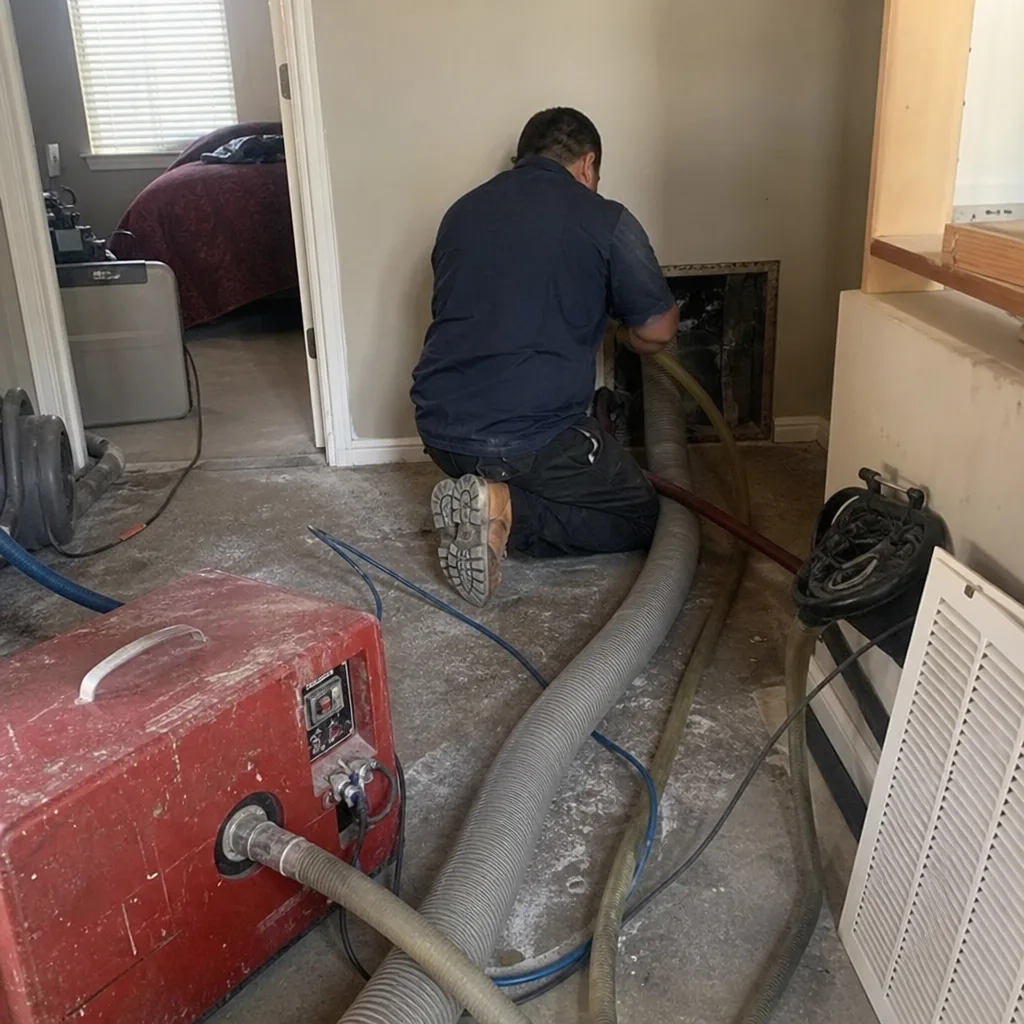
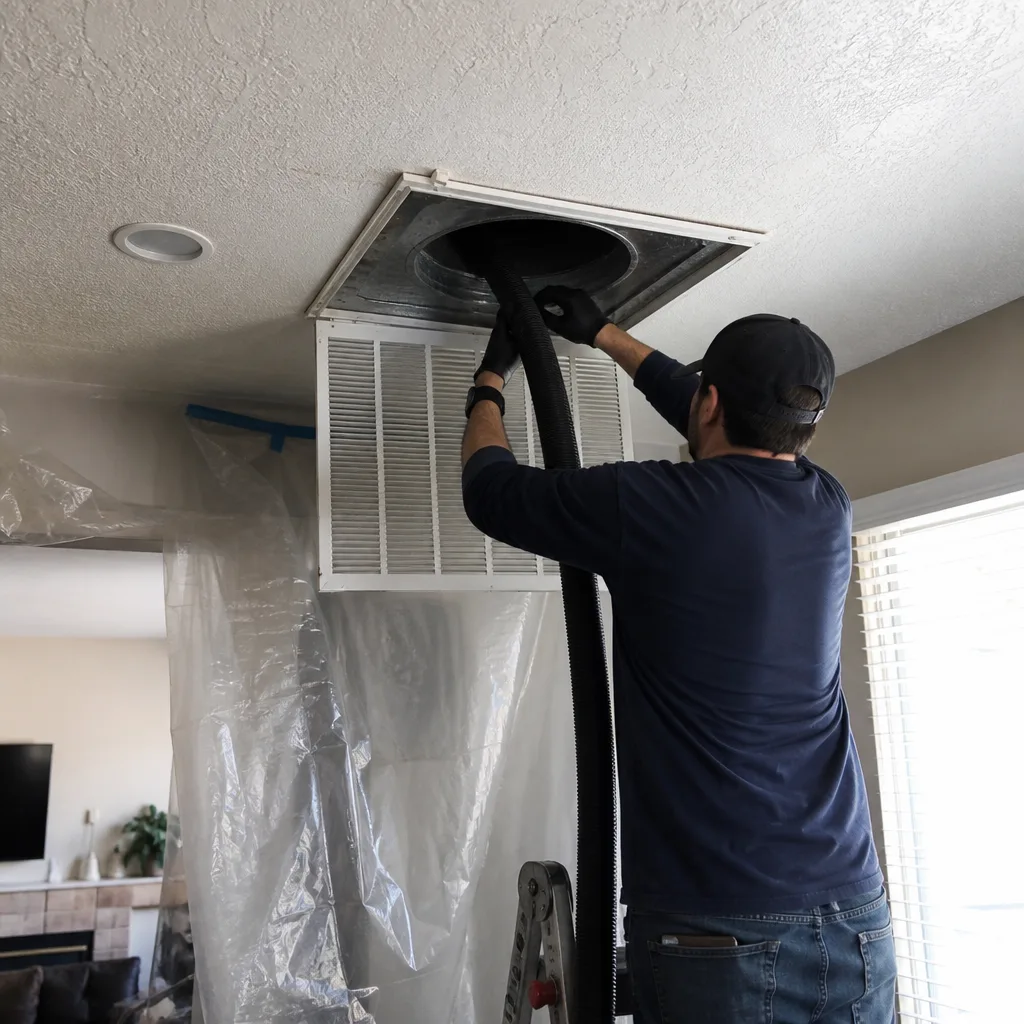
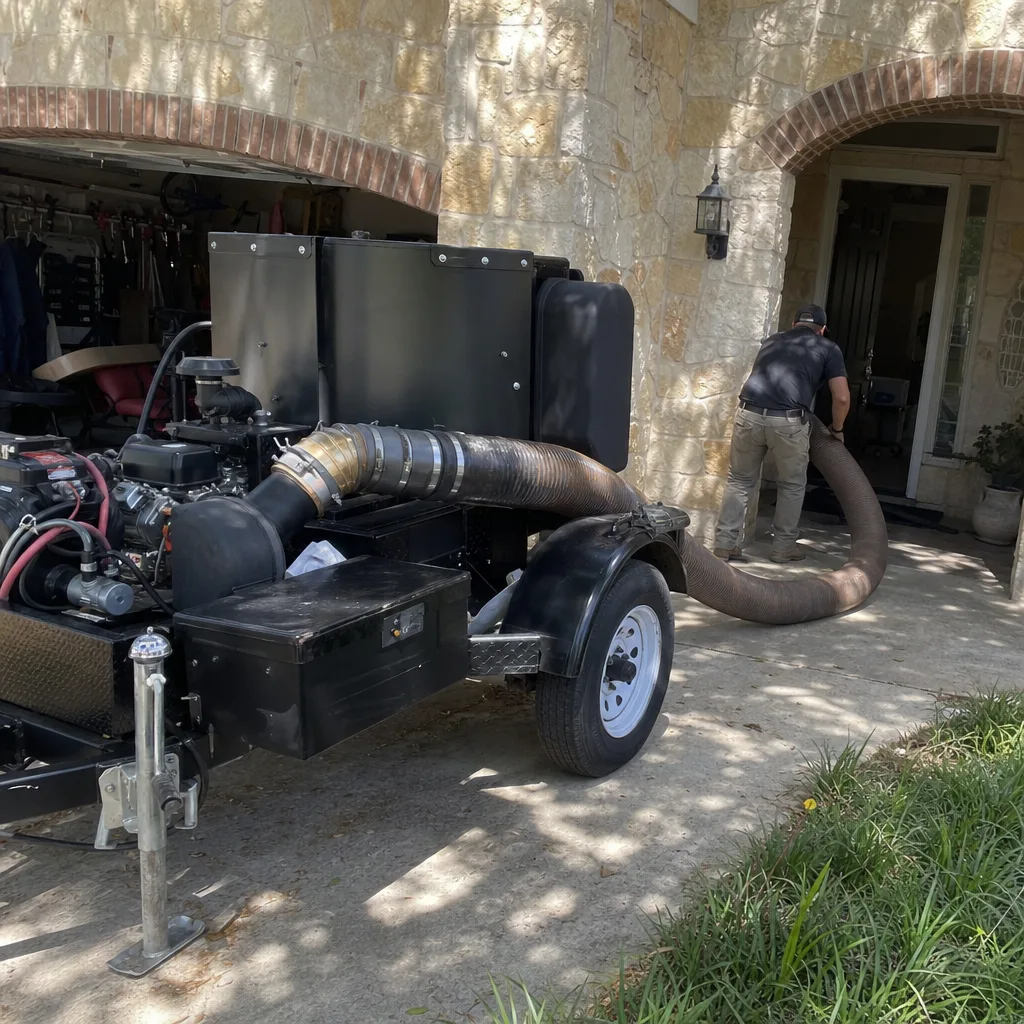
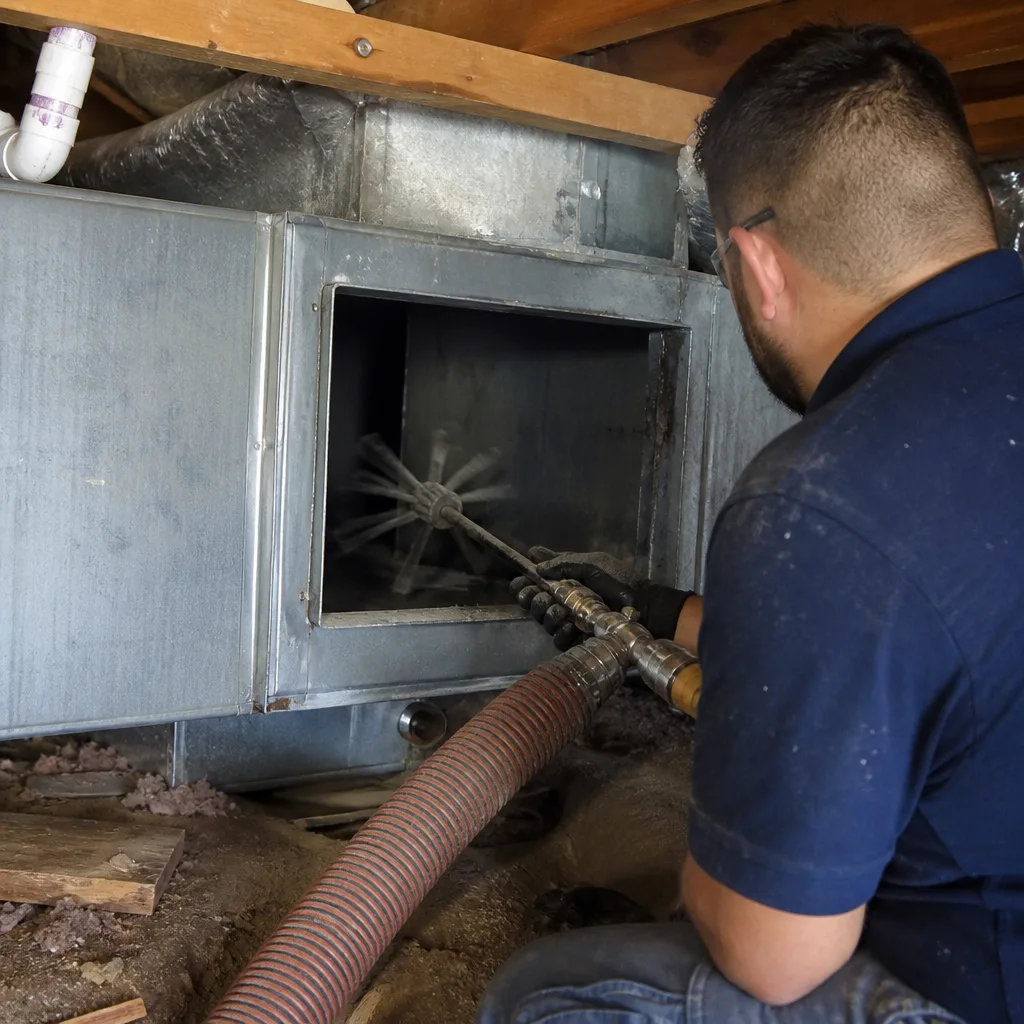
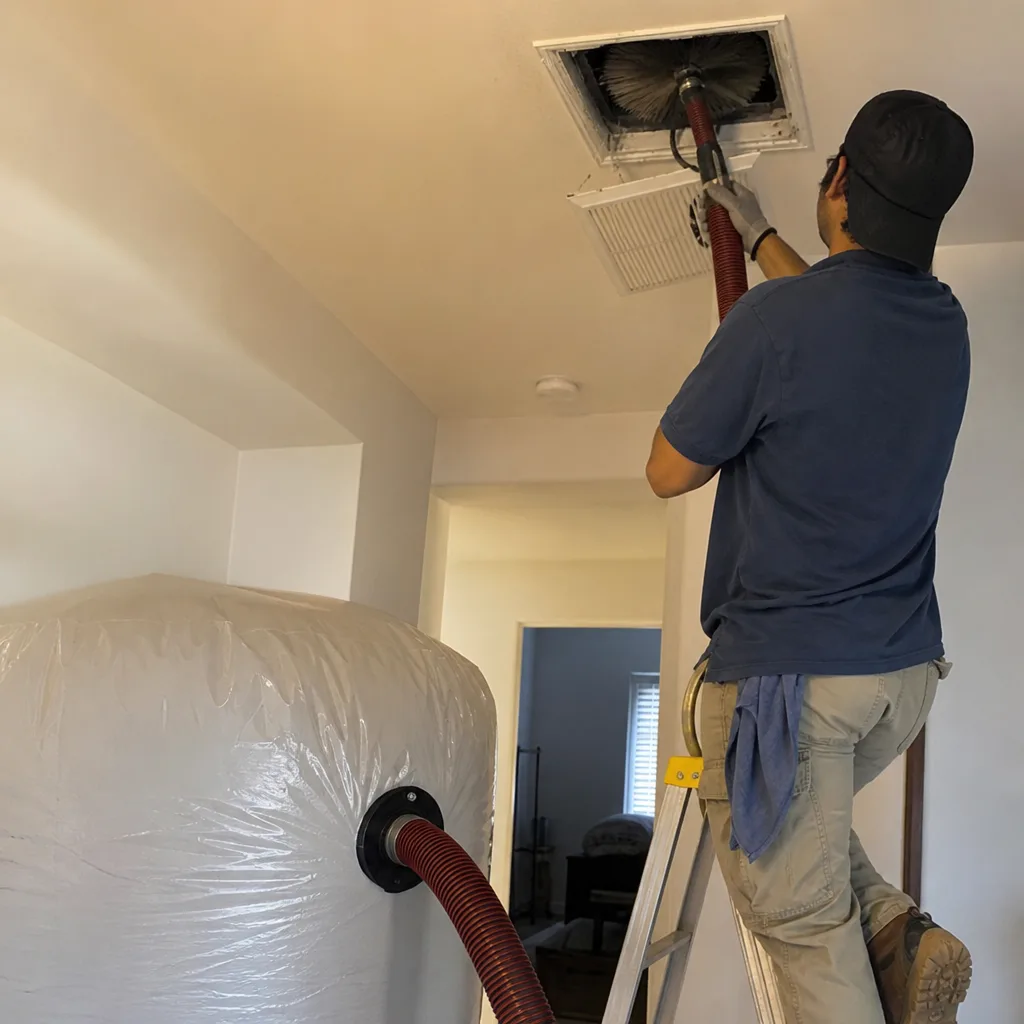
The industry-standard method for duct cleaning is negative-pressure extraction: a large vacuum (typically 5,000+ CFM) is connected to the duct system, creating suction throughout all connected runs. Agitation tools, mechanical brushes, or compressed-air whips dislodge debris, which is immediately drawn into the vacuum. This is the method specified by NADCA (the National Air Duct Cleaners Association) and is distinct from portable vacuum units that simply blow debris around.
Equipment brands you may encounter include Rotobrush (rotary brush systems for residential duct runs), Nikro (negative-pressure vacuums and HEPA filtration), and Abatement Technologies (containment and air scrubbing equipment). These are professional-grade tools that can be verified independently; a contractor should be able to tell you specifically what equipment will be used on your job.
What Equipment Cannot Do
No cleaning equipment restores degraded flex duct liner, seals separated metal duct seams, or repairs a cracked condensate pan. If your inspection reveals these physical defects, cleaning is secondary to repair. At CleanRun, we perform CleanRun Air Duct Cleaning San Antonio home services that include duct repair and sealing where needed, with the same written pricing and photo documentation standards.
Similarly, no cleaning eliminates microbial growth permanently without addressing the moisture source. If your annual inspection shows recurring biofilm or mustiness, the solution is likely condensate pan or drain line repair, not repeated cleaning.
Verifying What Was Actually Done
The final protection against inadequate work is the photo record. Every duct run, before and after, with identifiable features (register location, duct direction changes, specific debris patterns). If a contractor cannot or will not provide this, the work cannot be verified. This is why CleanRun has held the Documented Photo Record practice since its first job in 2013; it’s not an add-on, it’s the minimum standard for accountability.
Common Mistakes to Avoid
- Treating filter changes as duct maintenance. Filters protect equipment. They do not clean ducts, seal leaks, or address condensate problems. A clean filter with dirty ducts is common and dangerous to ignore.
- Accepting “before” photos that show only the register face. A register with dust on it proves nothing about duct conditions. Insist on photos from inside the duct run, showing the duct surface itself, or take your own baseline documentation before the contractor arrives.
- Ignoring seasonal triggers specific to San Antonio. Cedar season, extreme heat summers, and post-attic-work periods are predictable stressors. Failing to inspect after these events means missing early warning signs that would be obvious with a dated checklist.
- Storing records in proprietary formats or contractor portals. If your only copy of before-and-after photos is in a company’s app or website, you lose access if they go out of business or change platforms. Download everything to your own storage.
- Calling for “a cleaning” without specifying scope. “Duct cleaning” can mean anything from register wiping to full system negative-pressure extraction. Define the scope in writing: which runs, which components (plenum, coils, drains), and what deliverables (photos, written report).
- Assuming new homes don’t need inspection. San Antonio’s rapid growth in neighborhoods like Far West Side and near Toyota Manufacturing has produced homes with documented duct installation defects, including disconnected runs in attics and filters installed backwards at final walkthrough. Annual baseline documentation starting in year one protects your warranty claims.
When to Call a Professional
Call a professional when your documentation shows change over time, not just when you notice a smell or symptom. Specific triggers: year-over-year cooling cost increase above 15% with confirmed normal thermostat settings; visible debris or damage inside any duct opening that your quarterly inspection cannot explain; mustiness or biofilm that recurs within 30 days of register cleaning; or any register that has separated from the ceiling or shows significant airflow reduction.
Also call after any attic contractor has worked near your duct runs, even if you see no immediate symptoms. Disturbed connections often leak for months before becoming visible at registers.
CleanRun Air Duct Cleaning San Antonio offers free estimates in San Antonio - call (726) 600-7155. Every estimate includes a written price before any work starts, under Haven Standard Clause 1. We also provide a Free Second Opinion on any written estimate from another contractor; bring their quote and we’ll put our number next to it in writing.
Frequently Asked Questions
Whole-system duct cleaning for a typical San Antonio home ranges from $400 to $900 depending on system size, accessibility, and condition. Homes with multiple air handlers, extensive flex duct in crawl spaces, or severe contamination requiring additional agitation time fall at the higher end. CleanRun delivers a written price before any work starts on every job, with no per-vent add-ons or post-arrival upsells. Call (726) 600-7155 for an exact quote - estimates are free.
The $79-$149 coupon price typically covers register wiping with a portable vacuum, not negative-pressure extraction of the full duct system. The low price gets the truck on your driveway; the upsell happens after arrival. A legitimate whole-system cleaning requires a large negative-pressure vacuum, agitation equipment, and several hours of labor. If a quote seems too low for the described scope, ask specifically: is negative-pressure extraction included for every duct run? Are before-and-after photos provided? Is the price guaranteed in writing before work begins?
Demand a documented photo record of every duct run, before and after, with identifiable features. The photos should show the interior duct surface, not just the register face. At CleanRun, this is standard on every visit, included as a deliverable, not an add-on. If a contractor cannot provide dated, location-specific photos, you cannot verify the work was performed as described.
Most San Antonio homes benefit from professional cleaning every 3 to 5 years, with annual inspections in between. Homes with specific risk factors - cedar pollen sensitivity, recent construction, rodent history, or flex duct older than 15 years - may need more frequent service. The maintenance checklist in this guide is designed to tell you whether your system is trending toward needing service before a fixed calendar date would. Explore our more guides & resources for additional home maintenance insights.
A household vacuum can clean register grilles and a few inches of visible duct opening. It cannot reach the full duct run, create the negative pressure needed to extract settled debris, or safely agitate duct surfaces without damage. More importantly, DIY duct cleaning risks dislodging connections in flex duct, creating leaks that worsen efficiency and indoor air quality. For the duct system itself, professional equipment and training are necessary.
Hard water affects the condensate system, not the ducts directly. Mineral scale in the condensate pan and drain line can cause overflow, which re-contaminates supply ducts with moisture and microbial growth. If your home has a water softener, check that the condensate drain is not connected to the softener discharge, a configuration we’ve found in several San Antonio homes that accelerates drain line clogging. Annual condensate system inspection should be part of your duct maintenance awareness even though it’s technically a plumbing function.
The Bottom Line
A maintenance checklist only works if it produces evidence you can act on. The monthly register checks, quarterly filter inspections, and annual baseline photography in this guide give San Antonio homeowners that evidence: dated, specific, and independent of any contractor’s claims. Pair this documentation with disciplined record keeping, and you transform duct maintenance from a calendar guess into a data-driven decision. When you do hire a professional, you’ll know exactly what changed, when it changed, and what standard the work should meet. That’s the difference between maintaining your home and hoping someone else did.
Written by Tomas Reyes, Owner at CleanRun Air Duct Cleaning San Antonio, serving San Antonio since 2013.