
Last updated September 23, 2026
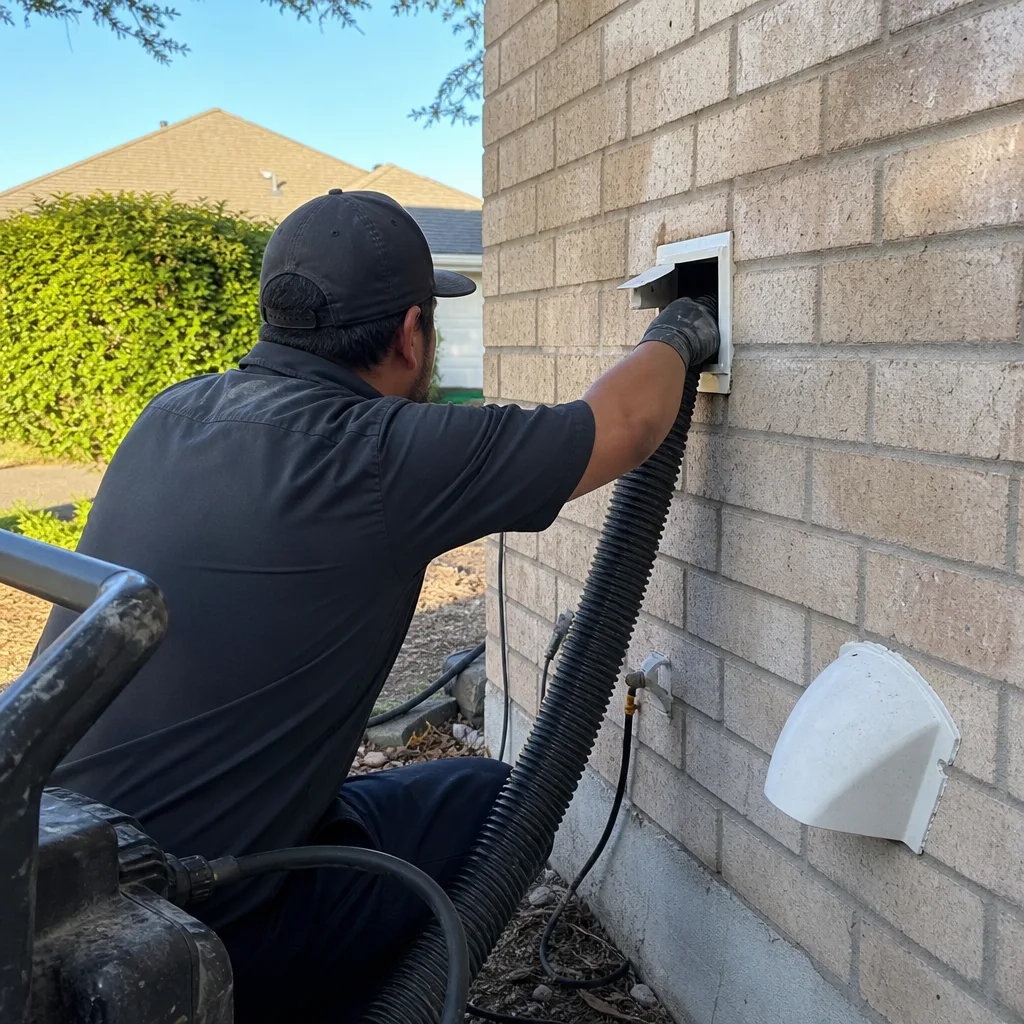
Whole-system duct and dryer vent check with before-and-after photos - you see exactly what came out of your vents
That "$99 whole-house special" is a bait ad - the real number appears once they are in your hallway, or the "clean" is a shop-vac at the register. We photograph the inside of your ducts before and after instead.

 Before
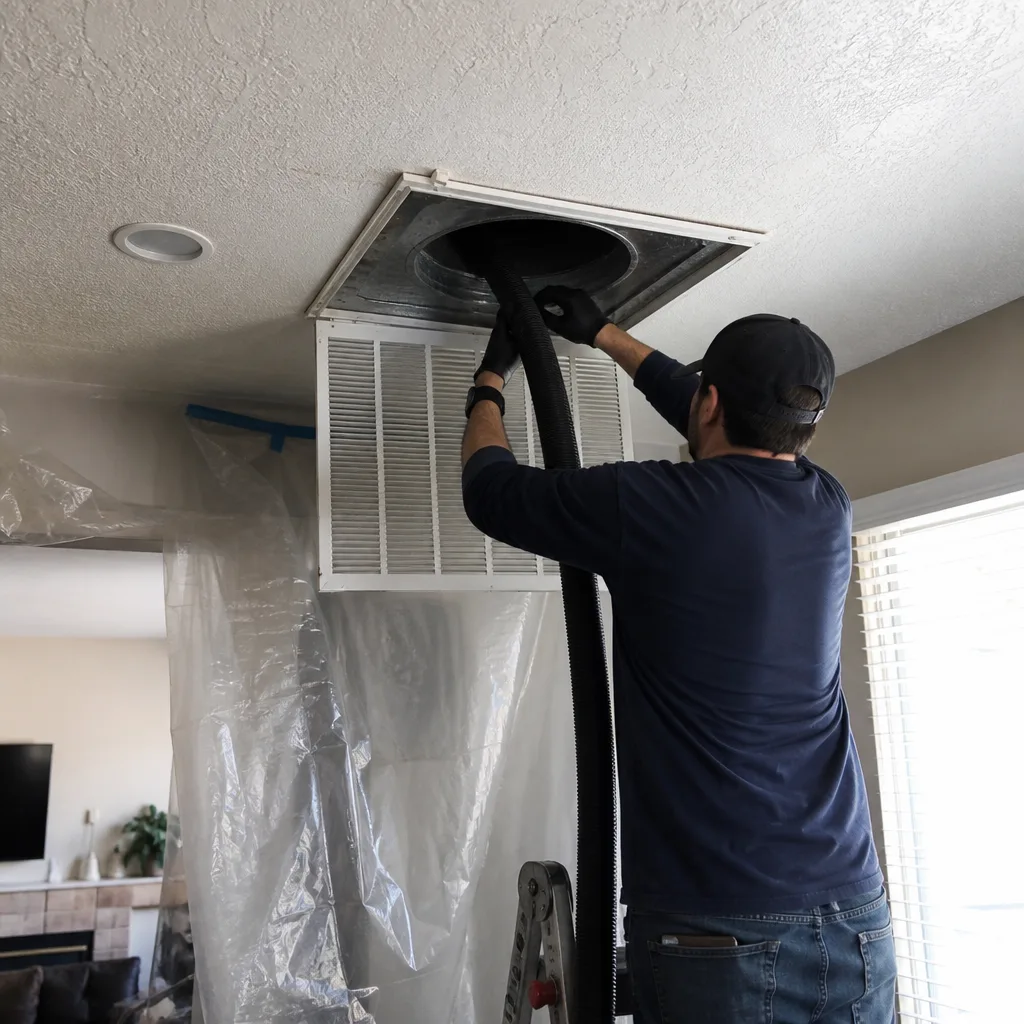 After
After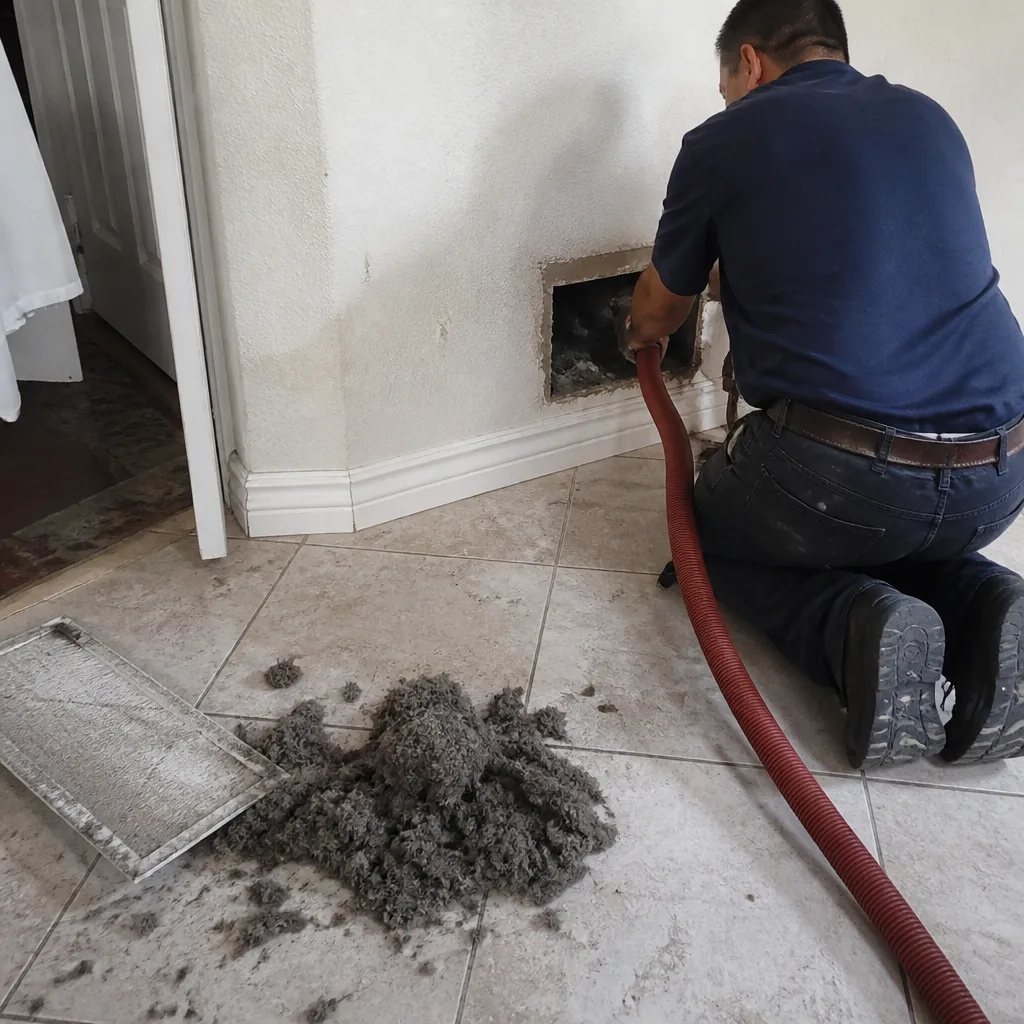 Before
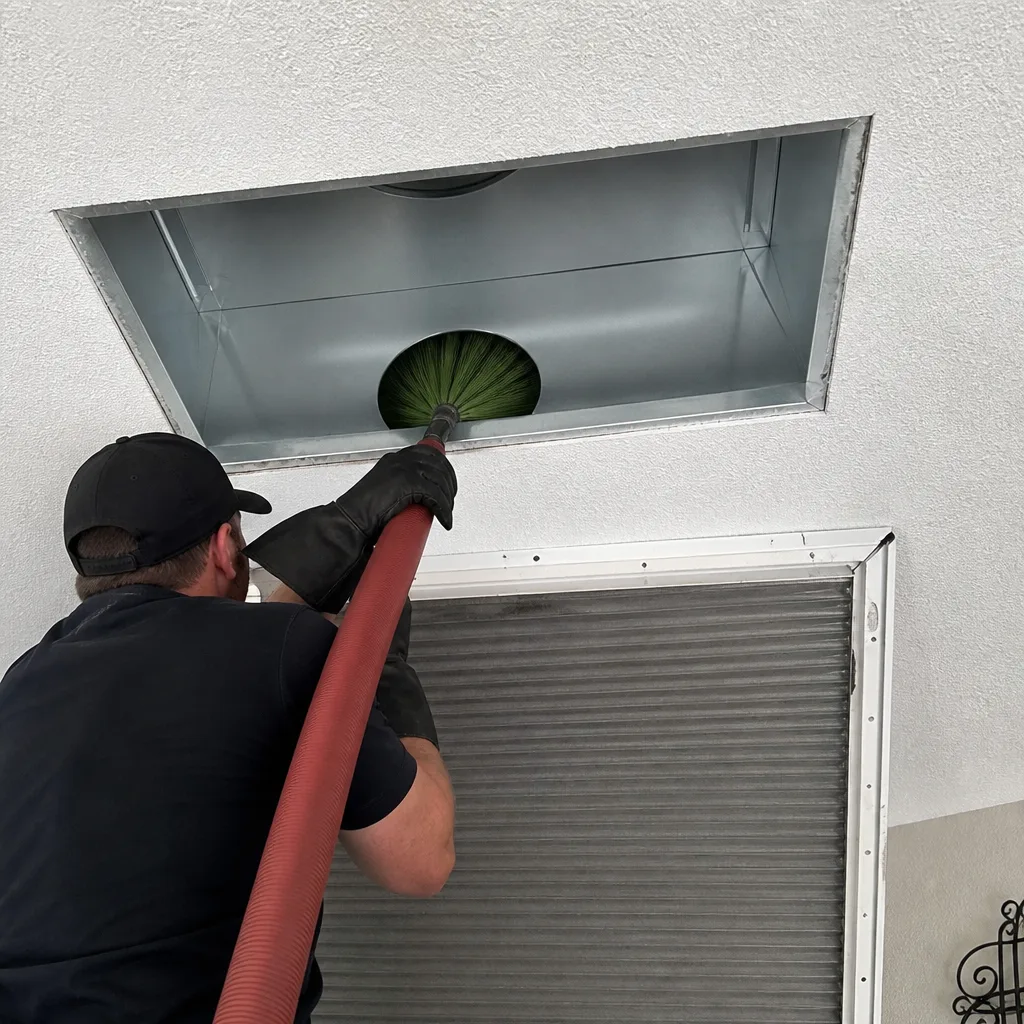 After
After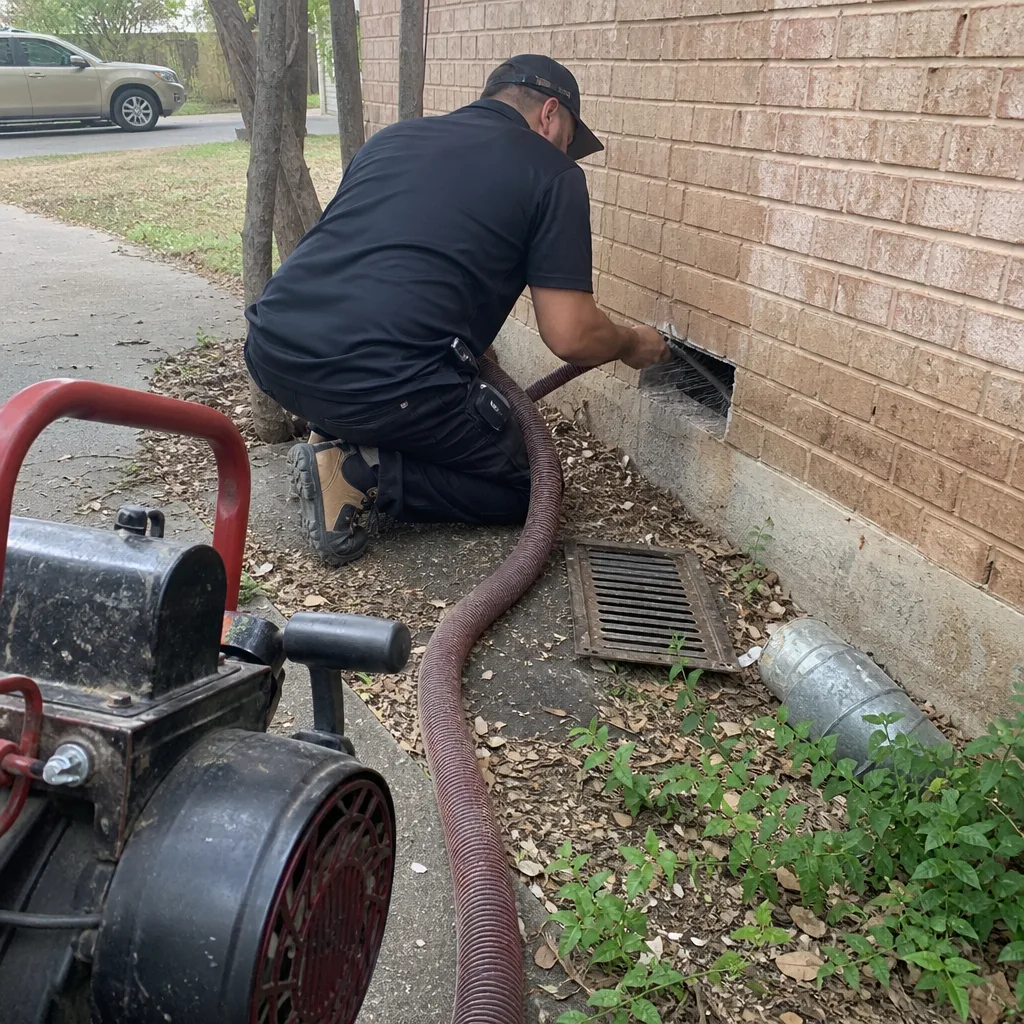 Before
 After
AfterSeasonal Air Duct Cleaning Care for San Antonio: Year-Round Homeowner’s Guide
San Antonio averages more than 220 days per year when the HVAC system runs, compared to the national average of roughly 130. The standard advice to “schedule cleaning every three to five years” was written for a climate that isn’t yours. In this Air Duct Cleaning Maintenance Checklist for San Antonio Homeowners, we’ll rebuild your maintenance schedule around what San Antonio weather actually does to ductwork: the cedar and oak pollen window, the extended cooling season, and the short shoulder periods where timing a professional cleaning produces the most documentable results.
Quick Answer
San Antonio homeowners should treat duct maintenance around three mechanical stress periods rather than four calendar seasons: inspect filters monthly during December-April pollen windows, schedule professional cleaning in October or March to avoid summer backlog pricing, and inspect flex duct connections after extended 100°F+ attic cycles. A whole-system Air Duct Cleaning in San Antonio typically runs $450-$850 for most single-family homes, with documented photo records showing what was actually removed.
Table of Contents
- Why San Antonio’s Climate Breaks the Standard Duct Cleaning Calendar
- The Cedar and Oak Pollen Window: December-April
- The Extended Cooling Season: May-October
- The Shoulder Periods: When Timing Actually Matters
- What 100°F+ Attics Do to Flex Duct (A San Antonio Problem)
- How to Time Duct Cleaning With Your HVAC Maintenance Visit
- What Professional Duct Cleaning Costs in San Antonio
- Common Mistakes to Avoid
- When to Call a Professional
- Frequently Asked Questions
BeforeAfterWhy San Antonio’s Climate Breaks the Standard Duct Cleaning Calendar
The duct cleaning industry publishes generic timelines. Most assume a heating-dominant northern climate with a brief cooling season and minimal pollen load. San Antonio inverts this model entirely.
Here is what actually happens to residential ductwork in Bexar County:
- Extended mechanical runtime: From late May through mid-October, most San Antonio homes run cooling 14-18 hours daily. That pushes 1,500+ cubic feet of air per minute through the duct system for months without interruption. Debris that would settle in a Chicago winter instead stays airborne and impacts at elbows, dampers, and register boots.
- Humidity cycling: San Antonio’s relative humidity swings from 85% morning readings to 40% afternoon lows during summer. Metal ductwork expands and contracts. Flex duct liner breathes moisture in and out. This cycling loosens tape bonds and separates connections in ways that dry climates like Phoenix don’t replicate.
- Pollen concentration: Mountain Cedar (Juniperus ashei) releases pollen from December through February, often peaking in January when homeowners keep windows closed and recirculate interior air. Oak follows March through April. The combined load exceeds what filter-only systems were designed to handle.
- Attic temperature extremes: Unconditioned attics in Alamo Heights, Terrell Hills, and newer Stone Oak builds routinely reach 140°F-150°F in July and August. Flex duct R-values are tested at 75°F. At sustained attic temperatures, the adhesive that bonds liner to spiral wire degrades measurably faster than manufacturer specifications assume.
The result: a San Antonio duct system ages differently than the same equipment in Dallas, Houston, or anywhere the “3-5 year” rule originated. Treating February the same as August is maintaining a calendar, not a house.
The Cedar and Oak Pollen Window: December-April
Mountain Cedar pollen is visually distinctive: yellow-brown, granular, and oily enough to cling to duct liner rather than pass through to the filter. We’ve photographed return plenums in January where the first 18 inches of duct past the filter housing held a visible pollen deposit, even though the filter itself was rated MERV 11 and changed on schedule.
This is what we recommend for the San Antonio pollen window:
- Inspect the return filter weekly from mid-December through February. Not monthly - weekly. Cedar pollen loads can clog a standard 1-inch pleated filter in 10-14 days during peak release. A clogged filter increases static pressure, which pulls unfiltered air through gaps in the filter rack and deposits pollen directly into the return duct.
- Upgrade to a 4-inch media filter or MERV 13 pleated if your system allows. Many San Antonio homes built 2015-2020 have filter racks sized for 1-inch filters with insufficient surface area for cedar season. Check the filter housing for a 4-inch or 5-inch upgrade kit - Honeywell and Aprilaire both manufacture retrofit media cabinets that install in the return plenum (the main distribution box where return air enters the air handler).
- Run the fan continuously during peak pollen days. This sounds counterintuitive, but constant filtration outperforms intermittent cycling when outdoor pollen counts exceed 5,000 grains per cubic meter. The filter captures more total particles per day, even though the rate per pass stays constant.
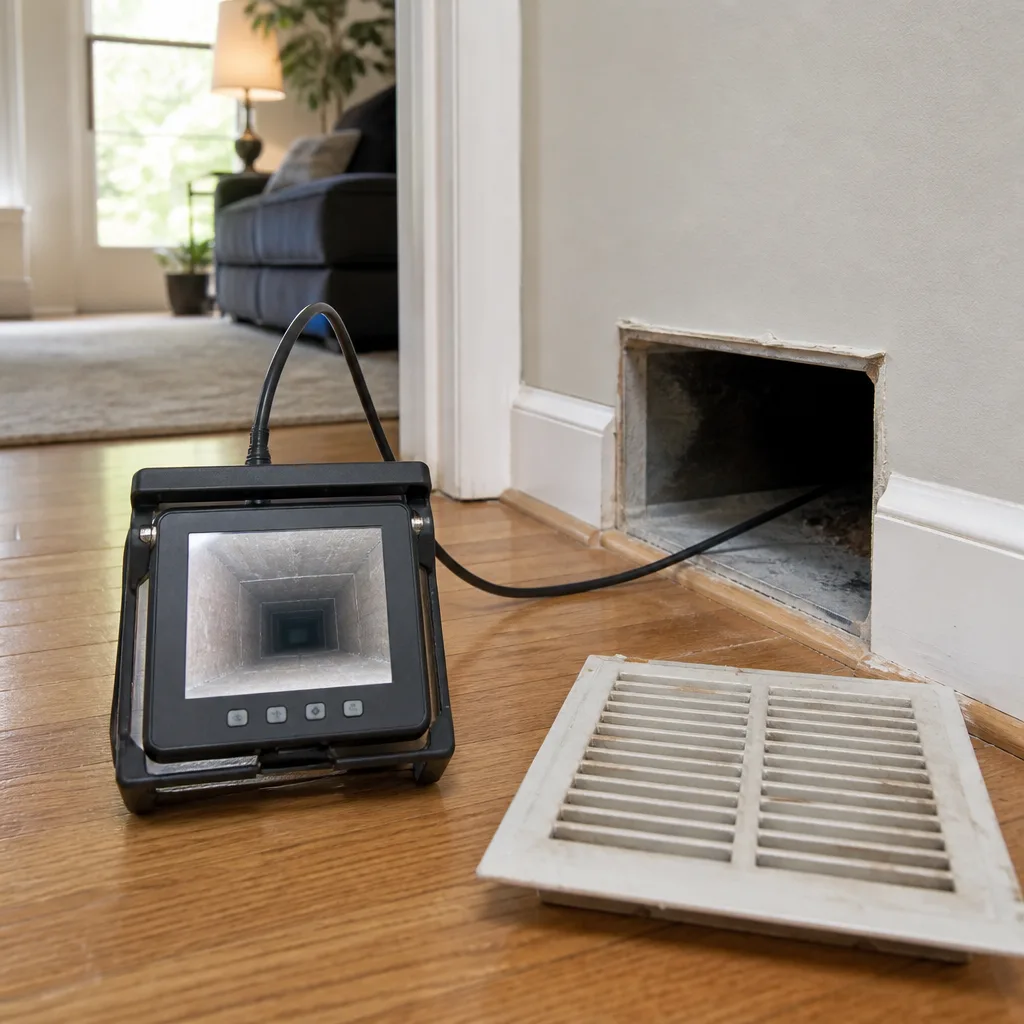
- Schedule a post-cedar inspection for late February or early March. This is not a full cleaning - it’s a camera inspection of the return trunk and first few duct runs. We charge for this as a standalone service, and the photo record shows whether pollen penetrated deep enough to warrant extraction or whether filter replacement was sufficient.
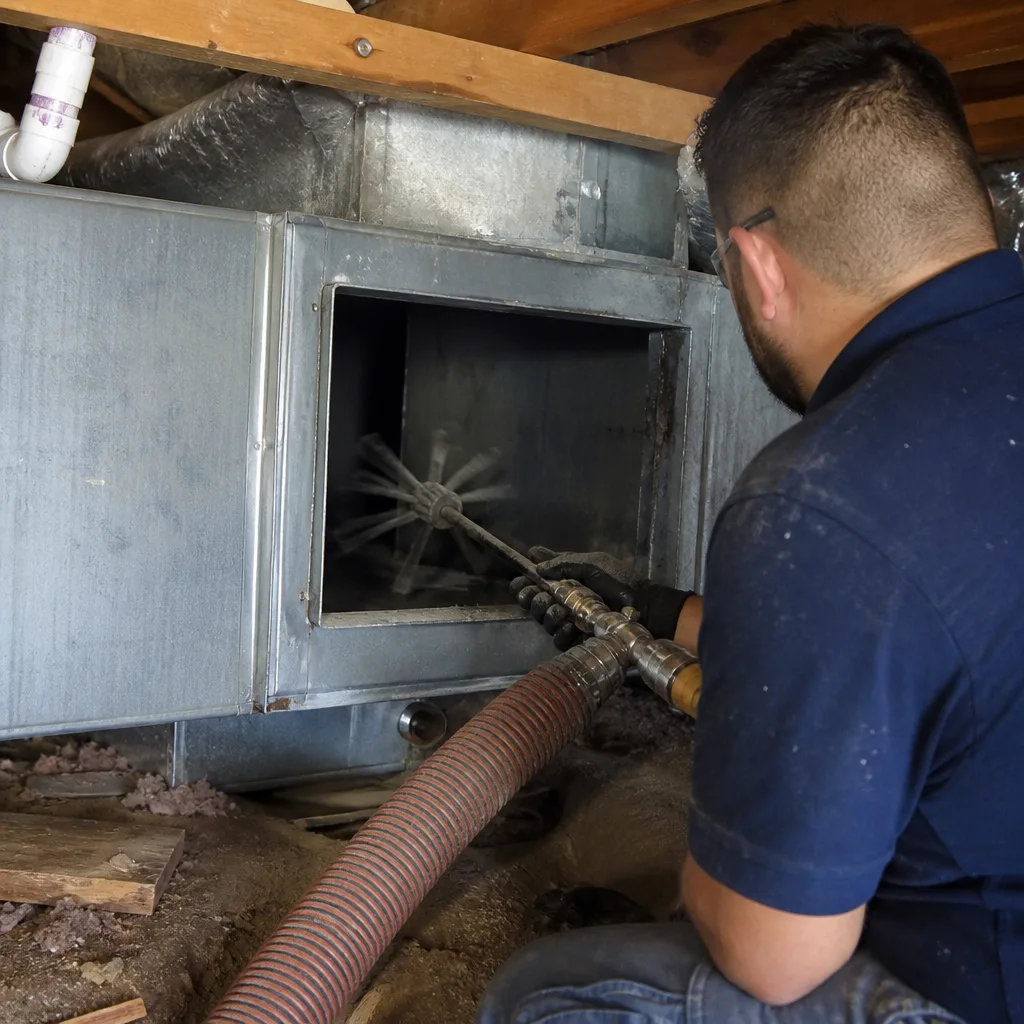
In Terrell Hills and Alamo Heights, where mature oak canopies surround homes built before 1980, we’ve found that oak pollen combines with cedar residue to form a packed layer at duct elbows. The camera shows it as a tan mat, not loose dust. That mat requires mechanical agitation - a Rotobrush contact cleaning system or negative-pressure extraction with powered whipping - not just vacuum suction.
The key distinction: if your February filter was heavy with yellow-brown dust and you experienced cedar fever symptoms indoors, inspect before you assume replacement was enough.
The Extended Cooling Season: May-October
San Antonio’s cooling season runs 160-180 days most years. From late June through early September, daily highs exceed 95°F more often than not. The mechanical stress on ductwork during this period is specific and under-discussed.
Condensate and microbial growth: When supply ducts in an unconditioned attic drop air to 55°F-60°F, the exterior duct surface can fall below the dew point of attic air. In San Antonio, where attic humidity often sits at 30%-50% even in summer, this produces intermittent condensation on metal trunk lines and register boots. We’ve photographed rust staining on galvanized trunk lines in homes near the Medical Center and Leon Valley where this condensation went unaddressed for multiple seasons. The rust itself is not a health hazard, but it indicates sustained moisture presence that can support microbial growth in adjacent insulation or liner.
Filter loading from constant runtime: A system running 16 hours daily loads a filter 2.3 times faster than one running 7 hours. Many San Antonio homeowners change filters on a 90-day schedule that works fine in October but fails by July. Check monthly during peak summer.
Negative pressure from closed doors: In newer San Antonio homes with open floor plans and bedroom wings, closed bedroom doors during peak cooling create return air imbalances. The master suite in a 2018-built home in Cibolo Canyons or Rogers Ranch can run 2-3 pascals negative relative to the hallway. That negative pressure pulls attic air through any duct leakage, introducing heat, humidity, and particulate directly into the conditioned space. Summer is when this leakage matters most, because the attic air being pulled in is 130°F+, not 85°F.
What to do during cooling season:
- Keep filters on a 30-45 day inspection cycle, not 90.
- Verify that all supply and return registers are fully open - closing registers to “save energy” increases static pressure and duct leakage.
- Listen for whistling at register boots or the filter rack; that sound is air moving through a gap that should be sealed.
- Schedule any needed duct repair or sealing before peak summer, not during it. Attic work in July is more expensive, harder to staff, and produces poorer adhesive cure on mastic and tape.
We do not recommend scheduling full duct cleaning in June, July, or August unless there is a specific contamination event (construction dust, rodent intrusion, visible mold). The summer backlog in San Antonio means longer lead times, and opening the duct system during peak cooling load creates temporary efficiency loss while registers are off.
The Shoulder Periods: When Timing Actually Matters
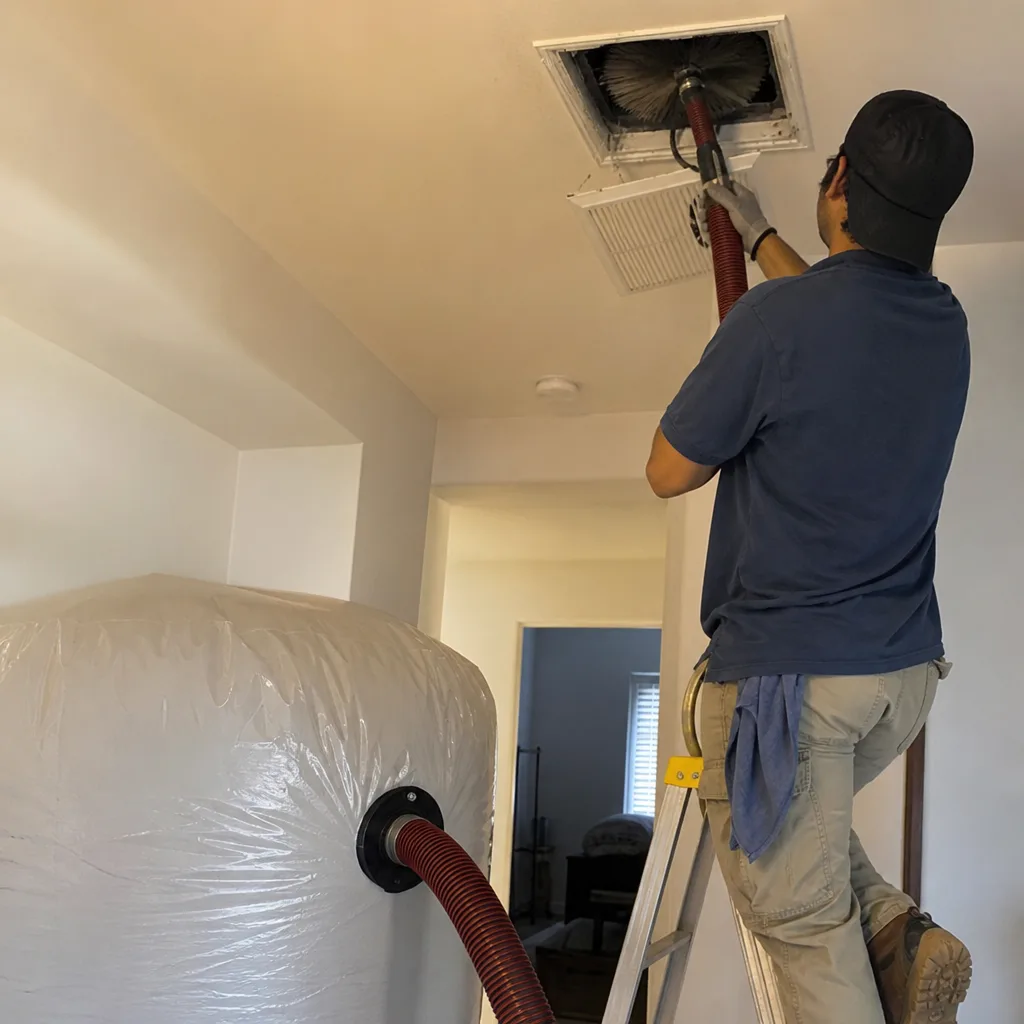
October and March are the two months that produce the most documentable before-and-after results for professional duct cleaning in San Antonio. Here’s why the timing matters mechanically and economically.
October advantages:
- The cooling season has deposited a full summer’s debris load. Pollen from spring, dust from summer drought conditions, and any microbial growth from condensation events are all present and photographable.
- Attic temperatures have dropped to 90°F-100°F, making technician access safer and adhesive cure times predictable for any needed sealing work.
- HVAC contractors are less booked with emergency no-cool calls, so coordinating a duct cleaning with your fall maintenance visit is logistically easier.
- Pricing pressure is lower. Summer backlog clears, and most San Antonio homeowners are not yet thinking about heating preparation.
March advantages:
- Cedar season has ended. The full pollen load is present in the system, but summer humidity has not yet begun reactivating any residual deposits.
- Attic temperatures are moderate, typically 70°F-85°F.
- Pre-summer cleaning removes debris before it becomes a continuous recirculation source during 160 days of cooling.
- Any flex duct damage from summer heat cycling can be identified before the next stress period begins.
We’ve tracked our San Antonio job records since 2013. October and March appointments show measurably higher debris removal per system - we document this in the photo record - and lower callback rates for residual odors or airflow complaints. The debris is present and removable, not yet baked into liner or dispersed so thoroughly that extraction is incomplete.
For homeowners in neighborhoods with mature tree canopy - Monte Vista, Olmos Park, parts of King William - March has a secondary advantage: oak pollen is present but not yet at peak. Cleaning before peak removes the prior year’s accumulation and gives the system a clean start for the heaviest loading.
What 100°F+ Attics Do to Flex Duct (A San Antonio Problem)
San Antonio shares summer temperatures with Phoenix, but not summer humidity patterns. That difference matters for flex duct longevity.
Flex duct consists of a plastic inner liner, fiberglass insulation layer, and outer vapor barrier jacket. The inner liner is typically polyethylene or metallized polyester, bonded to a spiral wire helix that maintains shape. Manufacturer specifications for liner adhesion are tested at 75°F ambient.
In a San Antonio attic, the daily cycle looks like this:
- 6:00 AM: Attic temperature 85°F, humidity 70%. Duct surface near dew point.
- 12:00 PM: Attic temperature 115°F, humidity 35%. Liner adhesive softens.
- 4:00 PM: Attic temperature 140°F+, humidity 25%. Adhesive at or above design limit.
- 10:00 PM: Attic temperature 95°F, humidity 50%. Adhesive re-cools, but not to original bond strength.
Each cycle produces micro-degradation. After 120+ days of this cycling annually, the adhesive bond between liner and spiral wire weakens. The liner sags between wire rings. Sagging creates low-velocity zones where debris accumulates. It also increases air turbulence, which raises static pressure and noise.
The humidity component is what distinguishes San Antonio from Phoenix. In Phoenix, sustained dry heat produces different failure modes - liner embrittlement, not adhesive fatigue. San Antonio’s humidity cycling means the liner is simultaneously softening from heat and breathing moisture in and out. That combination produces connection loosening at collars and register boots that we’ve documented repeatedly in 10-15 year old homes in Shavano Park and Helotes.
What to look for:
- Visible sagging in exposed flex duct runs, especially at mid-span between supports.
- Airflow reduction at registers farthest from the air handler - often the master bedroom in a two-story San Antonio home.
- Register boots that have pulled 1/2 inch or more from the ceiling drywall, indicating duct weight from sagging or disconnected inner liner.
- Unexplained dust accumulation around ceiling registers, which indicates leakage at the boot-to-duct connection.
We inspect flex duct condition as part of every Air Duct Cleaning in San Antonio. The photo record includes any sagging, connection gaps, or liner degradation we find. In many cases, cleaning reveals damage that was hidden by debris accumulation - the debris was actually supporting a sagging liner. Removing it exposes the underlying condition, which we document and quote for repair under Haven Standard Clause 1: written price before any work starts.
How to Time Duct Cleaning With Your HVAC Maintenance Visit
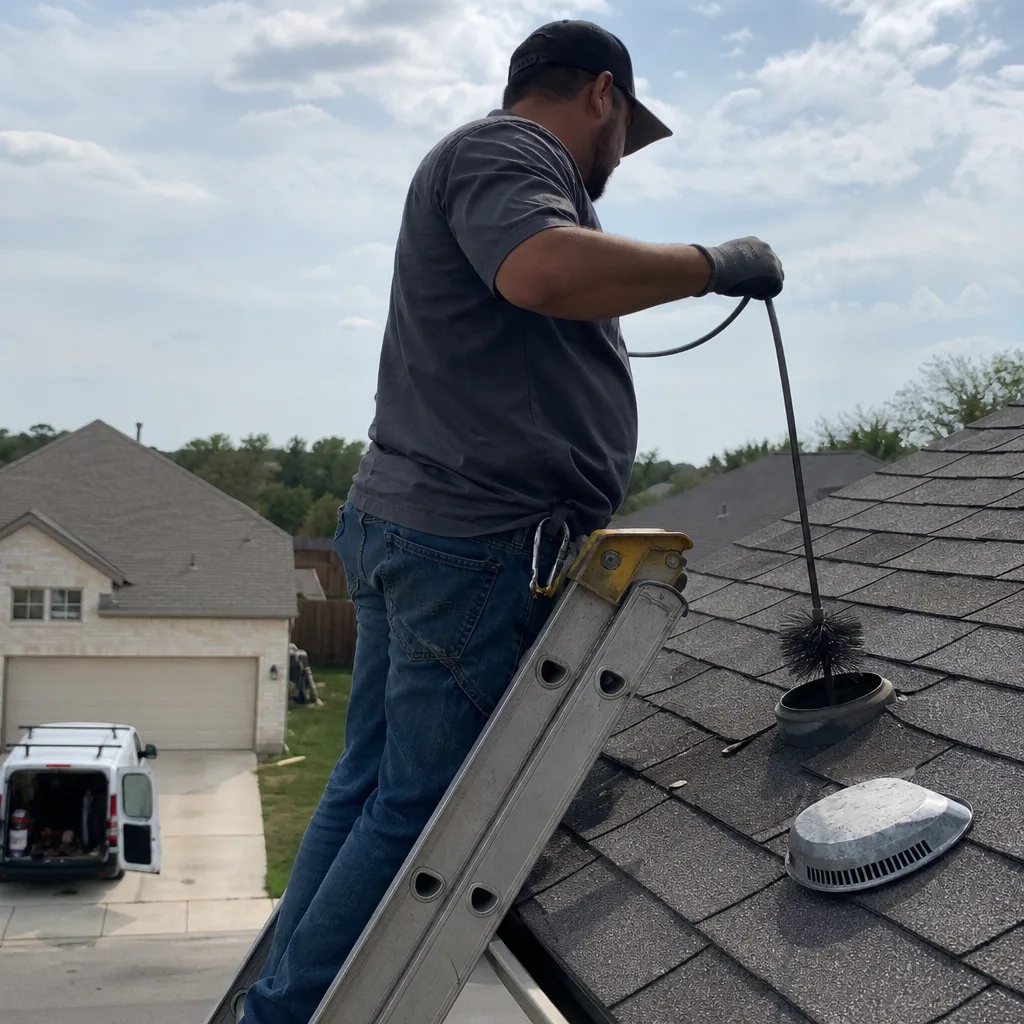
Most San Antonio HVAC contractors recommend bi-annual maintenance: a cooling check in spring, a heating check in fall. Duct cleaning is a separate service with a different purpose, but the timing can reinforce or duplicate depending on sequence.
The wrong sequence: HVAC technician cleans the evaporator coil and blower assembly, then duct cleaners arrive the following week and disturb debris that re-coils the components. We’ve seen this in customer photo records - a clean coil photographed during maintenance, then a debris-coated coil visible in our pre-cleaning system photo taken days later.
The right sequence:
- Schedule duct cleaning first, in October or March.
- Request that the cleaning crew photograph the evaporator coil and blower before and after, as part of the documented photo record. CleanRun includes this on every job - the coil condition is part of the system record.
- Schedule HVAC maintenance 2-4 weeks after duct cleaning. The technician then services a system with clean ducts, clean coil, and verified airflow. Any refrigerant charge or airflow adjustment is made on a known-clean baseline.
- Use the HVAC maintenance visit to verify that duct cleaning produced measurable static pressure improvement. A manometer reading at the air handler, compared to pre-cleaning, confirms extraction effectiveness.
This sequence also prevents the most common scheduling conflict: HVAC contractors in San Antonio book heavily in April-May and September-October. Duct cleaning companies see the same patterns. Scheduling duct cleaning in early October and HVAC maintenance in late October spreads the appointments and avoids the “everything in one week” rush that produces rushed work.
For homeowners with HVAC Cleaning in San Antonio as a separate consideration: coil and blower cleaning is part of HVAC maintenance, not duct cleaning. Duct cleaning addresses the distribution network (trunk lines, branch ducts, registers). HVAC cleaning addresses the air handler components. Both are necessary, neither substitutes for the other, and the photo record from each should show distinct before-and-after documentation.
What Professional Duct Cleaning Costs in San Antonio
Whole-system air duct cleaning in San Antonio typically costs $450-$850 for single-family homes under 3,500 square feet. See our Air Duct Cleaning Cost Breakdown: The San Antonio Homeowner’s Reference for 2026 for detailed pricing factors, with most jobs falling in the $550-$700 range. This assumes a standard forced-air system with 12-20 register openings, accessible attic or crawl space, and no significant contamination requiring specialized remediation.
What drives price within this range:
| Factor | Lower End ($450-$550) | Higher End ($700-$850) |
|---|---|---|
| Home size / duct complexity | 1,200-2,000 sq ft, single story, slab foundation | 2,500-3,500 sq ft, two story, pier-and-beam with crawl space |
| System type | Single HVAC unit, standard metal trunk with flex branches | Dual-zone system, zoned dampers, or extensive metal ductwork |
| Access difficulty | Attic access via pull-down stairs, ductwork exposed | Attic access limited, ductwork buried in insulation, or crawl space work required |
| Contamination level | Standard dust and debris accumulation | Construction dust, rodent debris, or visible mold requiring pre-treatment |
| Additional services | Cleaning only | Plus duct sealing, register boot repair, or sanitizer application |
CleanRun quotes one flat price per system, agreed in writing before work starts, under Haven Standard Clause 1. We do not quote per-vent pricing, which incentivizes crews to rush individual openings rather than clean the complete system. The written scope specifies:
- Number of supply and return registers to be cleaned
- Whether trunk lines are metal or flex (different cleaning methods)
- Whether the plenum and coil compartment are included
- Whether sanitizer or sealant application is included
- Delivery format of the documented photo record
The $79-$129 coupon prices advertised by some San Antonio operators cover a vacuum hose inserted at one or two registers for 20-30 minutes. We’ve photographed the aftermath: debris undisturbed past the first 6 feet of branch duct, trunk lines untouched, and no photo record provided. The customer has no evidence of what was or wasn’t done.
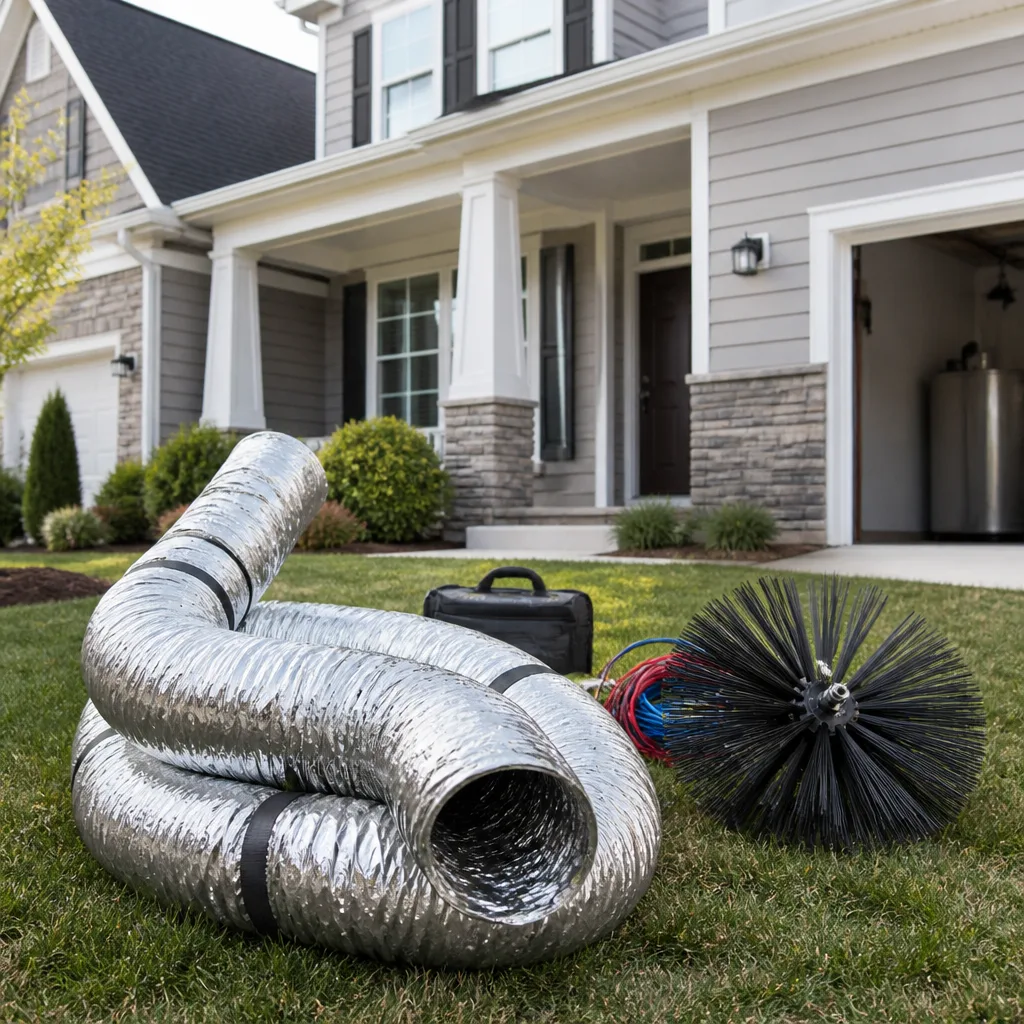
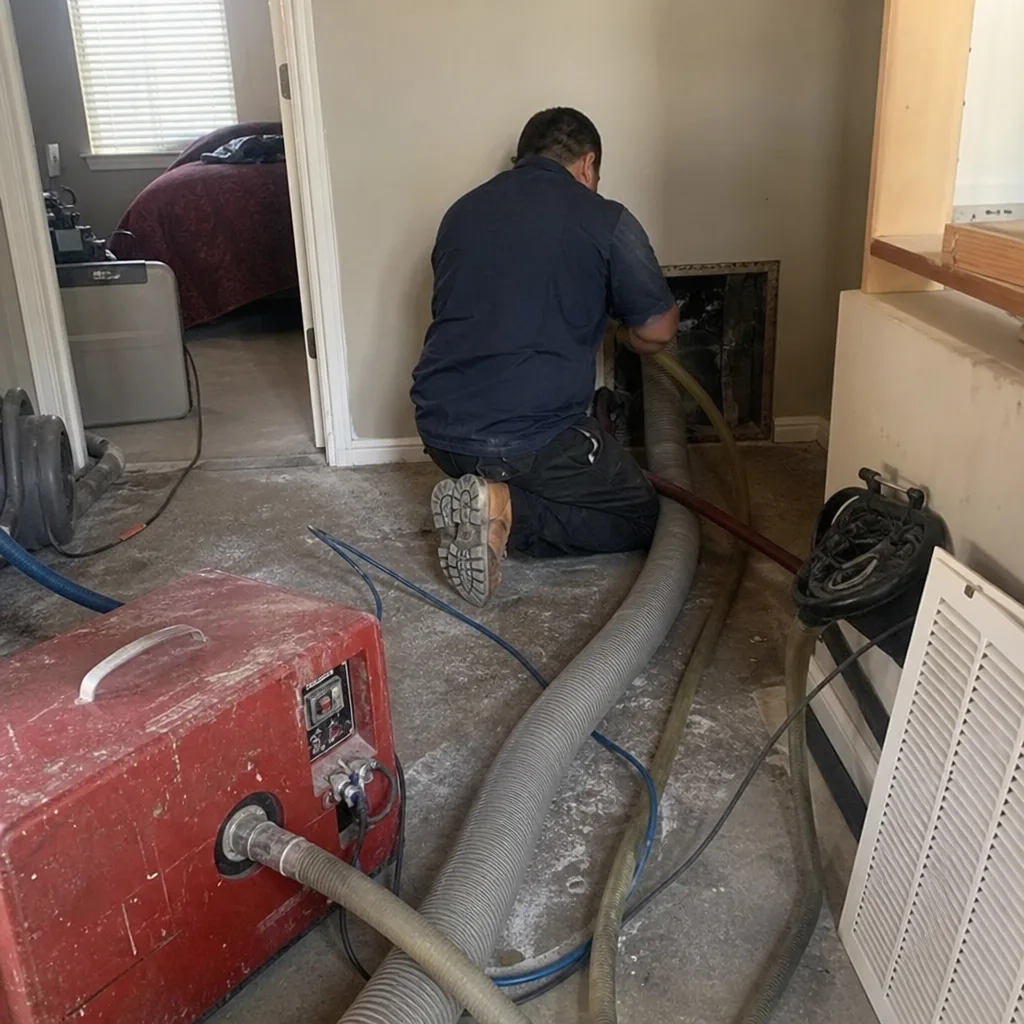
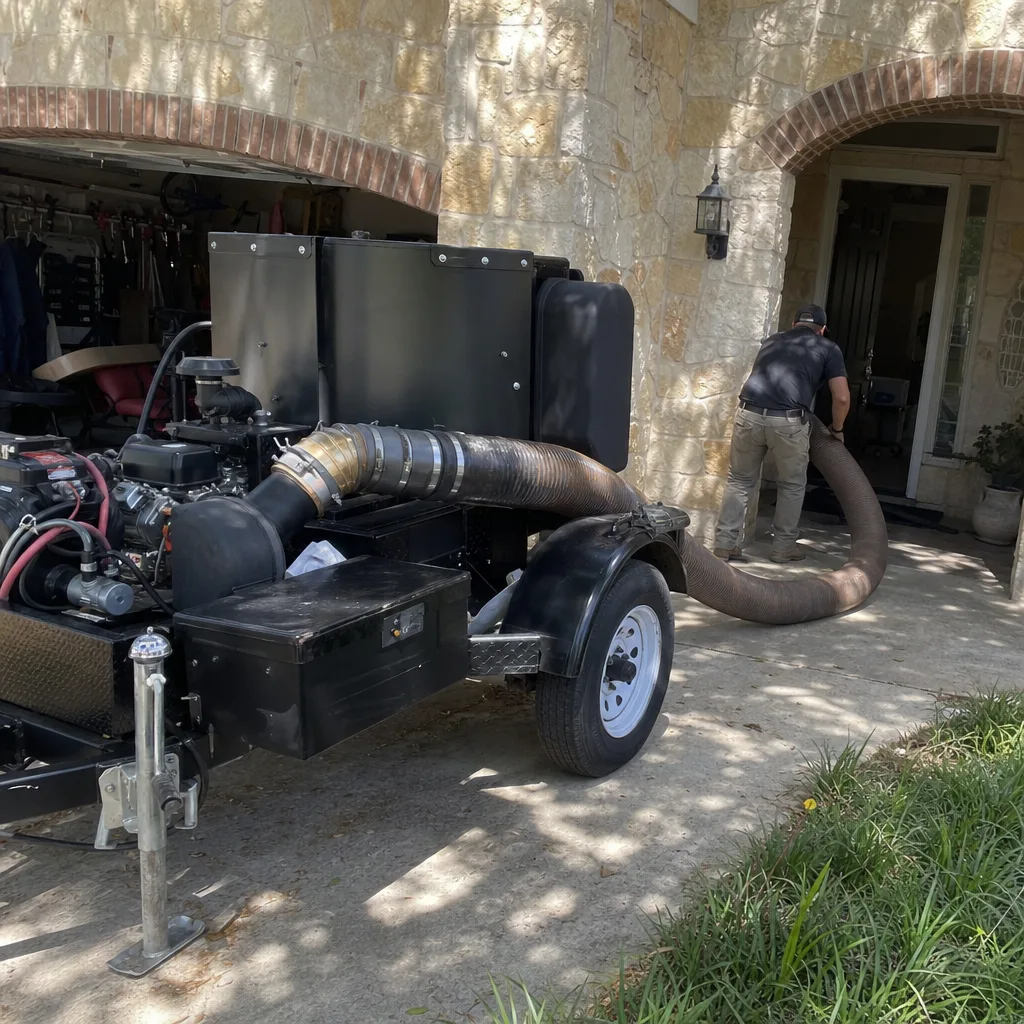
Our equipment roster includes Rotobrush contact cleaning systems for flex duct, Nikro and Abatement Technologies negative-pressure extractors for metal trunk lines, and HEPA-filtered collection. We name these brands so customers can verify specifications independently - professional-grade equipment produces documentable results that shop-vac operators cannot replicate.
Common Mistakes to Avoid
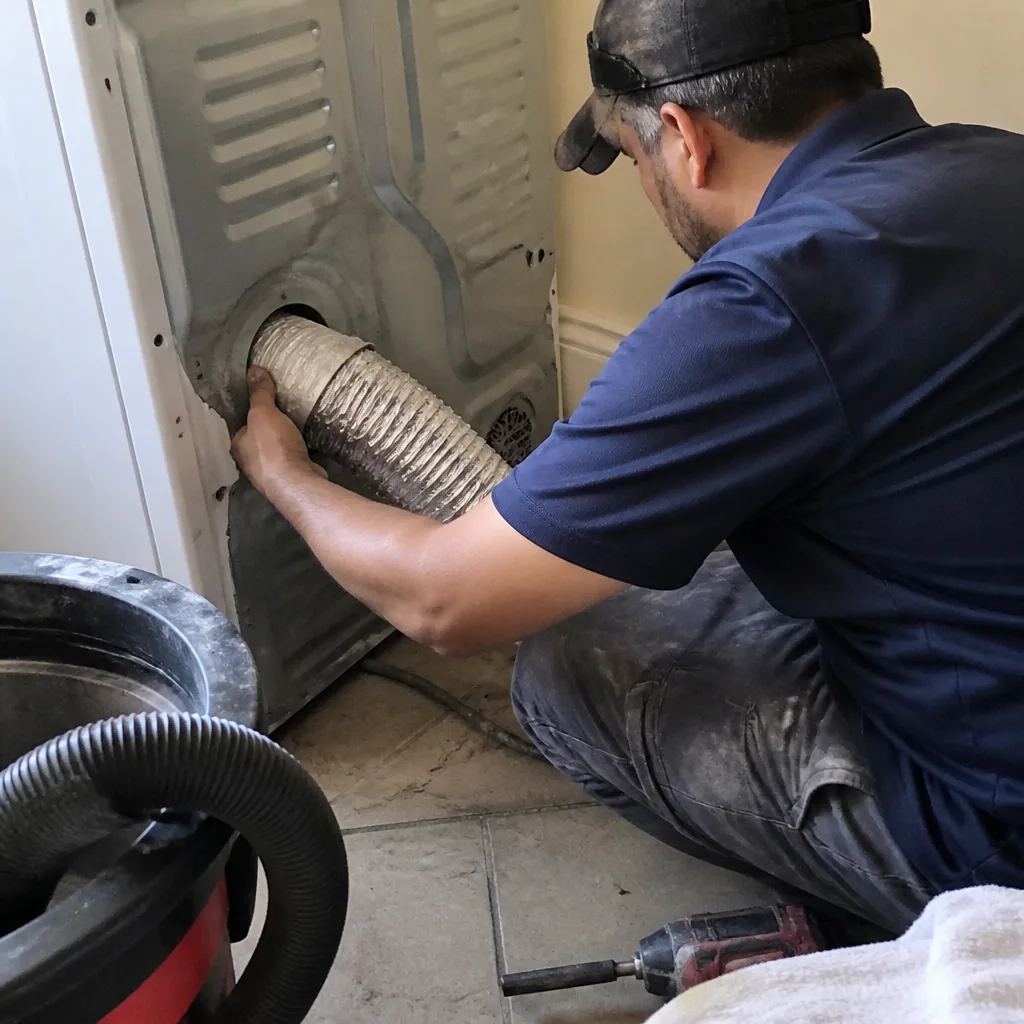
- Waiting for a “musty smell” to schedule cleaning. By the time odor is detectable at registers, microbial growth is established in liner or insulation. San Antonio’s humidity makes this progression faster than in drier climates. Schedule on debris load and runtime hours, not odor alone.
- Changing the filter but never inspecting the filter rack. A high-MERV filter in a leaky rack pulls unfiltered air around the edges. In Alamo Ranch and other neighborhoods with new construction settling, filter racks often gap 1/4 inch or more at the sides. That gap bypasses the filter entirely.
- Closing bedroom registers to “force air” to other rooms. This increases static pressure, which increases duct leakage proportionally. In summer, it also pulls 140°F attic air into the return system through any gaps. The energy savings are negative.
- Assuming new construction means clean ducts. We’ve documented construction debris - drywall dust, wood shavings, insulation scraps - in duct systems of San Antonio homes less than two years old. Builder cleanup typically does not include duct extraction, and the debris from finish carpentry and drywall sanding is substantial.
- Scheduling duct cleaning during peak summer without contingency. If the crew discovers disconnected ductwork or a failed liner that requires repair, opening the system in July creates a no-cool period. Shoulder season scheduling allows time for repair without emergency temporary measures.
- Accepting a verbal price or phone estimate without written scope. The bait-and-switch structure of this industry depends on quotes given without seeing the system. Haven Standard Clause 1 requires written price before work starts; any operator who won’t commit in writing should be declined.
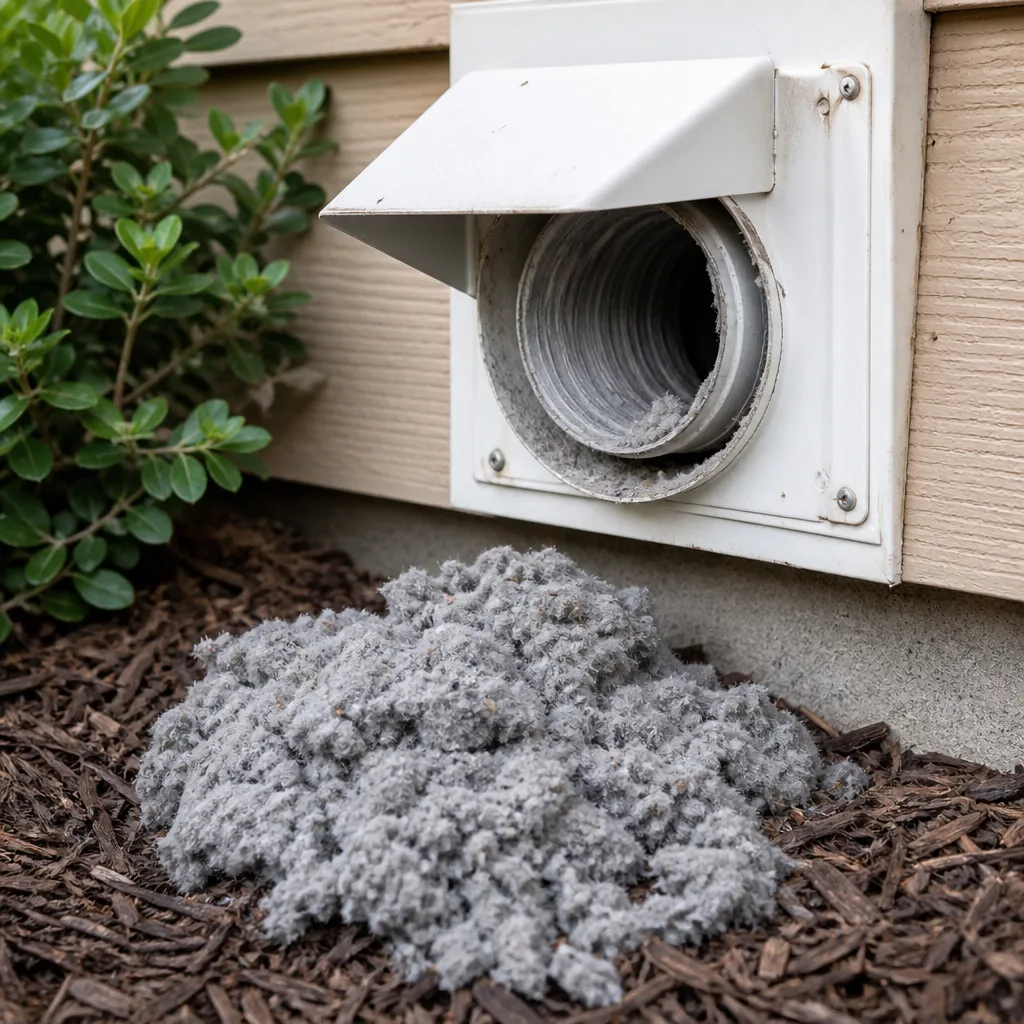
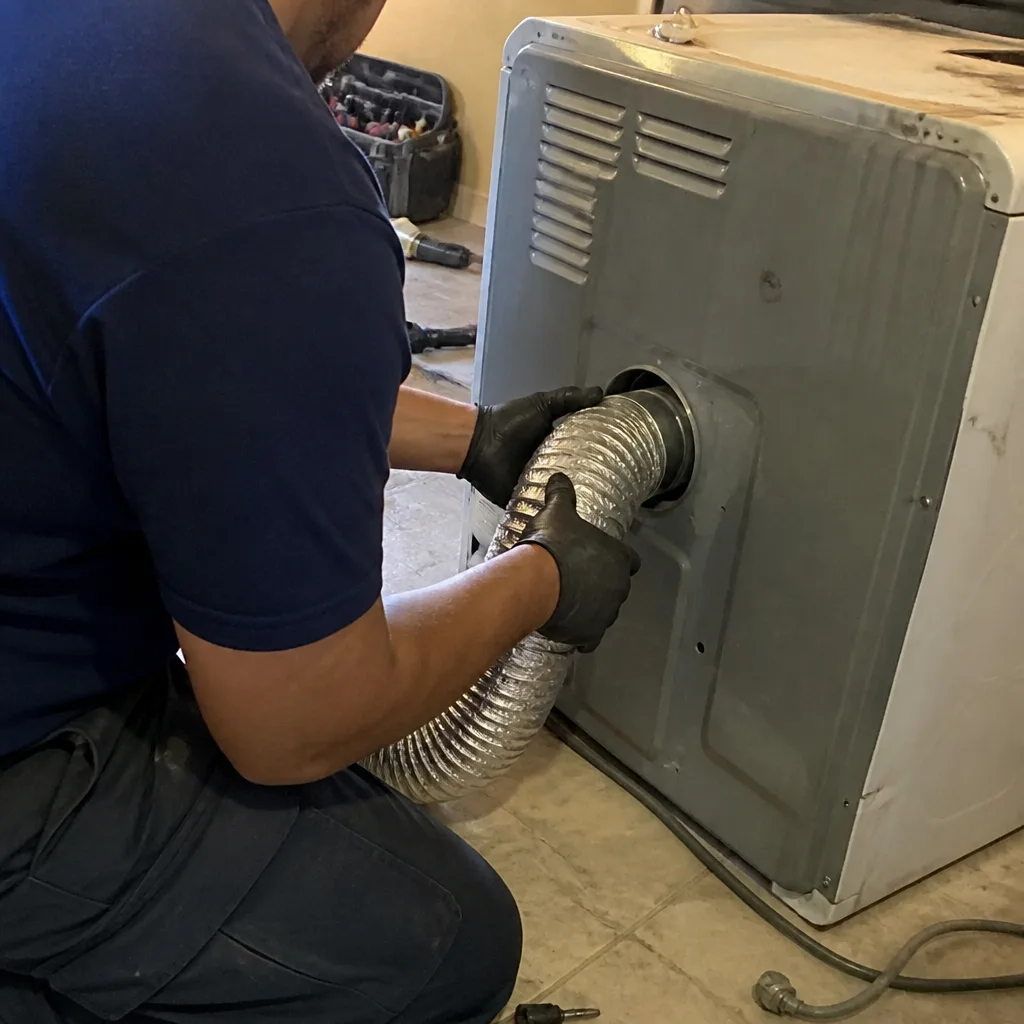
- Treating dryer vent cleaning as optional or separate from duct maintenance. Dryer Vent Cleaning in San Antonio addresses a fire safety component that shares the same attic and wall chases as HVAC ductwork. Lint accumulation is combustible and restricts airflow, extending dryer runtime and increasing fire risk. We inspect dryer vent condition as part of every whole-system evaluation.
When to Call a Professional
Call for a camera inspection, not necessarily a full cleaning, when you notice reduced airflow at distant registers, visible debris around register openings, or filter loading faster than 30 days. Call for full cleaning after construction, before moving into a pre-owned home, or if your system has run 200+ days since last service. In San Antonio, that describes most homes every 18-24 months.
CleanRun Air Duct Cleaning San Antonio offers free estimates in San Antonio - call (726) 600-7155. Every estimate includes a written price before work starts, and every job concludes with a documented photo record of every duct run. The 365-Day Done Right Promise applies in writing, not as a verbal assurance.
Frequently Asked Questions
Whole-system duct cleaning for a typical San Antonio home runs $450-$850, with most jobs between $550-$700. Two-story homes over 2,500 square feet, dual-zone systems, or crawl space access push toward the higher end. CleanRun quotes one flat price per system in writing before work starts - no per-vent add-ons, no post-arrival upsells. Call (726) 600-7155 for an exact quote; estimates are free.
The $79-$129 offers typically cover insertion of a vacuum hose at 2-3 registers for 20-30 minutes, with no trunk line cleaning, no photo record, and no verification of results. A complete cleaning accesses every register, cleans supply and return trunk lines separately, and documents the interior of every run with before-and-after photography. The price difference reflects scope, not markup. Ask any competitor for their written scope and photo record policy before comparing numbers.
Require a documented photo record showing the interior of every duct run before and after cleaning. CleanRun has delivered this on every job since 2013 - it’s part of the standard job record, not an upgrade. If a company won’t show you photos of your own ducts, you have no evidence that extraction occurred past the first few feet.
For most San Antonio homes, every 24-36 months with the schedule adjusted for runtime: homes with pets, recent construction, or occupants with pollen sensitivity should inspect annually and clean every 18-24 months. The 220+ day cooling season here means debris accumulates faster than national averages assume. Use runtime hours and photo inspection results, not calendar years alone.
Homeowners can and should change filters monthly during pollen season and vacuum register covers. But interior duct cleaning requires negative-pressure extraction equipment and mechanical agitation tools that contact the full duct surface. Inserting a household vacuum hose or brush kit from a hardware store risks damaging flex duct liner and cannot reach past the first few feet of branch duct. For the trunk lines and plenum that hold the majority of debris, professional extraction is the only verifiable method.
Cleaning restores airflow to design levels, which can reduce runtime and improve temperature consistency between rooms. It does not change the fundamental efficiency rating of the equipment. The measurable benefit is reduced static pressure - verified with a manometer before and after - which means the blower motor works less hard to move the same air volume. In San Antonio’s extended cooling season, that runtime reduction accumulates meaningfully over 160+ days of operation.
October or March. October captures the full summer debris load before heating season begins, with moderate attic temperatures and lower contractor backlog. March removes cedar and oak pollen accumulation before the cooling season starts, giving the system a clean baseline for 160+ days of continuous operation. Both months typically avoid the summer pricing pressure and scheduling delays that peak in June through August.
The Bottom Line
San Antonio’s climate demands a maintenance schedule built around three mechanical stress periods, not four equal seasons. Inspect filters weekly during December-April pollen windows. Schedule professional cleaning in October or March for documentable before-and-after results. Inspect flex duct connections after summer heat cycling, especially in homes with unconditioned attics. For more guides & resources on maintaining your system, visit our blog. And require written pricing, photo documentation, and verifiable equipment on every job - the standards that separate accountable work from vacuum noise.
CleanRun Air Duct Cleaning San Antonio home
Written by Tomas Reyes, Owner at CleanRun Air Duct Cleaning San Antonio, serving San Antonio since 2013.