
Last updated September 23, 2026
Whole-system duct and dryer vent check with before-and-after photos - you see exactly what came out of your vents
That "$99 whole-house special" is a bait ad - the real number appears once they are in your hallway, or the "clean" is a shop-vac at the register. We photograph the inside of your ducts before and after instead.

 Before
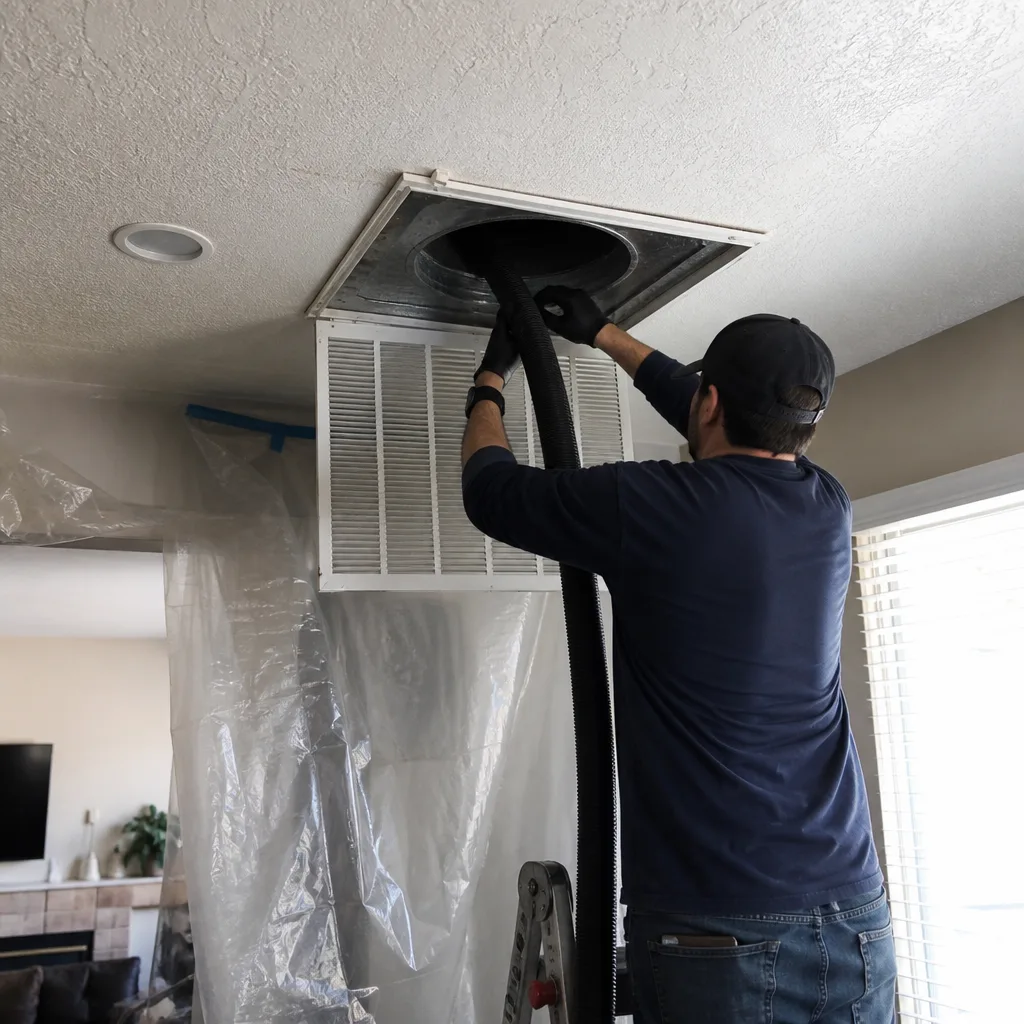 After
After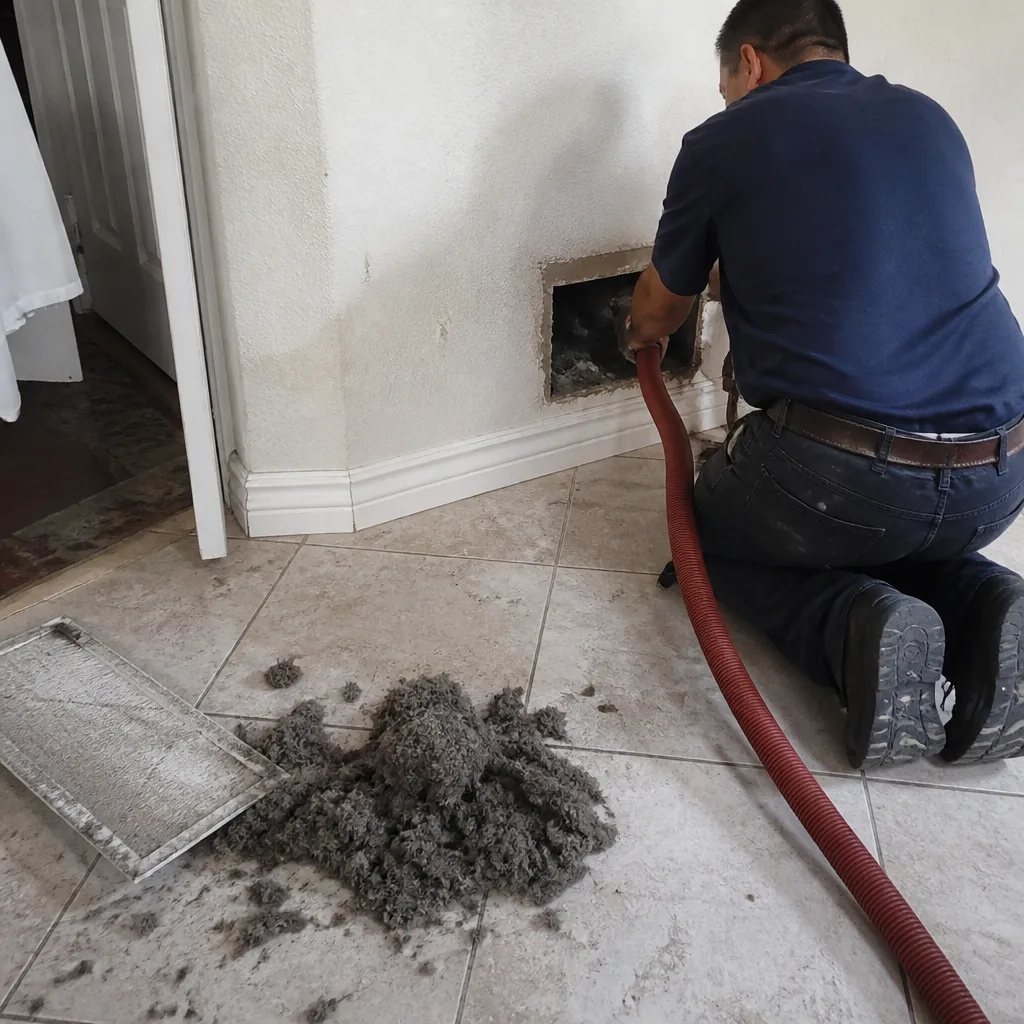 Before
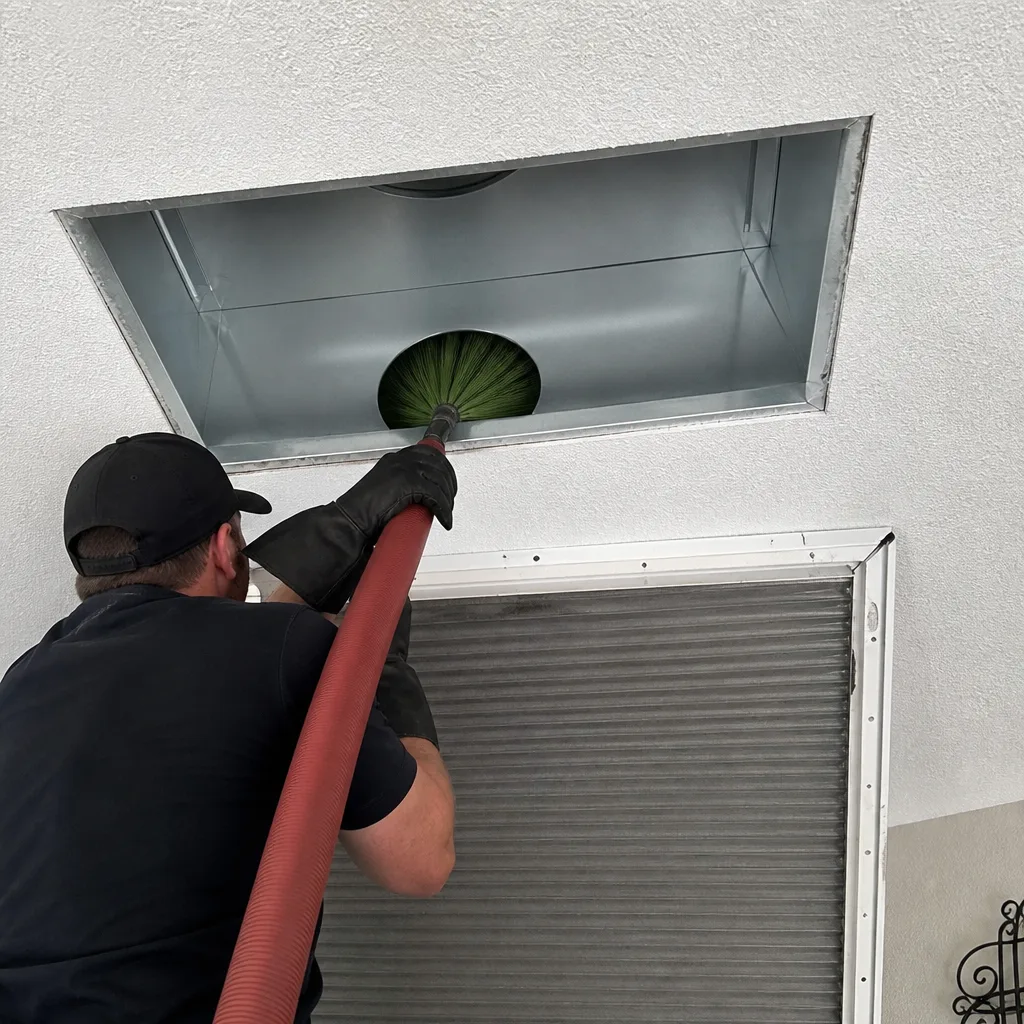 After
After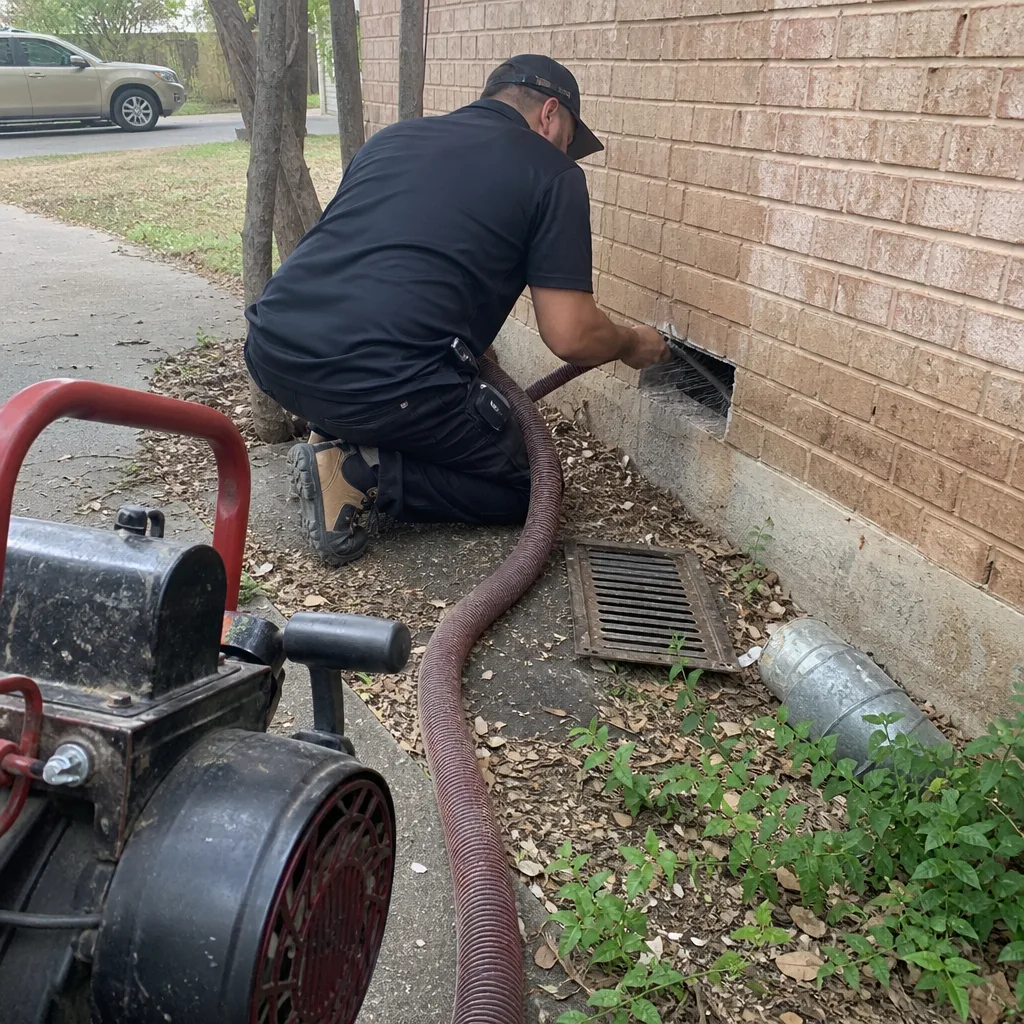 Before
 After
AfterHow to Hire a Air Duct Cleaning Contractor in San Antonio: A Step-by-Step Guide
The $79 air duct cleaning coupon that lands in San Antonio mailboxes every spring is not a price. It is a lead-generation tactic documented by consumer protection agencies across Texas. The technician who arrives has already paid for that coupon lead, and the average invoice closes at $280-$450 once “contaminated plenums,” “sanitizing treatments,” and “extra vent charges” appear on the tablet. In twelve years of work across San Antonio, from Alamo Heights to Stone Oak to the older ranch homes near Lackland, we’ve seen the pattern repeat because homeowners don’t know which four questions to ask before booking. This guide gives you the exact wording of those questions, what a legitimate answer sounds like, and how to verify it in under five minutes. For Air Duct Cleaning services done right, these questions are essential.
Quick Answer
Hiring a legitimate air duct cleaning contractor in San Antonio means asking four pre-booking questions: whether the price is written and fixed before work starts, whether every duct run will be photographed before and after, what specific equipment will be used on your system, and what guarantee applies if the work is not completed as described. A contractor who deflects on any of these four points is signaling a bait-and-switch operation.
Table of Contents
- The Four Questions That Separate Legitimate Contractors From Bait-and-Switch Operators
- What Licensing and Insurance Actually Apply to Air Duct Cleaning in Texas
- How to Evaluate a Written Estimate: Standard Line Items, Legitimate Add-Ons, and Red Flags
- What the Technician Should Show You During and After the Job
- How to Use the Scope of Work as an Enforcement Tool
- San Antonio-Specific Factors: Climate, Housing Stock, and Code
- Common Mistakes to Avoid
- When to Call a Professional
- Frequently Asked Questions
BeforeAfterThe Four Questions That Separate Legitimate Contractors From Bait-and-Switch Operators
Most guides tell you to “check reviews” and “get multiple quotes.” This is not enough. Reviews can be purchased. Quotes can be changed at the door. The four questions below are designed to force specific, verifiable commitments before a truck is dispatched.
Question 1: “Will you put the full price in writing before any work starts, and does that price cover the complete system?”
Passing answer: “Yes. You’ll receive a written scope with a single price for the complete system before we remove the first register.”
Deflection: “We need to see it first,” or “The base price covers the main trunk, then we assess.”
The $79 coupon model depends on this deflection. The “base price” covers almost nothing, the technician discovers “problems” on arrival, and the homeowner faces pressure to approve add-ons with a stranger standing in their hallway. At CleanRun Air Duct Cleaning San Antonio home, Haven Standard Clause 1 requires a written price before any work begins. No exceptions. We do not have a “base price.” We have a price for your specific system, delivered in writing, that you can compare against any competitor’s quote.
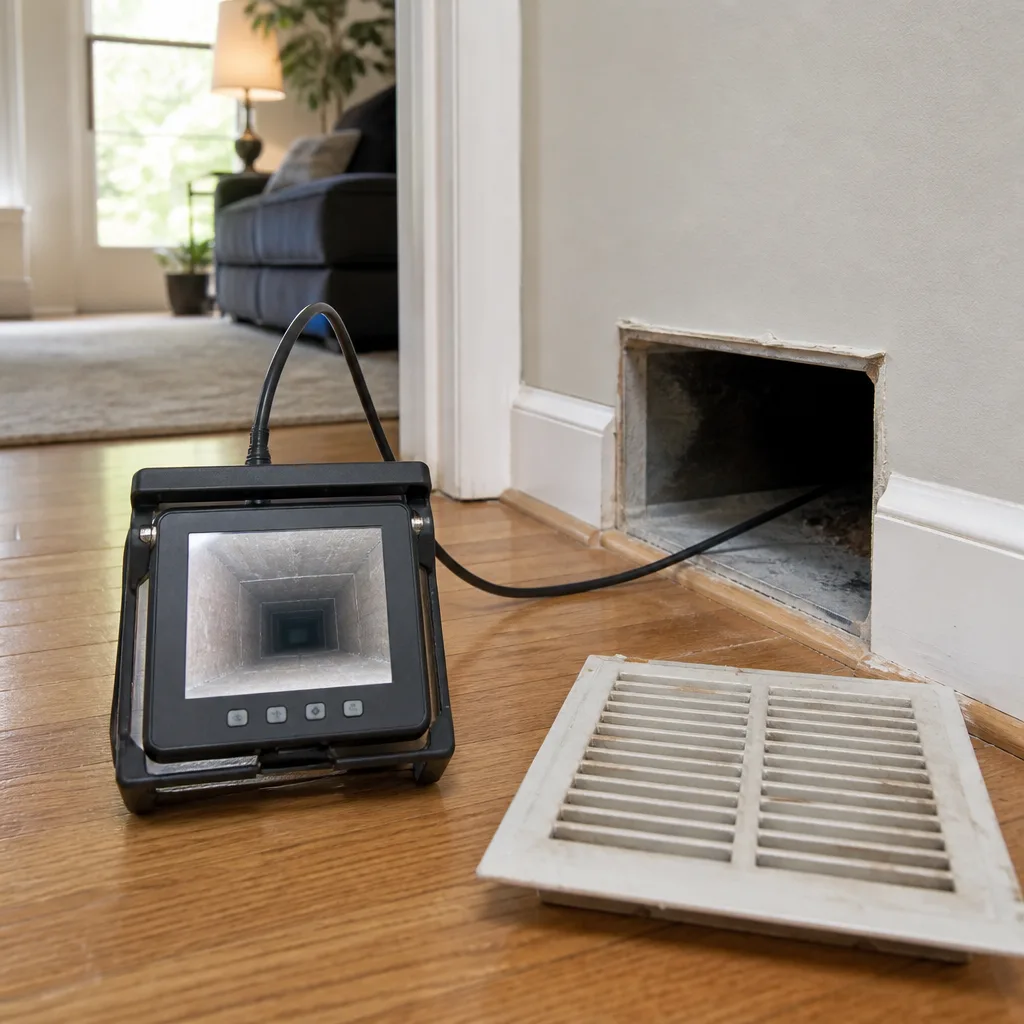
Question 2: “Will you photograph the inside of every duct run before and after, and will I receive those photos as part of the job record?”
Passing answer: “Yes. Every run is photographed, indexed to its location, and delivered to you.”
Deflection: “We can take a few pictures if you want,” or “Our vacuum has a camera but we don’t always save the footage.”
A single “after” photo of a clean register face proves nothing. The register face is the easiest 12 inches to clean. The debris builds at elbows, in the plenum, and in the horizontal runs where dust settles. Without indexed photos of each run, you have no evidence that the work reached your entire system. CleanRun has photographed every duct run on every job since 2013. The photo record is a standard deliverable, not an optional extra.
Question 3: “What specific equipment will be used on my system, and can I verify the manufacturer independently?”
Passing answer: “We use [specific brand] negative-pressure extraction with [specific brand] agitation tools. You can look up the model on the manufacturer’s site.”
Deflection: “Commercial-grade truck-mounted equipment,” or “The latest technology,” or refusal to name brands.
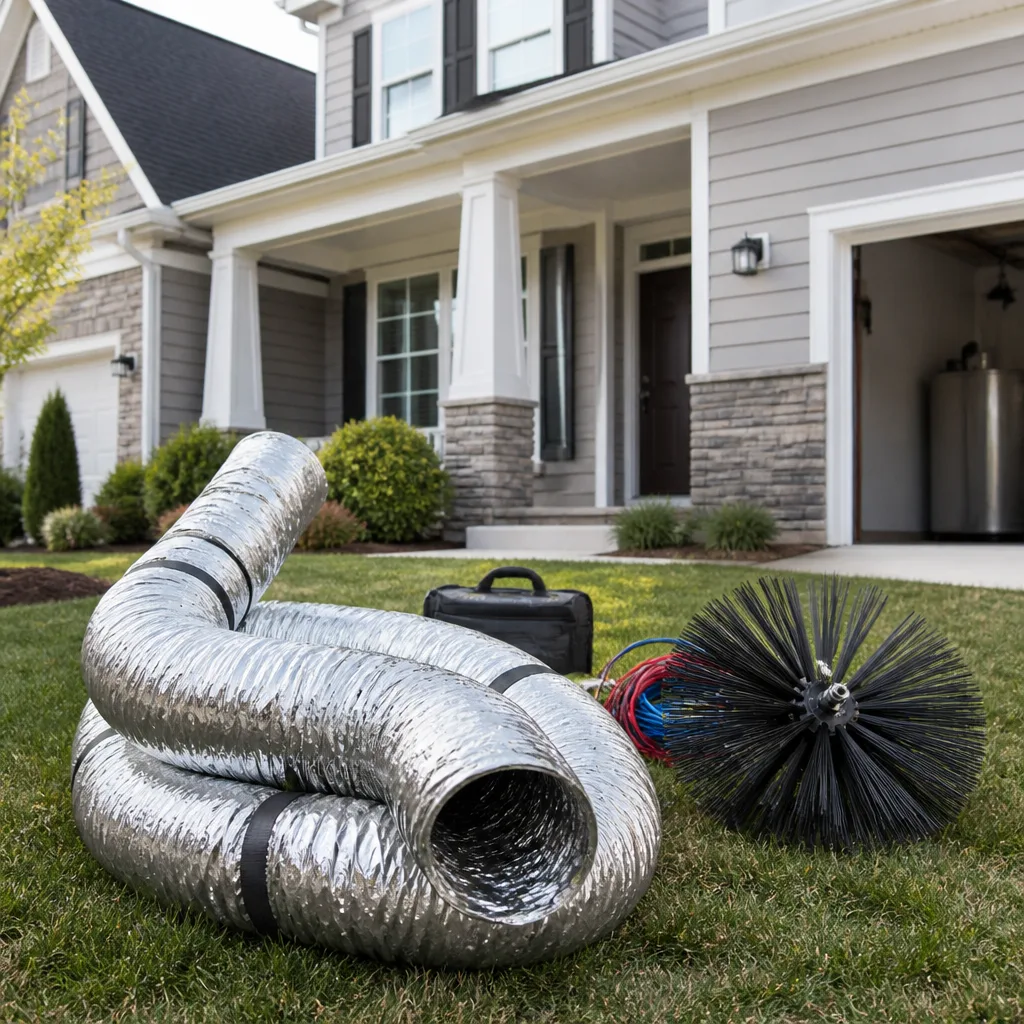
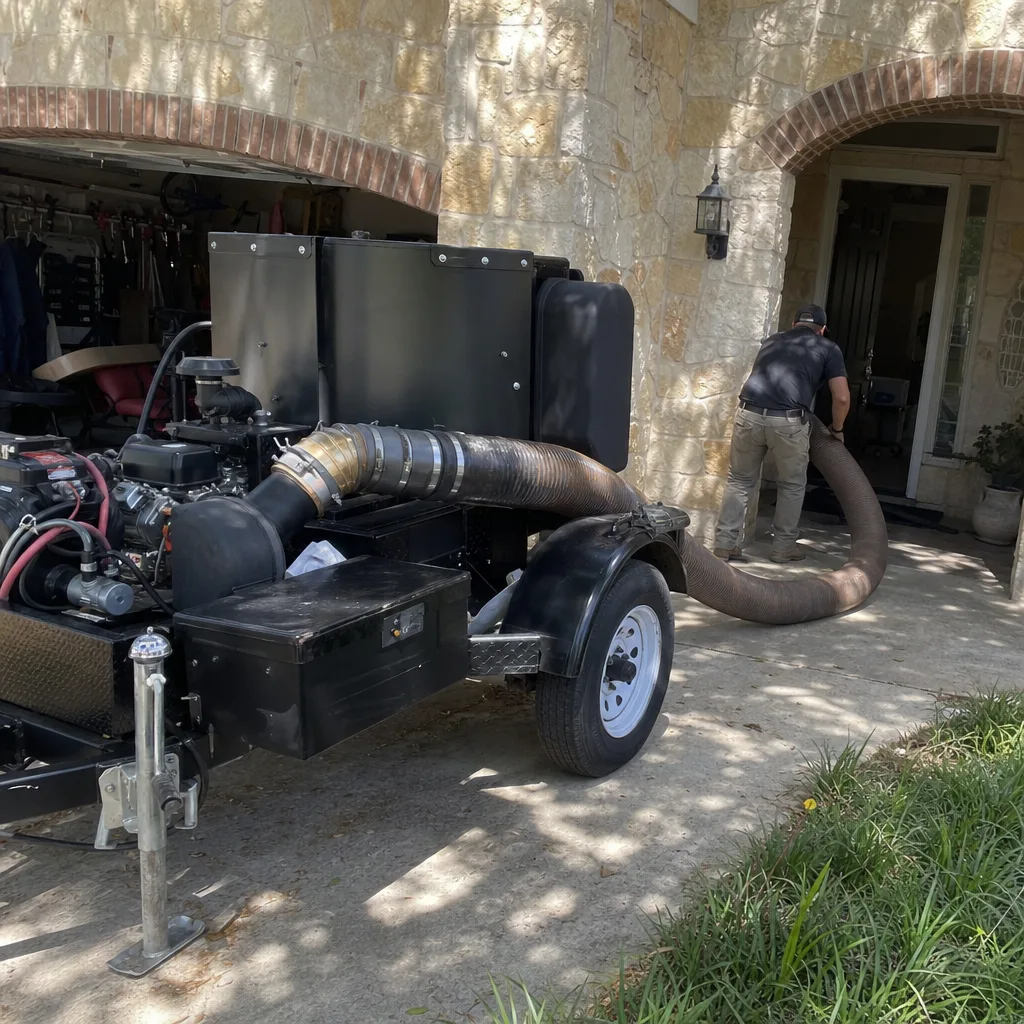
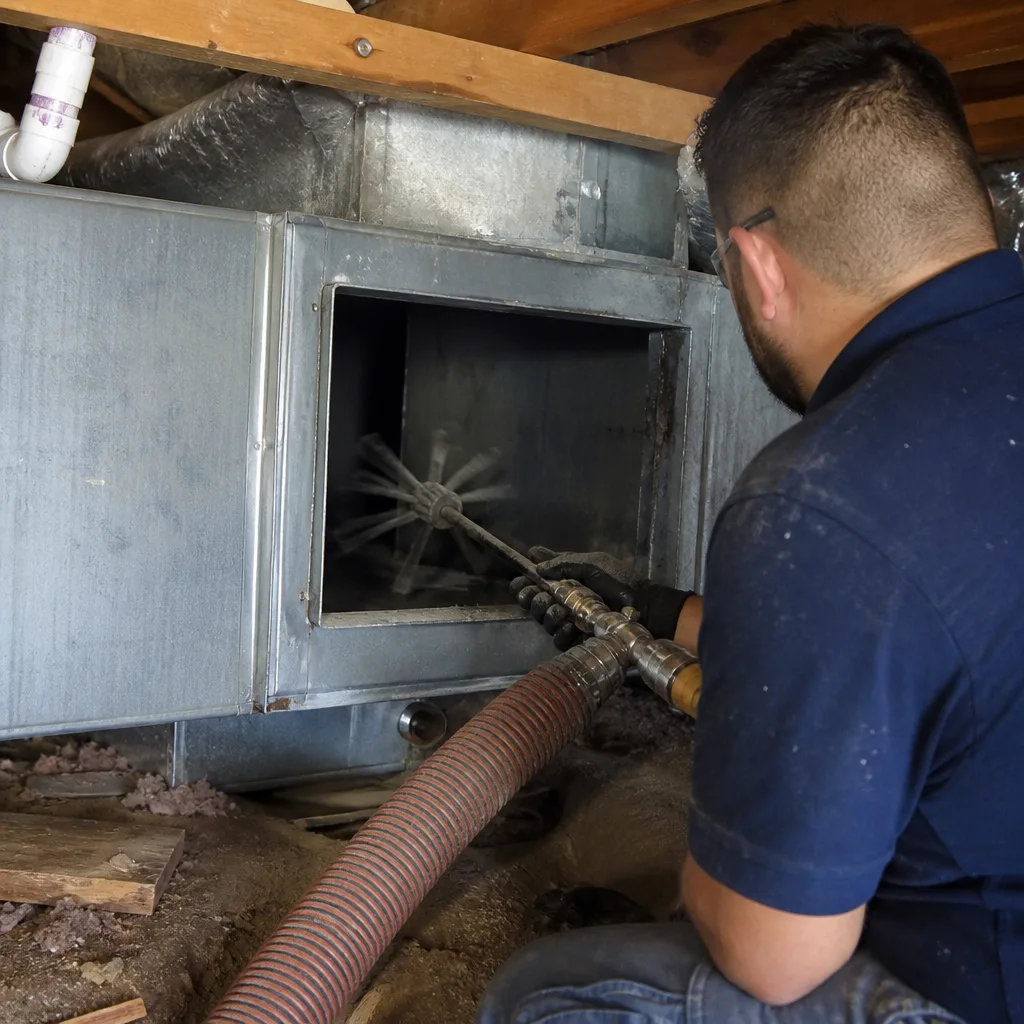
Vague equipment claims hide shop vacuums with fancy decals. Professional-grade air duct cleaning equipment is manufactured by recognized trade brands and sold through HVAC supply channels, not retail. CleanRun’s equipment roster includes Rotobrush agitation systems, Nikro and Abatement Technologies negative-pressure extractors, and Honeywell and Aprilaire filtration components. These are verifiable products with published specifications, not marketing labels.
Question 4: “What does your guarantee say, specifically, and is it in writing?”
Passing answer: “Here is the written guarantee. It covers [specific scope] for [specific period], and this is how you invoke it.”
Deflection: “We stand behind our work,” or “Satisfaction guaranteed,” with no written document.
Verbal guarantees are unenforceable. The 365-Day Done Right Promise at CleanRun specifies that if the work is not right, we make it right, and it is backed in writing on every job, not stated only in marketing materials. You should receive a guarantee document with the same specificity as your invoice.
What Licensing and Insurance Actually Apply to Air Duct Cleaning in Texas
Texas does not issue a standalone “air duct cleaning license.” This surprises many homeowners, and contractors exploit the confusion by displaying irrelevant or inflated credentials. Here is what actually applies.
Required: Texas Air Conditioning and Refrigeration Contractor License
Air duct cleaning that involves any disassembly of HVAC components, access to the plenum, or work on the air handler itself falls under the Texas Department of Licensing and Regulation (TDLR) Air Conditioning and Refrigeration program. The contractor must hold either a Class A or Class B license, and the license number must be displayed on all advertising and vehicles. You can verify any license in under two minutes at the TDLR License Search portal.
CleanRun operates under TDLR license, published on every page, not buried in a footer. If a contractor cannot provide a TDLR license number, or provides a number that does not match their business name in the TDLR database, they are operating illegally on any job that touches your HVAC system.
Required: General Liability Insurance
Air duct cleaning involves powered equipment in your home, access to electrical components, and potential damage to finished surfaces. Texas does not mandate specific insurance for duct cleaners, but any legitimate contractor carries general liability insurance of at least $1 million per occurrence. Request a certificate of insurance (COI) naming your property address. A contractor who hesitates or offers to “email it later” is a contractor to avoid.
Not Required, But Standard: Workers’ Compensation
Texas does not require workers’ compensation coverage for most businesses, but legitimate contractors carry it. If a technician is injured in your home and the contractor lacks coverage, your homeowner’s policy may be drawn into the claim. Ask directly: “Do you carry workers’ compensation for your technicians?”
What “Certifications” Actually Mean
The National Air Duct Cleaners Association (NADCA) offers a certification program. NADCA certification indicates that a technician has passed a written exam on industry standards. It does not guarantee quality execution, written pricing, or documentation. Use NADCA certification as one data point among several, not as a deciding factor. We have encountered NADCA-certified contractors who operate on the $79 coupon model and deliver undocumented work.
How to Evaluate a Written Estimate: Standard Line Items, Legitimate Add-Ons, and Red Flags
A proper written estimate for air duct cleaning in San Antonio should be comprehensible without a technical dictionary. Here is how to read one.
Standard Line Items
| Item | What It Covers | San Antonio Price Range |
|---|---|---|
| Complete system cleaning (supply + return) | All duct runs, plenum, registers, grilles, and accessible trunk lines | $350-$650 |
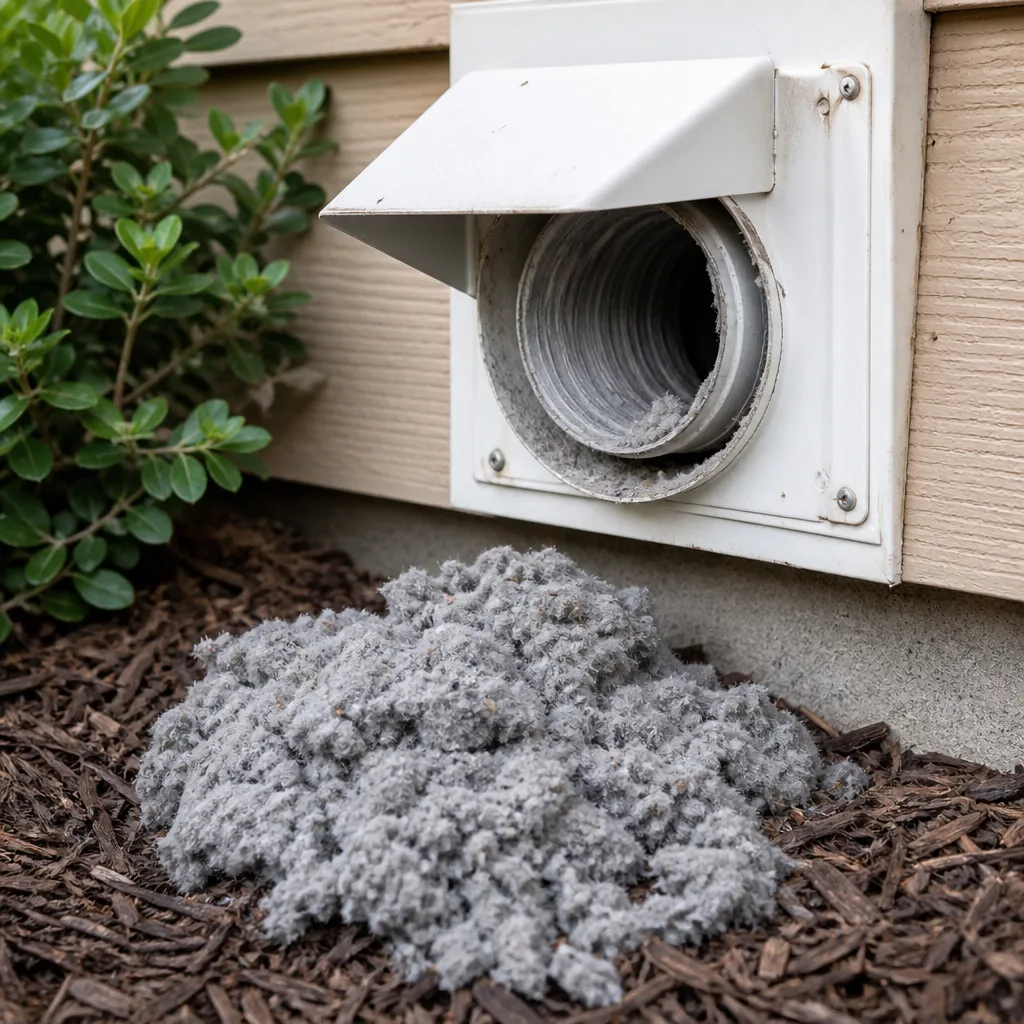
| Dryer vent cleaning (separate service) | Full lint removal from dryer to exterior termination | $120-$220 |
| Main trunk line only (not recommended standalone) | Horizontal distribution trunk without branch runs | $200-$350 |
These ranges reflect San Antonio’s market in 2024-2025, accounting for travel time in outlying areas like Helotes or Converse and the prevalence of slab-on-grade construction with attic ductwork. See our Air Duct Cleaning Cost Breakdown: The San Antonio Homeowner’s Reference for 2026 for detailed pricing factors. Prices below $300 for a complete system should trigger immediate scrutiny.
Legitimate Add-Ons With Real Explanations
Some conditions justify additional charges, but the explanation should be specific and photographic:
- Mold remediation: Visible microbial growth confirmed by photo, not “we smelled something.” Requires separate scope and often third-party lab verification.
- Duct repair or sealing: Disconnected runs, collapsed flex duct, or significant leakage at joints. Should be photographed and quoted separately before execution.
- Contaminated insulation replacement: Insulation lining the duct interior that has degraded or harbored moisture. Rare in standard residential systems.
Red Flag Line Items
- “Sanitizing treatment” quoted without prior photo evidence of contamination
- “Plenum cleaning” as a separate charge when the plenum is part of the system
- “Per vent” pricing that escalates as vents are “discovered”
- “EPA-approved” chemicals (the EPA does not approve consumer products; it registers them)
- “Coil cleaning” bundled into duct cleaning without inspection access
The Air Duct Cleaning in San Antonio page includes our full pricing structure. We do not quote per-vent prices because they incentivize the wrong behavior: finding more vents to charge more, rather than cleaning the complete system you already have.
What the Technician Should Show You During and After the Job
Documentation is the only proof that work occurred inside a sealed system. Here is what legitimate documentation looks like.
Before the Work Starts
- Written scope and price, signed by both parties
- Photo of each register face and the area behind it
- Photo of the plenum interior, if accessible
- Photo of any visible damage or contamination
During the Work
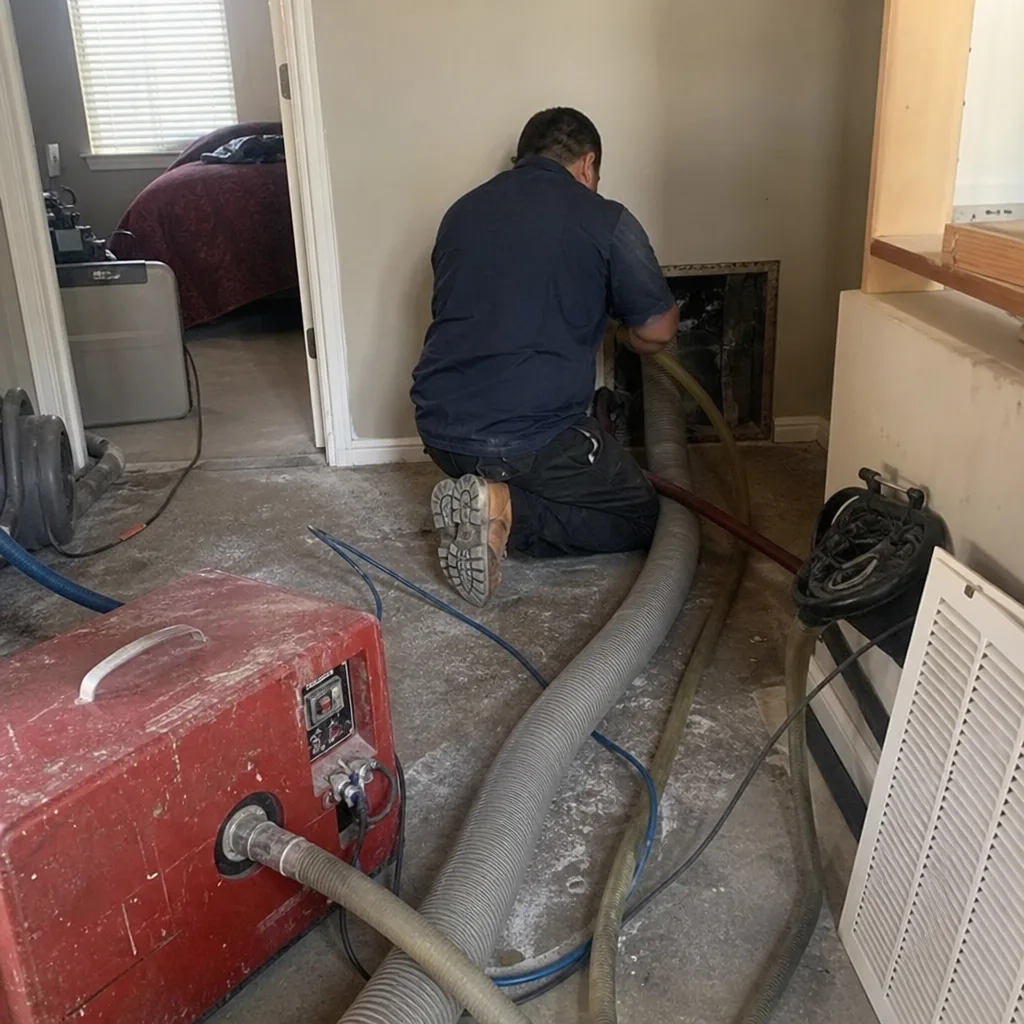
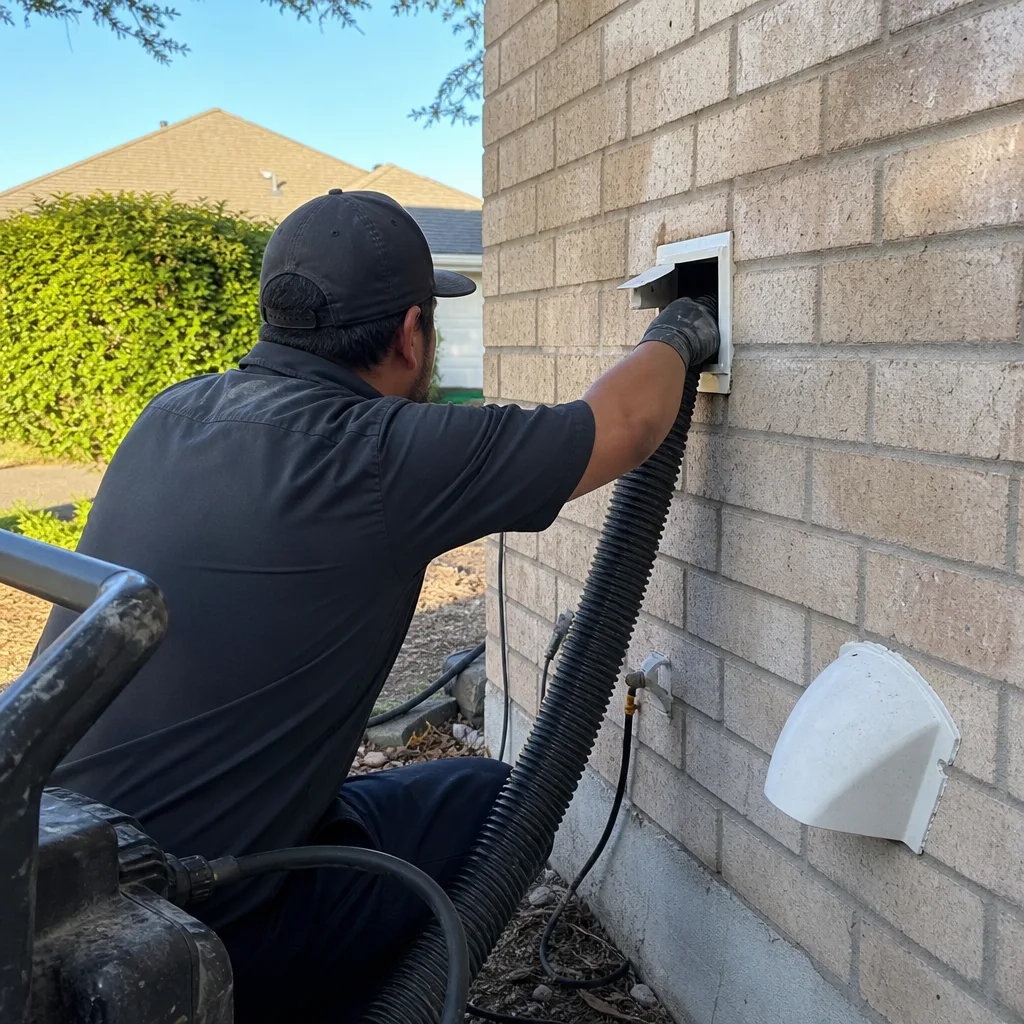
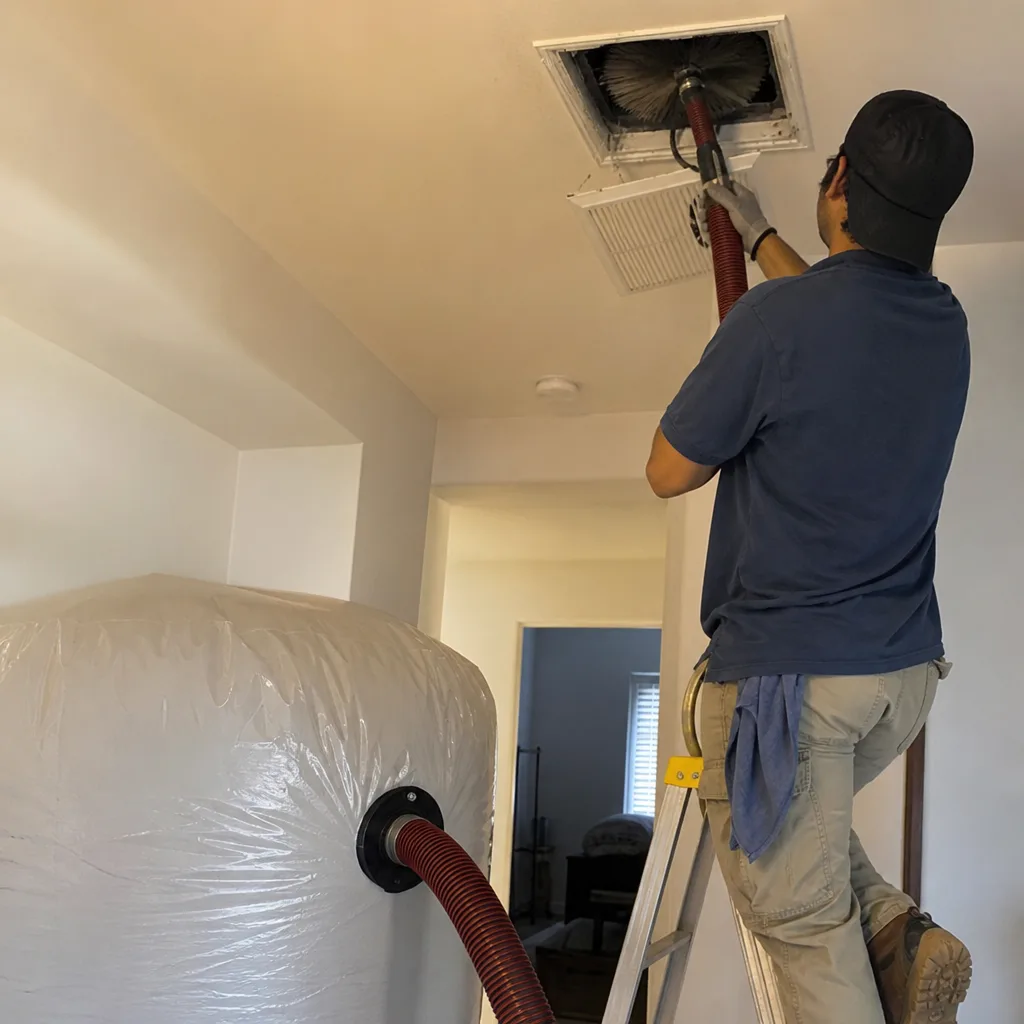
The technician should not object if you observe. Professional equipment for HVAC Cleaning in San Antonio includes negative-pressure extractors (large vacuums that pull debris out while containing it) and agitation tools that dislodge buildup from duct walls. The technician should be able to explain, without prompting, which tool is being used in which run and why.
After the Work Is Complete
- Indexed photo of each duct run after cleaning, matched to the “before” photo
- Photo of the plenum after cleaning
- Written completion statement noting any deviations from scope
- Guarantee document with specific terms and invocation procedure
At CleanRun, the photo record is delivered as part of the standard job record, not emailed days later or made available “on request.” You should not need to ask for proof of work. It should arrive without prompting.
How to Use the Scope of Work as an Enforcement Tool
The signed scope of work is a contract. Most homeowners file it and forget it. Used correctly, it is your primary protection against incomplete or substandard work.
What a Legitimate Scope Contains
- Specific address and system location (attic, crawl space, garage)
- Count of supply and return runs
- Specific services: cleaning, inspection, repair, or sealing
- Equipment to be used, by brand or category
- Single total price, with any conditions clearly stated
- Estimated duration
- Technician name and license number
- Guarantee reference
How to Enforce It
If the work does not match the scope, the document is your evidence. Photograph any discrepancy immediately. Contact the contractor in writing, referencing the scope by date and job number. Specify the deviation and the remedy you expect. Under Haven Standard Clause 1, the written price is fixed; under the 365-Day Done Right Promise, deviations are corrected at no additional cost.
If the contractor refuses, the scope supports a complaint to TDLR (for unlicensed work or license violations), the Texas Attorney General’s Consumer Protection Division, or small claims court. Without a written scope, you have no record of what was promised.
San Antonio-Specific Factors: Climate, Housing Stock, and Code
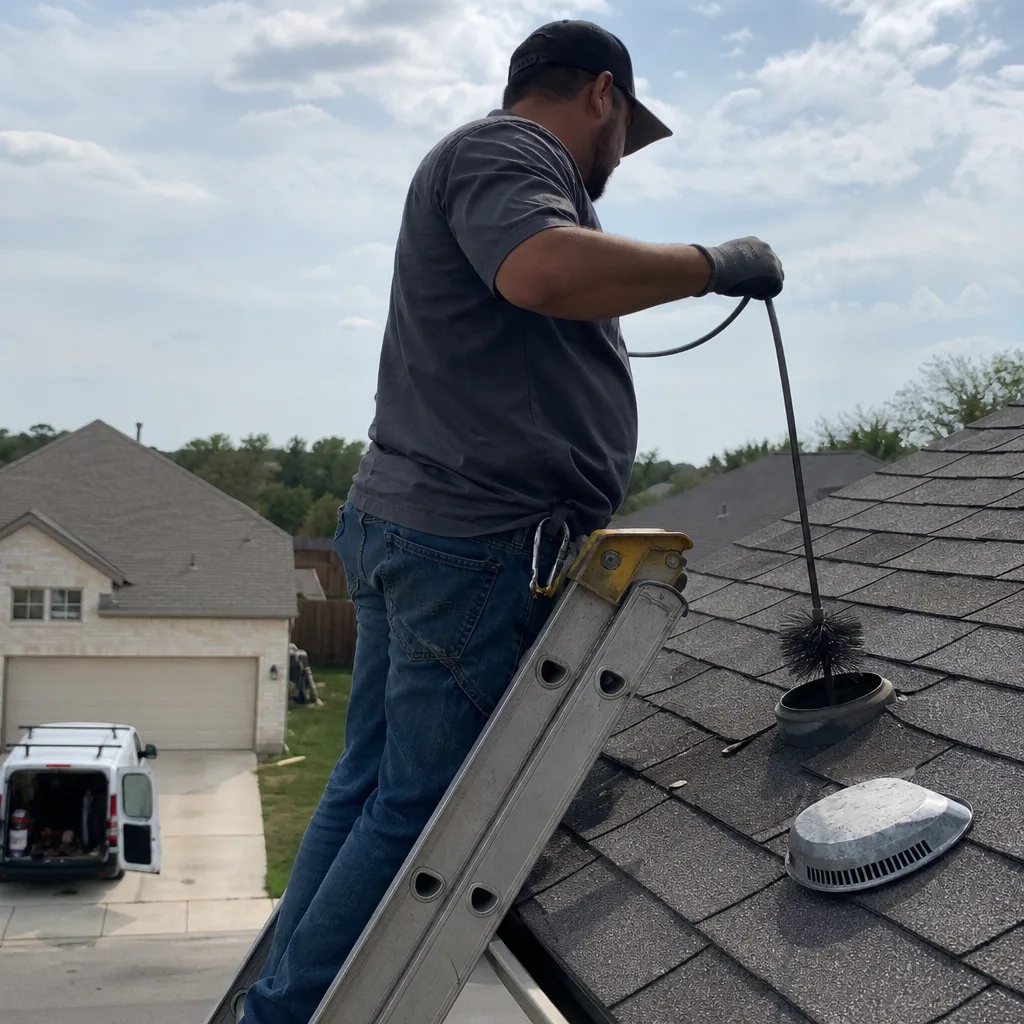
San Antonio’s conditions create specific risks and requirements that generic guides ignore.
Climate and Debris Patterns
San Antonio’s combination of high pollen counts, caliche dust, and extended cooling seasons produces distinct duct contamination. In neighborhoods near Loop 1604 and Highway 281, we’ve documented heavy caliche infiltration in homes built during the 2010s construction boom, when envelope sealing was often rushed. In older homes near Monte Vista or King William, decades of accumulated debris combine with original duct materials (often unlined metal or early flex duct) that degrade and release particulate.
The long cooling season means systems run eight to nine months annually. More runtime equals more air volume moving through ducts, which accelerates buildup at elbows and in the plenum where velocity drops.
Housing Stock Characteristics
San Antonio’s housing includes:
- Pre-1980s ranch and bungalow: Often unlined metal duct, sometimes asbestos-insulated. Requires careful inspection before agitation.
- 1980s-2000s suburban construction: Flex duct in attics, frequently with poor support and sagging runs that trap debris.
- 2010s-2020s infill and master-planned: Tighter envelopes but often with central returns and longer duct runs that concentrate buildup.
Code and Permit Considerations
Air duct cleaning itself does not require a permit in San Antonio. However, duct modification, sealing that involves mastic application to plenums, or any work on the air handler may trigger permit requirements under the San Antonio Development Services Department building codes. A contractor who proposes structural modifications without mentioning permits is either ignorant or evading oversight.
Common Mistakes to Avoid
- Booking based on the lowest coupon price. The $79 coupon is a loss leader designed to generate in-home upsells. In San Antonio, legitimate whole-system cleaning costs $350-$650. Anything significantly below this range signals a bait-and-switch model.
- Accepting verbal estimates. A price given over the phone or at the door, without a written scope, can be changed at any time. Texas law provides limited protection for verbal home improvement contracts.
- Failing to verify the TDLR license. Unlicensed contractors operate in San Antonio, particularly those advertising through social media and door-to-door solicitation. The TDLR database takes 90 seconds to check.
- Ignoring equipment specifics. “Truck-mounted” and “commercial-grade” are meaningless descriptors. Ask for brand names and model numbers you can verify.
- Not requesting the photo record before payment. Once payment is processed, your leverage disappears. Review the documentation before signing completion.
- Confusing duct cleaning with duct sealing or repair. These are distinct services with different equipment and pricing. A contractor who begins cleaning and then “discovers” needed repairs should have noted visible damage in the pre-work inspection.
- Scheduling during peak pollen season without preparation. March through May in San Antonio brings oak and mountain cedar pollen that can recontaminate ducts within days if the system filter is not upgraded simultaneously.
When to Call a Professional
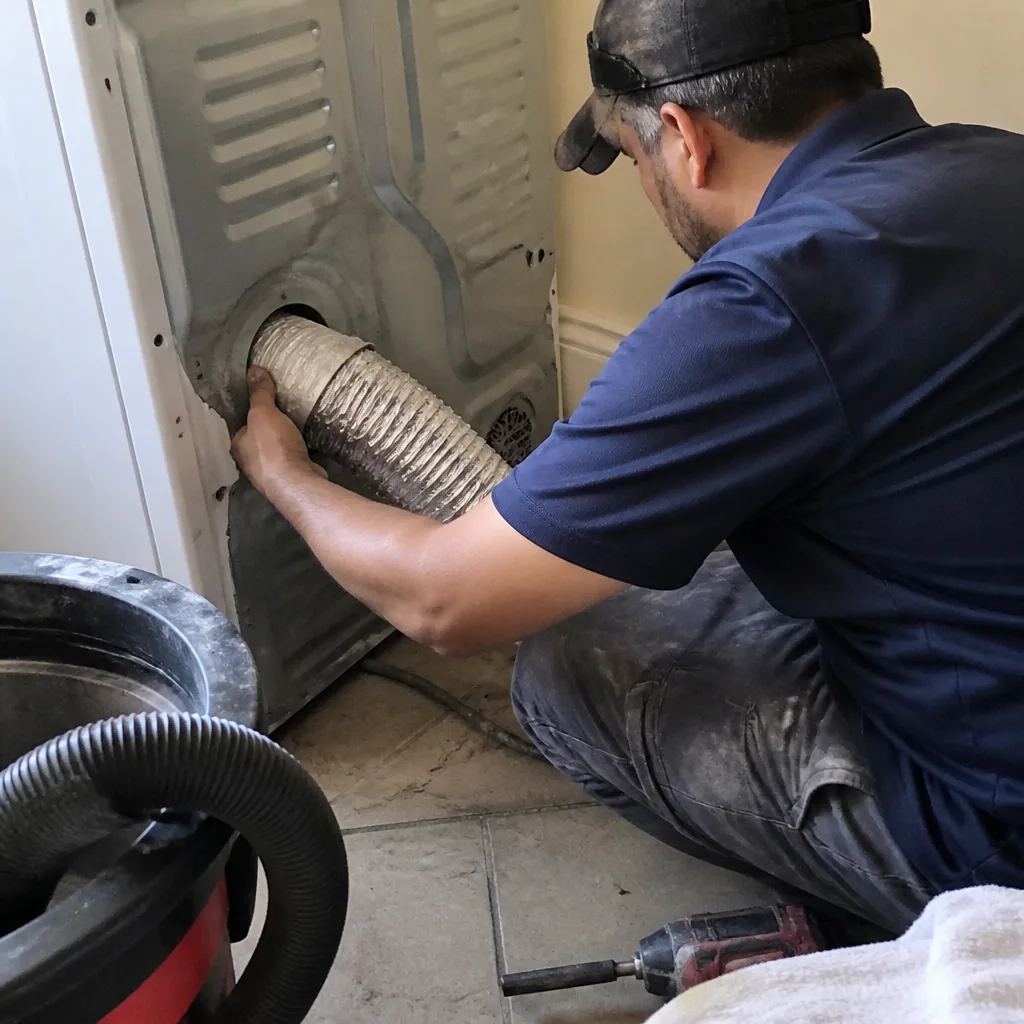
Call a licensed air duct cleaning contractor when you observe visible debris at registers, reduced airflow from specific vents, musty odors when the system cycles, or after any renovation that generated significant dust. In San Antonio, we also recommend inspection before purchasing a home built between 2005 and 2015, when construction volume often outpaced quality control in envelope sealing and duct installation.
CleanRun Air Duct Cleaning San Antonio offers free estimates throughout San Antonio and surrounding areas. Every estimate includes a written price before any work begins, and every completed job includes a Documented Photo Record of every duct run. Call (726) 600-7155 to schedule.
Frequently Asked Questions
Complete system cleaning for a typical San Antonio home runs $350-$650, depending on system size, accessibility, and contamination level. Dryer vent cleaning is typically $120-$220 as a separate service. Prices below $300 for a complete system are almost always bait-and-switch operations that generate the real revenue through in-home upsells. Call (726) 600-7155 for a written estimate with no obligation.
The low quote is a customer acquisition cost, not a service price. The contractor loses money on the initial visit and recovers it through mandatory add-ons: “contaminated” plenums, “required” sanitizing, per-vent charges, or “discovered” repairs. A legitimate quote covers the complete system at a price that allows proper equipment, trained technicians, and documentation. At CleanRun, Haven Standard Clause 1 prohibits this practice: the written price is the complete price.
Demand indexed before-and-after photos of every duct run, not a single after shot of a register face. The register is the easiest surface to clean; it proves nothing about the interior of the system. You should receive photos matched to specific locations (master bedroom supply, hallway return, etc.) with timestamps. CleanRun has delivered this documentation on every job since 2013.
Every three to five years for most San Antonio homes, sooner if you have pets, allergies, or recent renovation. Homes near active construction, major roads, or in areas with heavy caliche dust (common in northern Bexar County developments) may need more frequent inspection. The NADCA recommends cleaning when visible contamination exists, not on a fixed calendar.
Moderately, in specific conditions. Significant debris buildup can restrict airflow and force the system to run longer cycles. However, duct cleaning does not fix underlying issues: leaky ductwork, undersized returns, or failing components. A contractor who promises major energy savings from duct cleaning alone is overstating the benefit. CleanRun photographs any airflow restriction we find and notes whether cleaning alone is likely to resolve it.
Decline all add-ons not listed on your signed scope. Request that the contractor complete only the contracted work, pay only for that work, and document any claimed “problems” with photos. If the contractor refuses to proceed without add-ons, you are dealing with a bait-and-switch operator. Document the interaction and report it to TDLR and the Texas Attorney General’s office. CleanRun offers a Free Second Opinion on any written estimate: bring a competitor’s quote, and we will put our number next to it in writing.
The Bottom Line
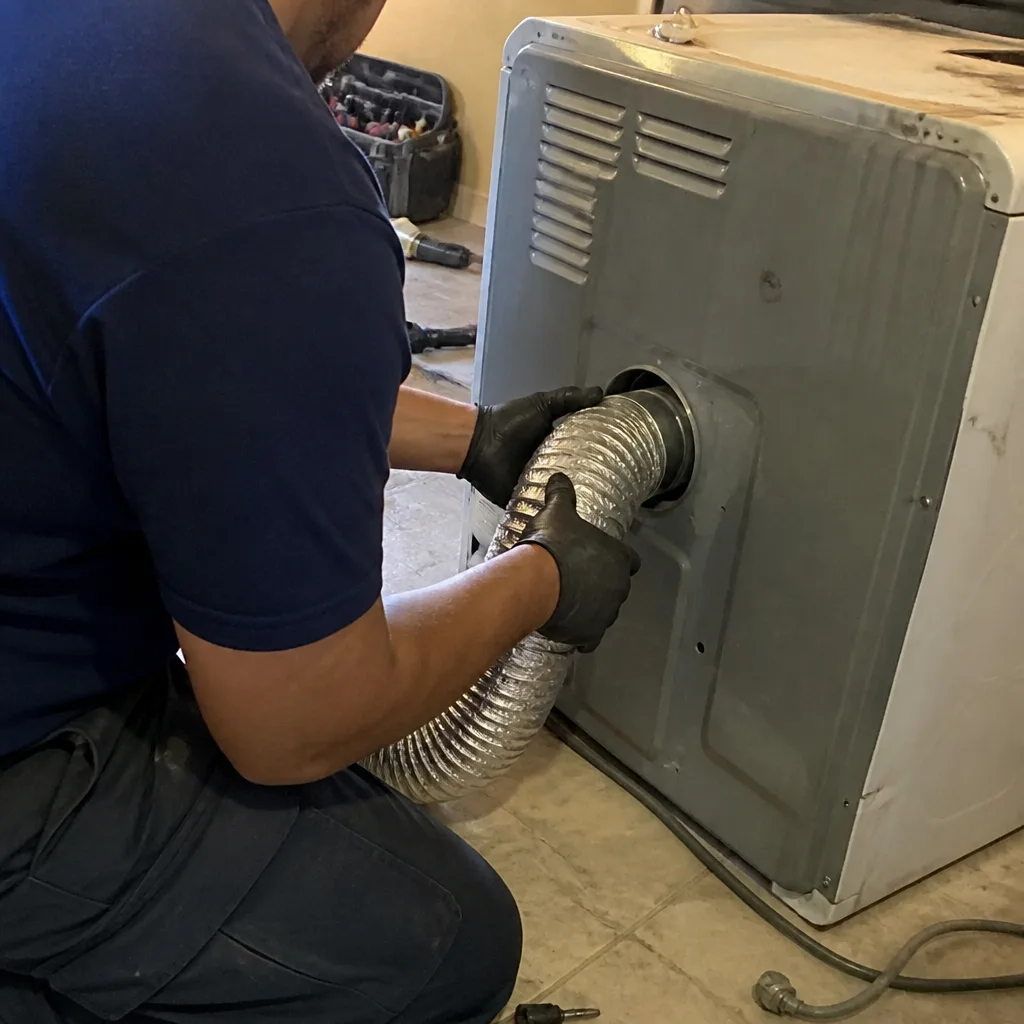
Hiring an air duct cleaning contractor in San Antonio is not about finding the friendliest technician or the most reviews. It is about obtaining four specific commitments in writing before anyone enters your home: a fixed price for the complete system, indexed photo documentation of every run, named professional equipment, and a written guarantee with specific terms. Contractors who deflect on any of these four points are not being cautious; they are preserving flexibility to change the terms once they are inside. The protection is not skepticism. It is a specific question, asked calmly, with the answer recorded in writing. Explore more guides & resources on protecting your home investment.
Written by Tomas Reyes, Owner at CleanRun Air Duct Cleaning San Antonio, serving San Antonio since 2013.