

Whole-system duct and dryer vent check with before-and-after photos - you see exactly what came out of your vents
That "$99 whole-house special" is a bait ad - the real number appears once they are in your hallway, or the "clean" is a shop-vac at the register. We photograph the inside of your ducts before and after instead.
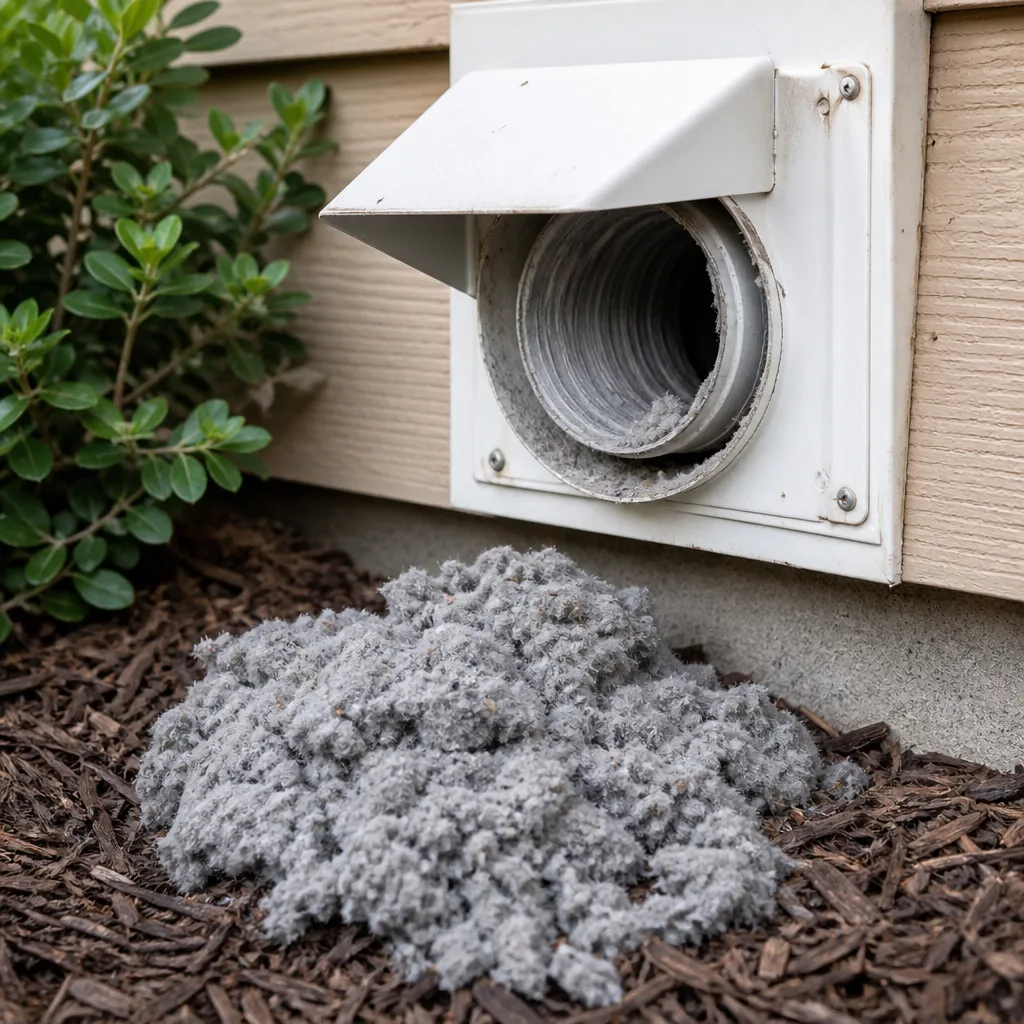

 Before
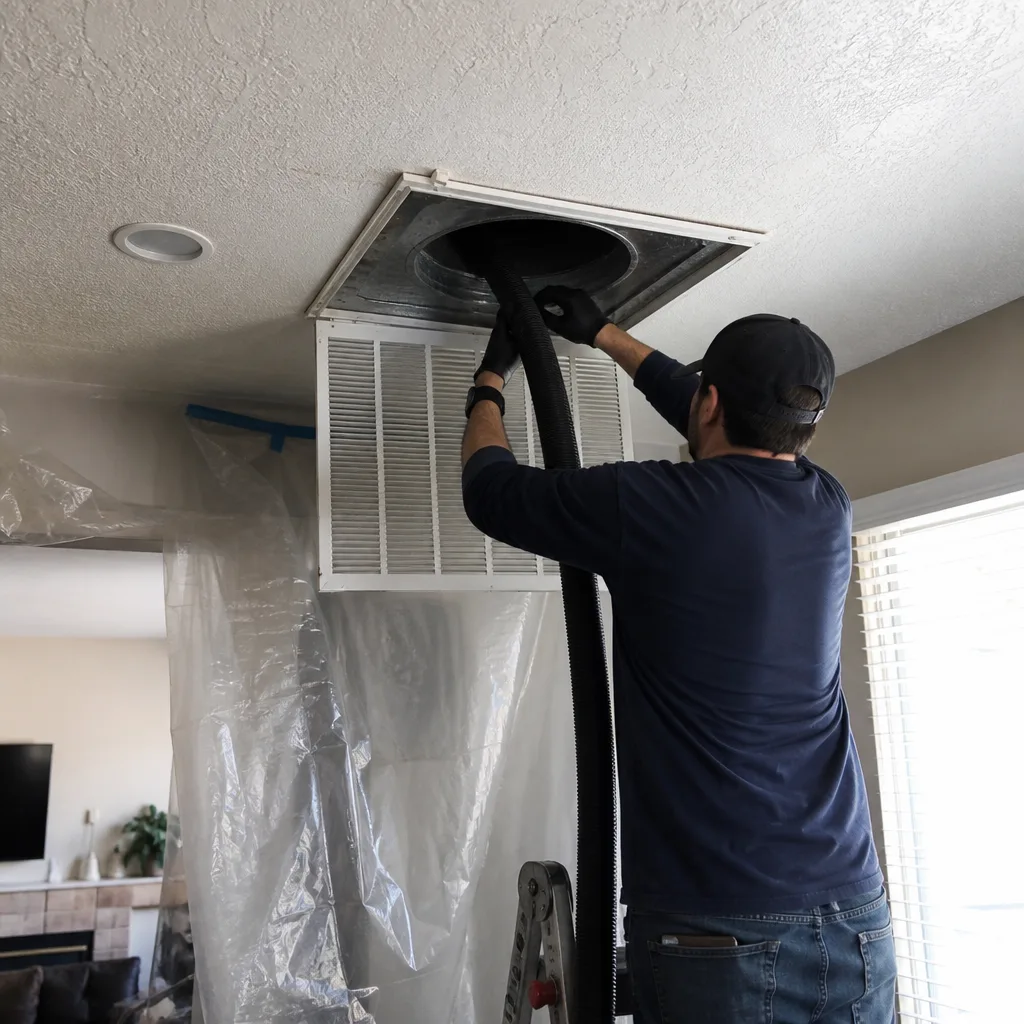 After
After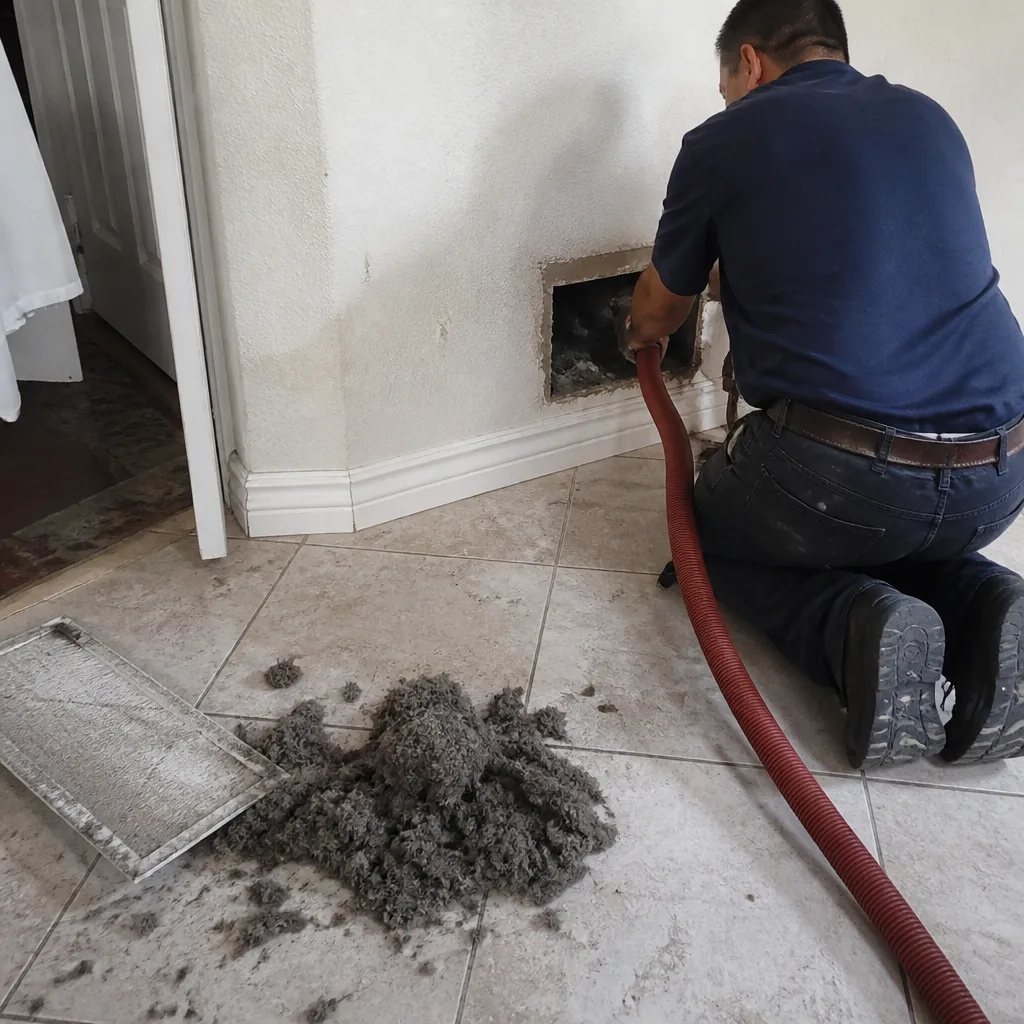 Before
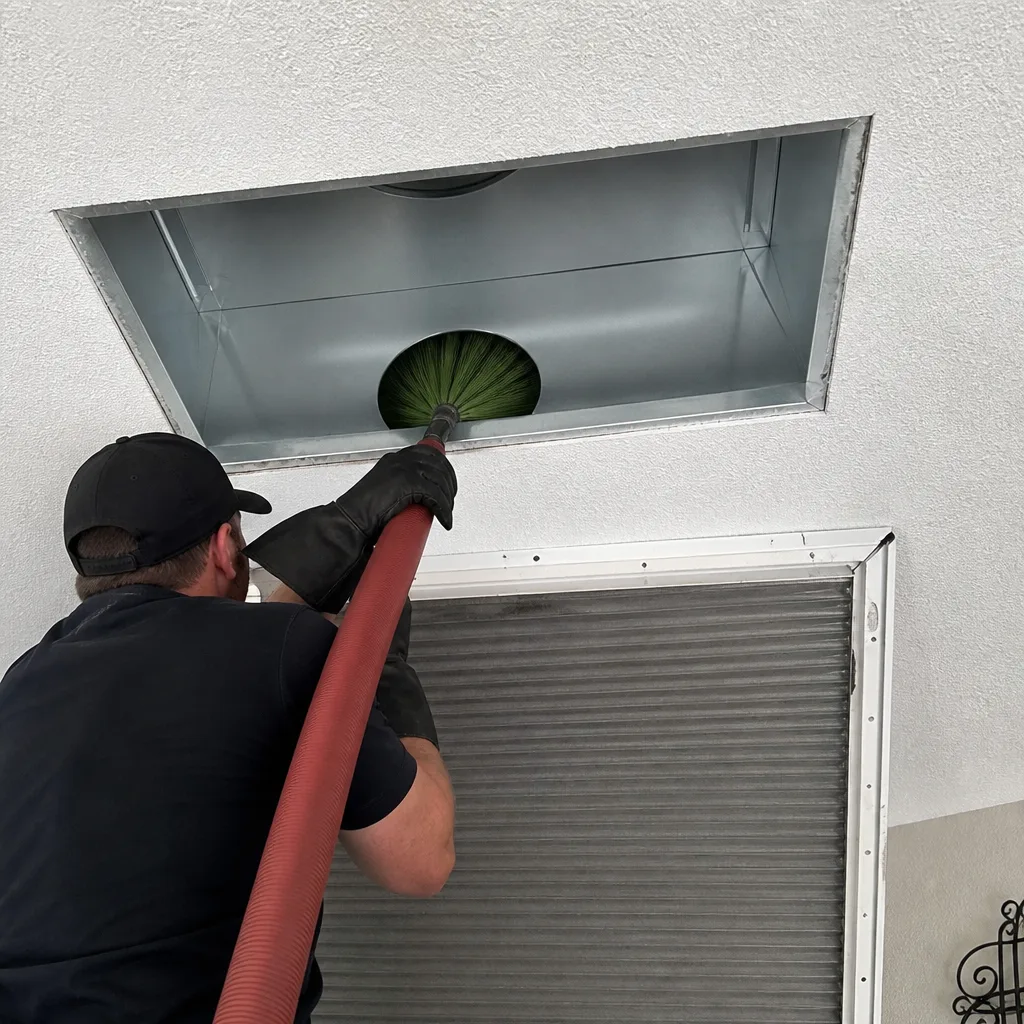 After
After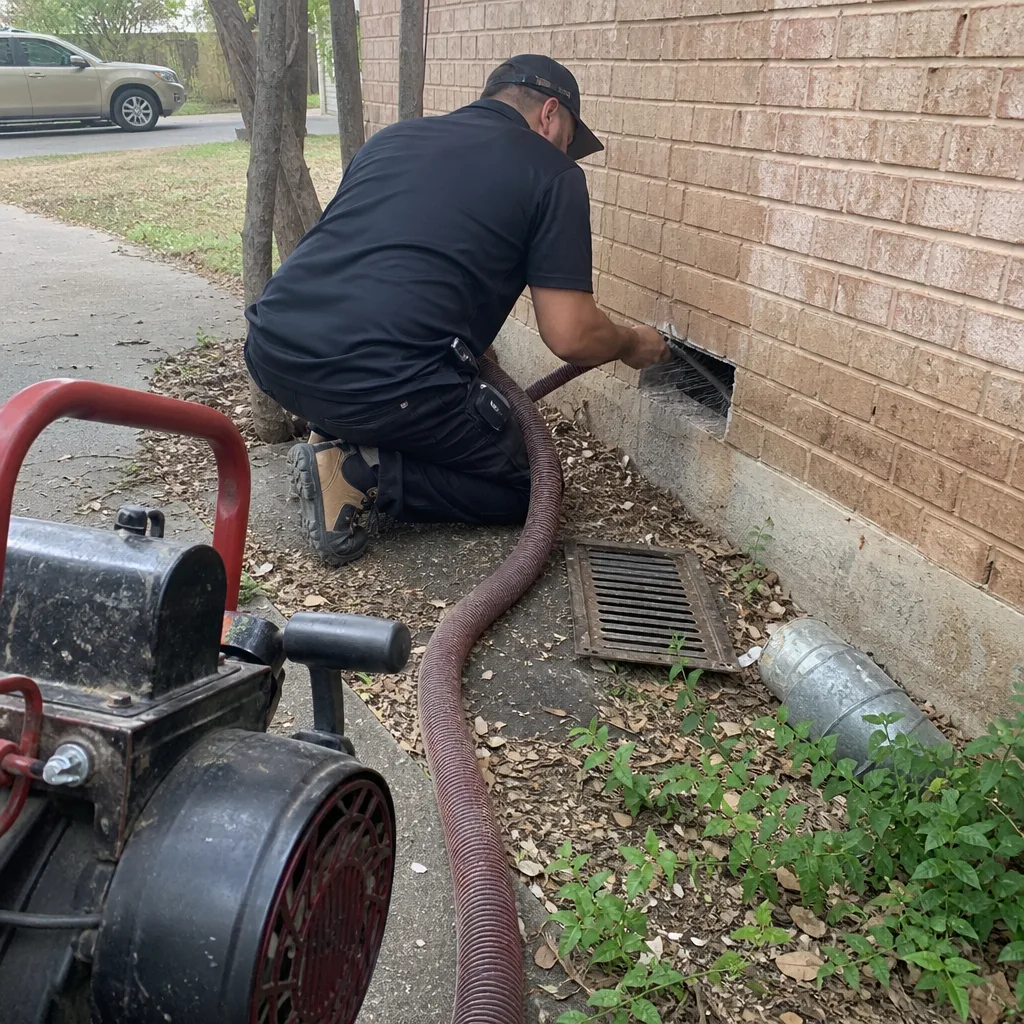 Before
 After
AfterHow Much Does Dryer Vent Cleaning Cost in San Antonio?
Dryer Vent Cleaning services in San Antonio typically cost between $99 and $229 for a standard single-family home, with most jobs landing around $129 to $169 when the vent run is under 25 feet and exits through a side wall or roof cap. Jobs involving long runs, bird nest obstructions, or crushed flexible duct behind the wall push toward the higher end – and anything requiring duct repair or rerouting is priced separately, in writing, before a single panel comes off.
Dryer Vent Cleaning Cost Breakdown (2026)
The table below reflects real pricing in the San Antonio market as of 2026. These are not national averages – they account for the housing stock, duct configurations, and labor costs specific to this city.
| Service | Typical Price Range | Notes |
|---|---|---|
| Standard dryer vent cleaning (up to 25 ft) | $99 – $149 | Straight or single-elbow runs, exterior wall or roof exit |
| Extended vent run (25 – 50 ft) | $149 – $199 | Common in two-story homes and garage laundry setups in Stone Oak and the Dominion corridor |
| Bird nest or debris obstruction removal | $60 – $120 (added to base) | Nesting is frequent in San Antonio’s older Alamo Heights and Monticello Park homes with worn or missing vent caps |
| Flexible duct replacement (foil or plastic) | $85 – $160 | Includes rigid metal transition piece; priced per linear section replaced |
| Vent cap replacement (exterior) | $45 – $95 | Louvered or pest-proof cap; roof-mounted caps cost more due to access time |
| Video inspection (borescope camera) | $0 – $49 | Included at no charge on CleanRun jobs – it’s the before photo in the documented record |
| Duct rerouting (in-wall or through attic) | $250 – $650+ | Quoted separately, in writing, after camera assessment confirms scope |
| Annual maintenance plan (dryer vent only) | $79 – $119/year | Covers one cleaning per 12-month period; some plans include priority scheduling |
What moves a job from the low end to the high end? Mostly distance and access. A gas dryer in a first-floor laundry room that exits through the side wall of a 1990s Helotes-area ranch is a 45-minute job. The same cleaning on a laundry closet stacked unit on the second floor of a newer Alamo Ranch townhome – with a 40-foot vent run looping through the attic before exiting the roof – takes longer, requires more equipment passes with the Rotobrush rotary brush system, and carries a higher price. That price is still written before work starts, every time, under Haven Standard Clause 1.
One thing that does not move the price: whether lint is visible at the exterior cap or not. Lint compaction happens deepest in the run, at bends and transitions, where you cannot see it from the outside. A Dryer Vent Inspection with a borescope camera pass before cleaning is the only way to know what you’re actually pricing. That camera pass is included on every CleanRun job at no charge – and the images stay in the customer’s job record.
What Affects Dryer Vent Cleaning Pricing in San Antonio
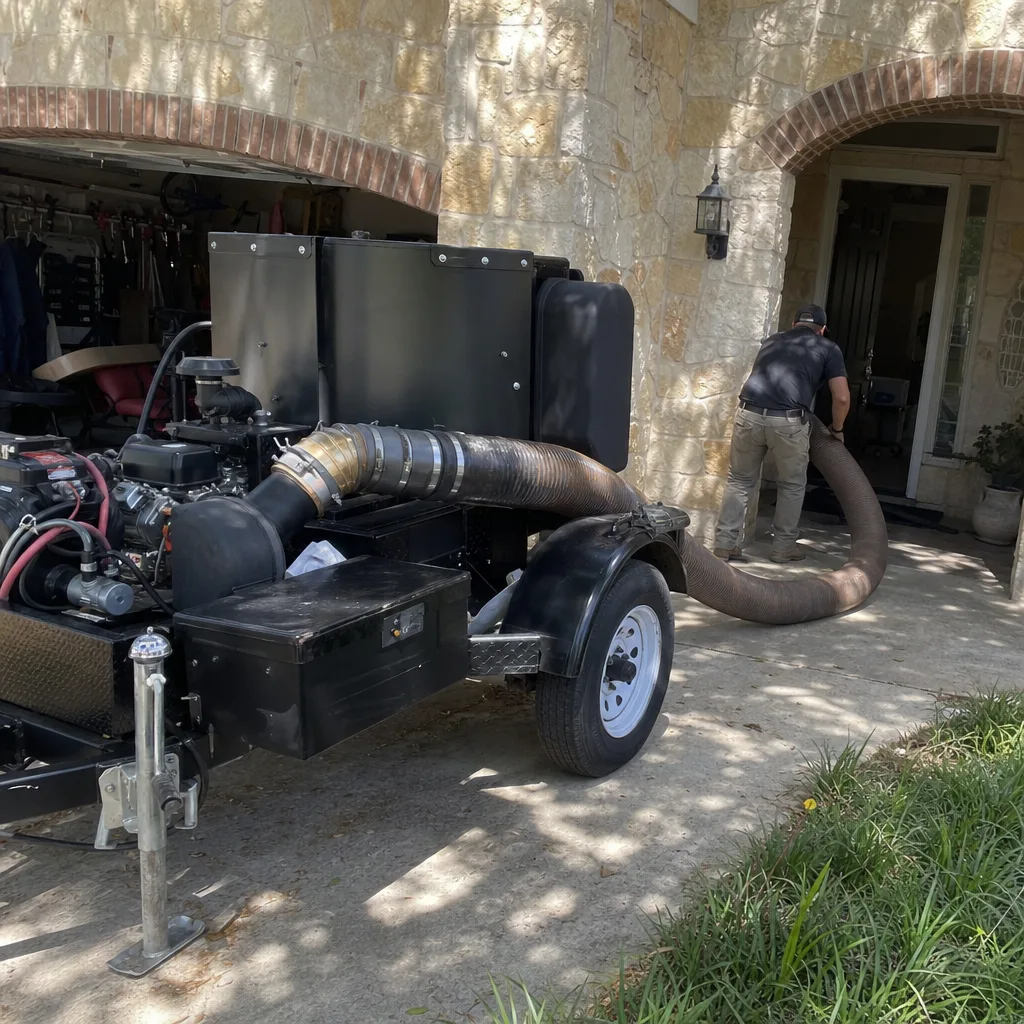
- Total vent run length: Every additional foot of duct is another foot the rotary brush and negative-pressure extraction hose have to travel. San Antonio’s newer master-planned communities – Alamo Ranch, Cibolo, and Converse – tend to have longer runs because laundry rooms are positioned away from exterior walls to maximize usable square footage in open-concept floor plans.
- Number of elbows and direction changes: Each 90-degree elbow is roughly equivalent to 5 additional linear feet of restriction. A run with three elbows is harder to clean thoroughly than a straight 30-foot run with zero, and it takes more brush passes to confirm the duct is clear end to end.
- Duct material and condition: Rigid galvanized or aluminum metal duct cleans faster and holds its shape under rotary brush action. White vinyl “slinky” flex duct – still present in a significant number of San Antonio homes built between 1985 and 2005 – can be compressed, accordion-kinked, or brittle enough to tear during aggressive cleaning. When the camera shows compromised flex duct, the right answer is to price a replacement, not pretend the cleaning will fix what material failure has already caused.
- Exit point location and roof pitch: Vents that exit through a side wall below the roofline are straightforward. Vents that exit through a roof cap require the technician to access the roof safely, assess the cap condition, and work from above. In San Antonio’s hill country-adjacent neighborhoods like Leon Springs and Fair Oaks Ranch, steeper roof pitches add real access time and are reflected honestly in the quote.
- Obstruction type and severity: Lint buildup is the expected finding and is priced in the standard range. Bird nests are a separate category – great-tailed grackles and house sparrows nest aggressively in San Antonio from February through June, and a full nest in the vent cap can require mechanical extraction, cap replacement, and a follow-up camera confirmation that the run is clear. This adds cost. It is also why a pest-proof louvered cap is worth the $45 to $95 on any home where the current cap is more than five years old.
- Access to the dryer and laundry area: A washer-dryer pair in a stacked configuration in a closet adds setup time. A dryer that has been pushed directly against the wall with no flex connection visible requires the technician to move the appliance first. None of that is unusual, but it is time, and time is an honest cost that shows up in the written price before the work starts.
BeforeAfterThe $79 Coupon Problem in San Antonio
San Antonio has a well-documented low-price coupon market in duct and Vent Cleaning. The $79 dryer vent cleaning offered by several operators in the area typically covers a shop-vac pass from the exterior cap toward the dryer – no rotary brush agitation, no negative-pressure extraction from the dryer end, and no camera confirmation that the duct is actually clear. The lint compacted at the first elbow, which is where most fires start, stays exactly where it was.
That is not a small distinction. The U.S. Fire Administration attributes roughly 2,900 residential dryer fires per year to failure to clean the vent, and the fire starts in the duct, not in the lint trap. A cleaning that does not mechanically agitate and extract from both ends of the run is not a cleaning in any meaningful sense – it is a visit with paperwork.
CleanRun’s Dryer Vent Cleaning in San Antonio uses Rotobrush rotary brush systems combined with Nikro negative-pressure extraction equipment, with camera documentation before and after. If the photos don’t show a clear duct, the job isn’t finished. That is Haven Standard Clause 2: Documented Results. Customers receive the before and after images as part of the standard job record – not because they asked, but because it’s how every job has been delivered since 2013.
How to Save on Dryer Vent Cleaning in San Antonio
The most straightforward way to reduce cost is to clean the vent on a regular schedule before buildup becomes obstruction. A vent that is cleaned annually – or every 18 months for a household of two with moderate laundry volume – stays in the $99 to $149 range. A vent that has not been cleaned in six years and has a compressed flex section and a partial bird nest costs $280 to $380 to restore to safe operation. Frequency is the most effective cost-control tool available.
Beyond that, a few specific approaches keep the price honest:
- Get a written price before any work starts. This is not optional with a reputable company. Under Haven Standard Clause 1, CleanRun delivers a written price before a single panel is moved. Any company that cannot produce a written price for the specific job at your specific address, before work begins, is one that will find reasons to charge more once the duct is open.
- Ask for a free second opinion on any written estimate you already have. CleanRun offers a free second opinion on any written estimate from a competitor – the technician puts CleanRun’s number next to it in writing. This is available at no cost, no obligation.
- Combine services on the same visit. If your dryer vent is due for cleaning and your HVAC air ducts have not been serviced in more than three years, scheduling both on the same visit reduces the per-job trip cost. A technician is already at your home with equipment staged – that efficiency is real and is reflected in combined-service pricing.
- Replace a cheap plastic or foil flex transition with rigid metal once. The $85 to $120 cost of replacing the last 4 to 6 feet of flex duct behind the dryer with code-compliant rigid metal is a one-time expense. Rigid metal does not collapse, does not trap lint in accordion folds, and cleans more completely in less time on every future visit – which keeps future cleaning costs at the low end of the range.
- Schedule outside peak demand periods. Spring in San Antonio – particularly March through May – is when post-winter inspections pile up and bird nest obstructions become frequent. Scheduling in late summer or early fall typically means faster appointment availability.
For an exact written price at your address, call (726) 600-7155. The estimate is free, the price is written before work starts, and there is no version of this where you get a surprise number after the duct is open.
What the Cleaning Process Actually Involves
Knowing what you’re paying for is reasonable. Here is what a properly executed dryer vent cleaning looks like, step by step, in plain language.
Step 1: Camera Assessment (Borescope Inspection)
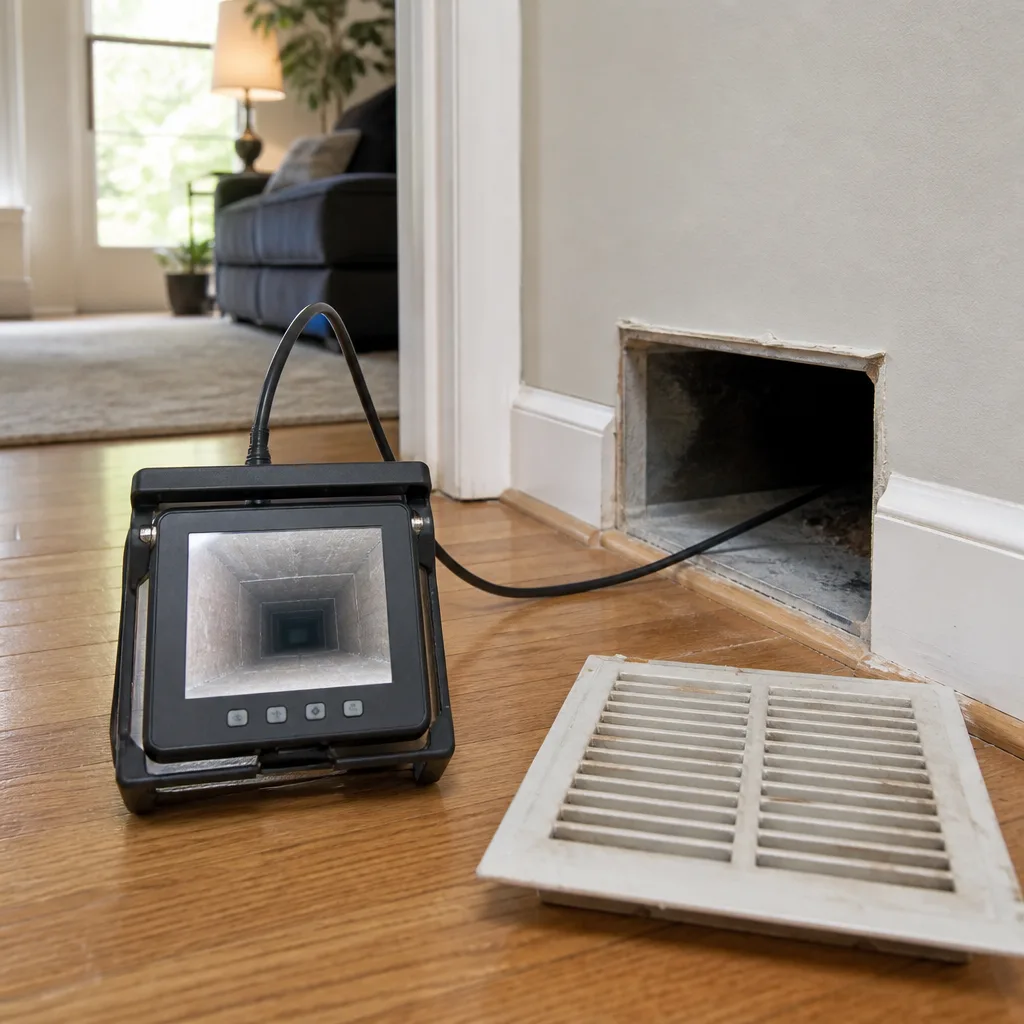
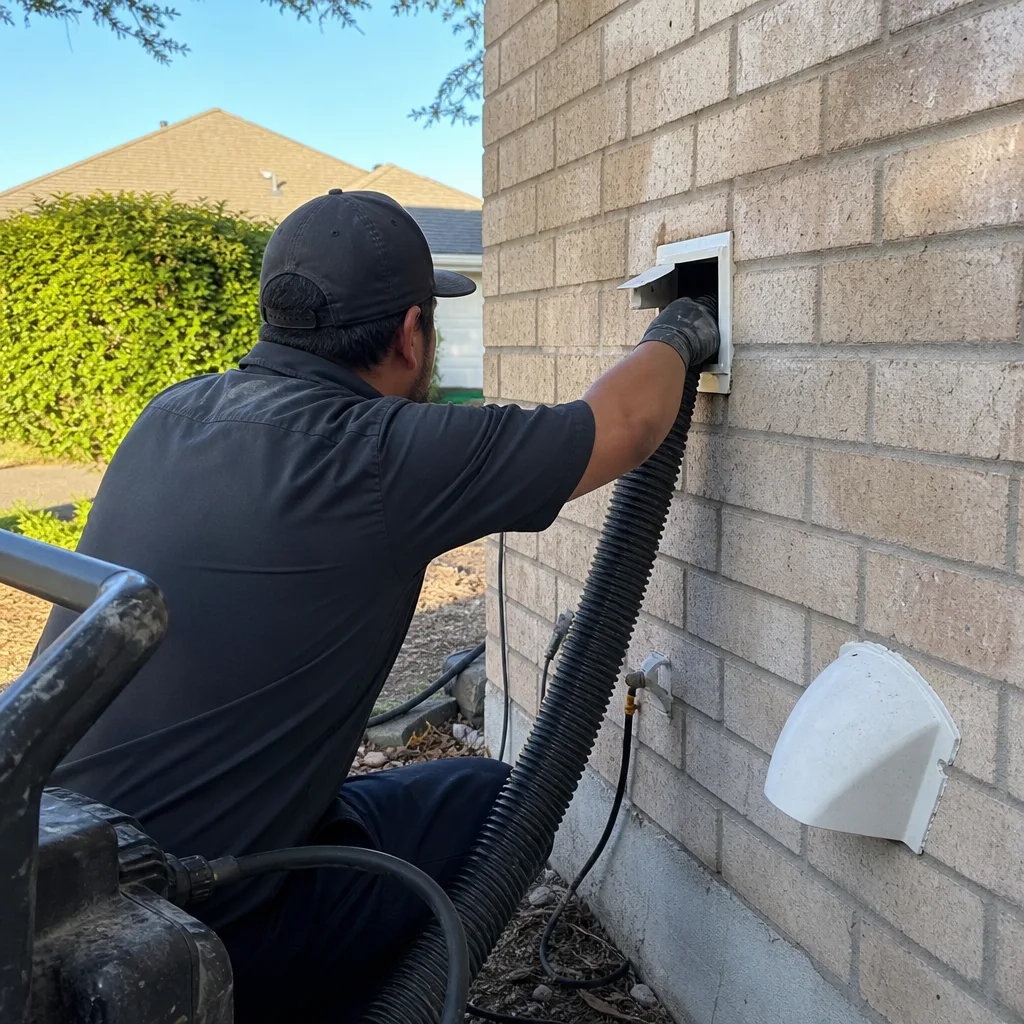
Before any cleaning equipment is introduced, the technician runs a small borescope camera through the vent run from the dryer end. This shows the actual condition of the duct – lint depth at each elbow, presence of nesting material, condition of the flex transition, and whether any sections are crushed or disconnected. The camera image is photographed and saved. This is the “before” in the documented photo record every CleanRun job includes by default.
This step is the reason CleanRun can give you a written price that reflects your actual vent, not a guessed average. It is also the step that $79 coupon operators skip entirely.
Step 2: Rotary Brush Agitation
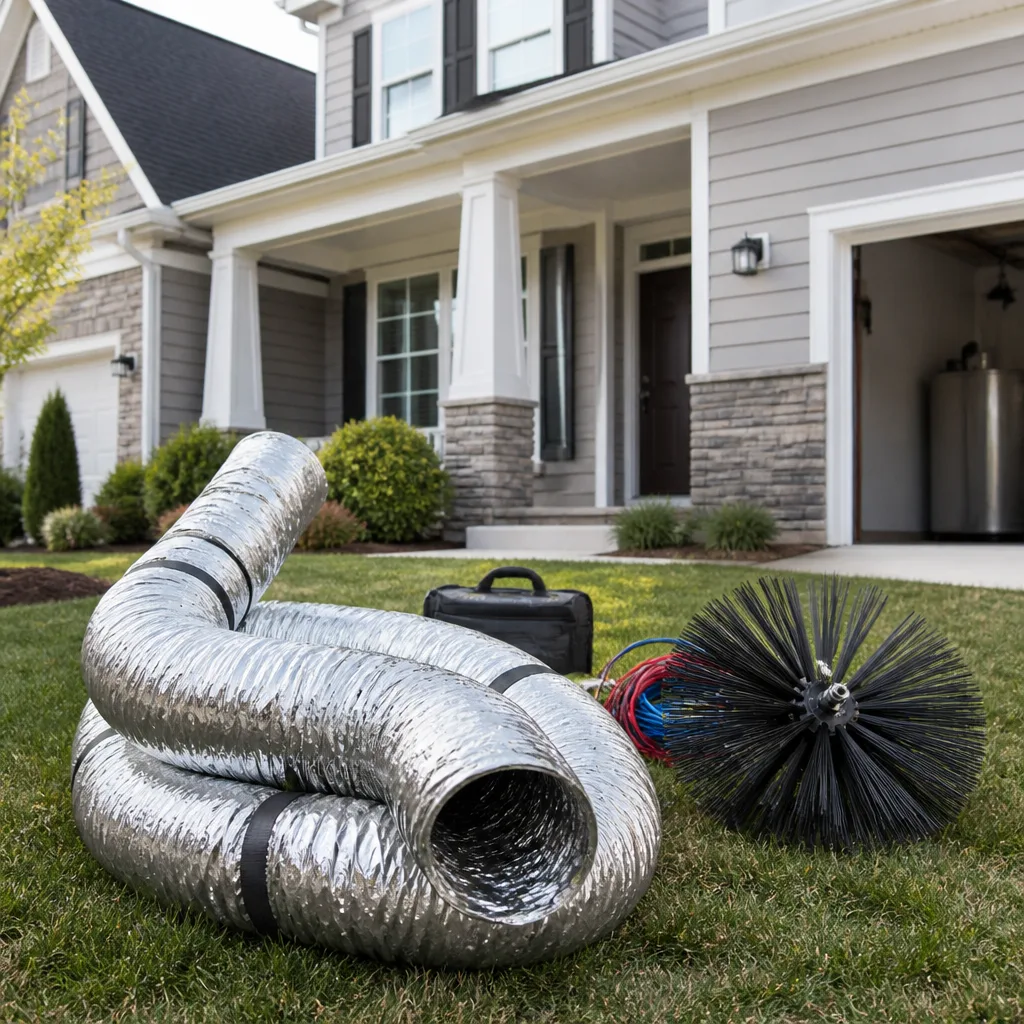
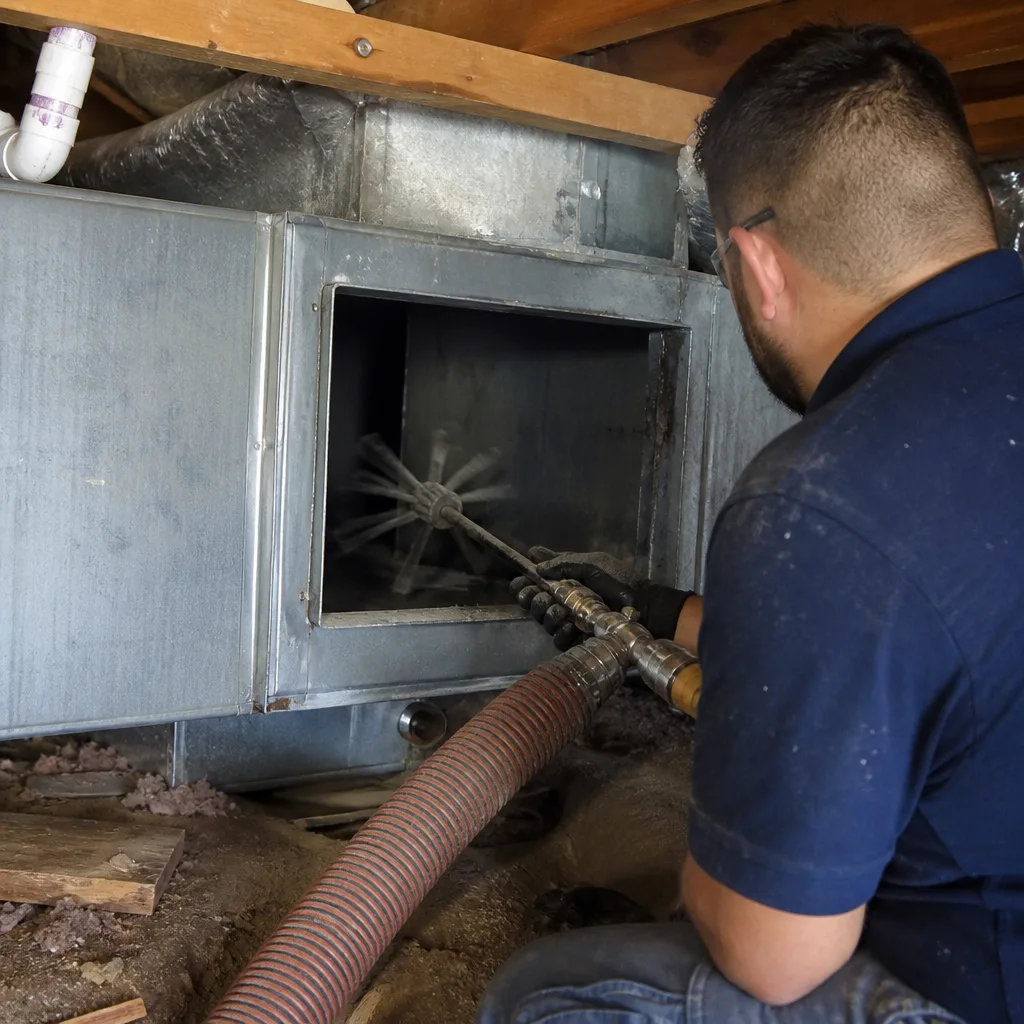
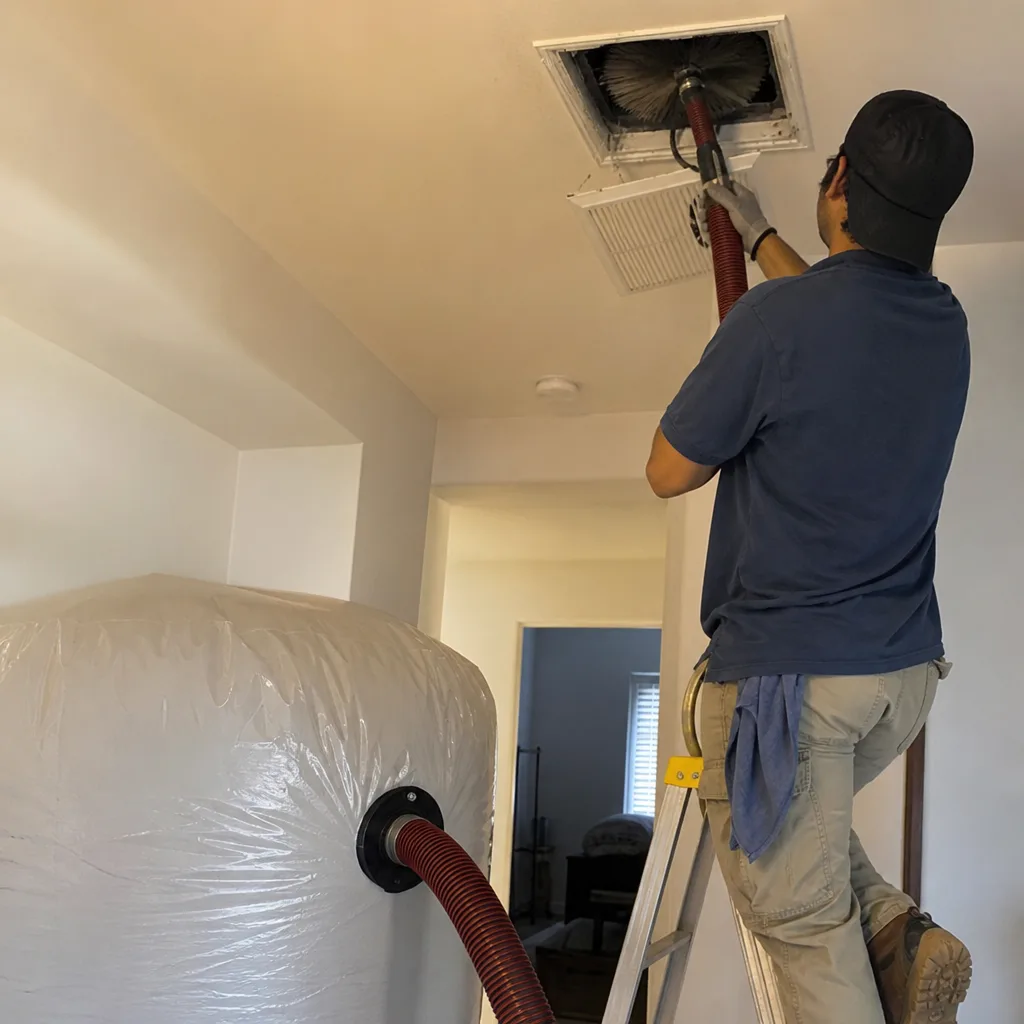
A Rotobrush rotary brush is fed through the duct from the dryer end. The rotating bristles agitate compacted lint, loosening it from the interior duct wall without damaging the duct material. The brush is run in passes – not a single pass and done, but multiple directional passes until resistance drops and the bristles return clean. In a 25-foot run with two elbows, this typically takes 20 to 30 minutes of active equipment time.
Step 3: Negative-Pressure Extraction
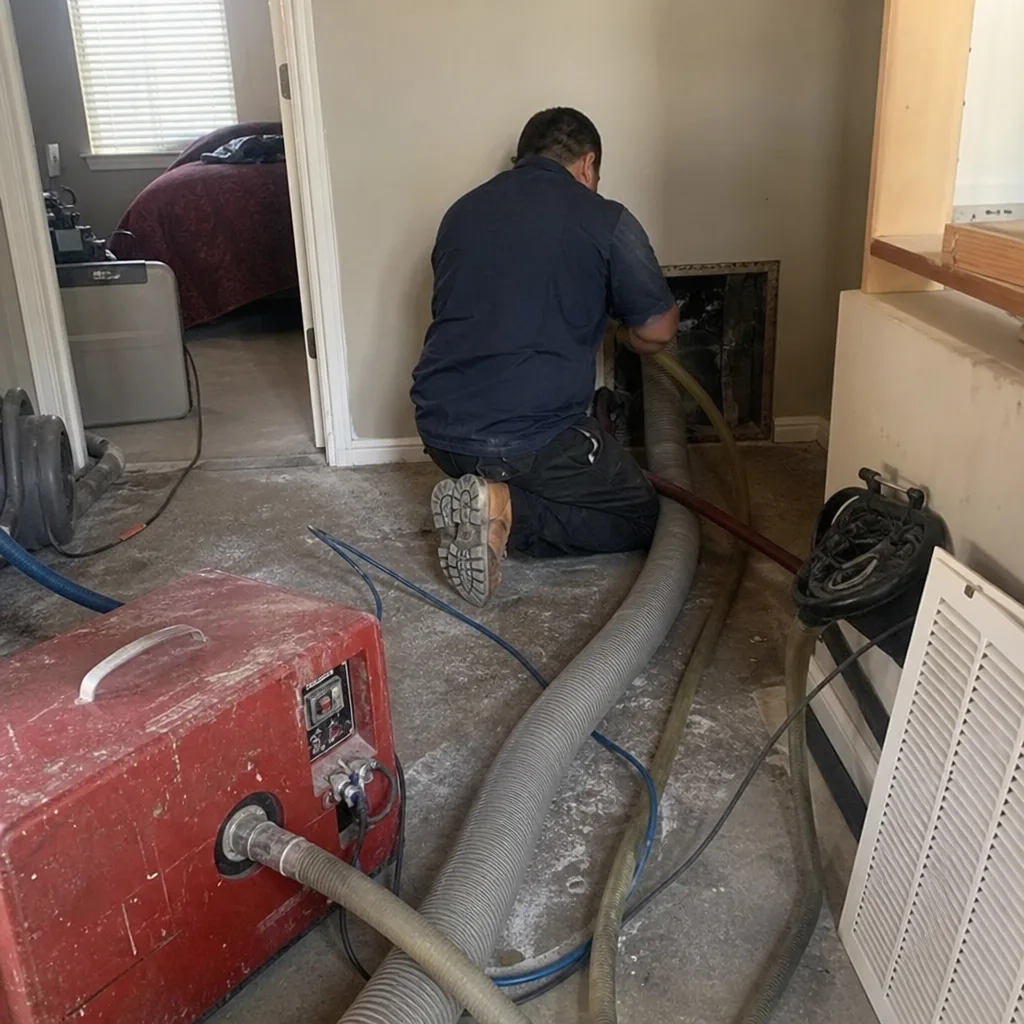
While the brush runs, Nikro negative-pressure extraction equipment pulls agitated debris through the duct and into a sealed collection unit. Negative pressure means the air flows toward the equipment, not toward your laundry room – lint and debris are captured, not redistributed. This is the difference between a cleaning and a redistribution exercise.
Step 4: Exterior Cap Inspection and Clearing
The technician checks the exterior vent cap – whether it opens freely, whether the louvers are intact, whether there is any evidence of nesting at the cap entry. A cap that does not open fully under normal dryer airflow is a restriction that negates any cleaning done from the interior. If the cap needs replacement, that is quoted and confirmed in writing before replacement happens.
Step 5: Post-Cleaning Camera Confirmation
After extraction, the borescope camera passes through the duct again. The post-cleaning images are compared to the pre-cleaning images. If the duct is clear, those photos go into the customer’s job record. If the camera shows remaining material at a specific location, the technician addresses it before calling the job complete. This is Haven Standard Clause 2: Documented Results – the work is confirmed, not assumed.
San Antonio-Specific Considerations
San Antonio’s housing stock creates a few patterns that show up consistently in dryer vent jobs around the city.
Homes built in the 1970s and 1980s in neighborhoods like Woodlake, Oakwell Farms, and Castle Hills frequently have older metal duct in good structural condition but with decades of lint compaction at every elbow. These clean well with rotary brush and extraction, but they take longer than a newer duct because the lint layer is dense and adhered. The price reflects that time honestly.
Newer construction in master-planned communities – Alamo Ranch on the northwest side, Cibolo on the northeast, and Converse further east – tends to have longer vent runs and attic routing to accommodate the open-concept layouts popular since the mid-2000s. Attic-routed vents in San Antonio’s summer heat are particularly prone to lint adhesion because the duct surface temperature accelerates moisture evaporation from the lint, essentially baking it to the duct wall. Cleaning an attic-routed vent that has not been serviced in more than three years often falls in the $160 to $199 range, not the base $99 to $149.
Bird activity is a genuine local factor. San Antonio sits in a major migratory corridor, and great-tailed grackles, house sparrows, and European starlings actively nest in vent openings during spring. A vent cap found with a fully developed nest inside is not a rare edge case in Alamo Heights, Southtown, or the King William District – it is a service call that happens multiple times per week during March through May. If your cap is missing, cracked, or visibly worn, budget for replacement as part of the cleaning visit. It is the cheaper outcome compared to a nest-and-lint combination blocking a duct entirely.
San Antonio’s humidity patterns also matter. The city sits in a transitional zone where Gulf moisture can push relative humidity to 80 percent or higher from May through September. Lint that absorbs that moisture and then dries repeatedly over a summer develops a denser, more compacted texture than lint in a drier climate. This is one reason why the national “clean every year” guideline translates to “clean at minimum every 12 to 18 months” for most San Antonio households, not every two to three years as some general guides suggest.
When to Call Immediately, Not Eventually
Some signs indicate a vent that is past due for a scheduled cleaning and into the range where a prompt service call is the right response:
- Clothes are taking two drying cycles to dry when they previously took one – this is the most common reported symptom of a significantly restricted vent
- The top of the dryer is noticeably hot to the touch during or after a cycle
- There is a burning or musty smell during operation – lint has a distinctive burnt smell when it reaches the surface temperature of the duct near the heating element
- The exterior vent cap is not visible or does not appear to be moving air when the dryer runs
- A gas dryer is cycling off before clothes are dry, then restarting – this is often the thermal limit switch cutting power due to excessive heat buildup from a restricted vent
A high-tension spring or electrical panel is a situation that warrants a specific caution about DIY risk. Dryer vents do not carry that same immediate physical hazard, but a significantly blocked vent in an active dryer is a fire risk. If you are seeing two or more of the symptoms above, the right call is to schedule the cleaning within the week, not at your next convenient opening.
CleanRun’s Pricing Commitment in San Antonio
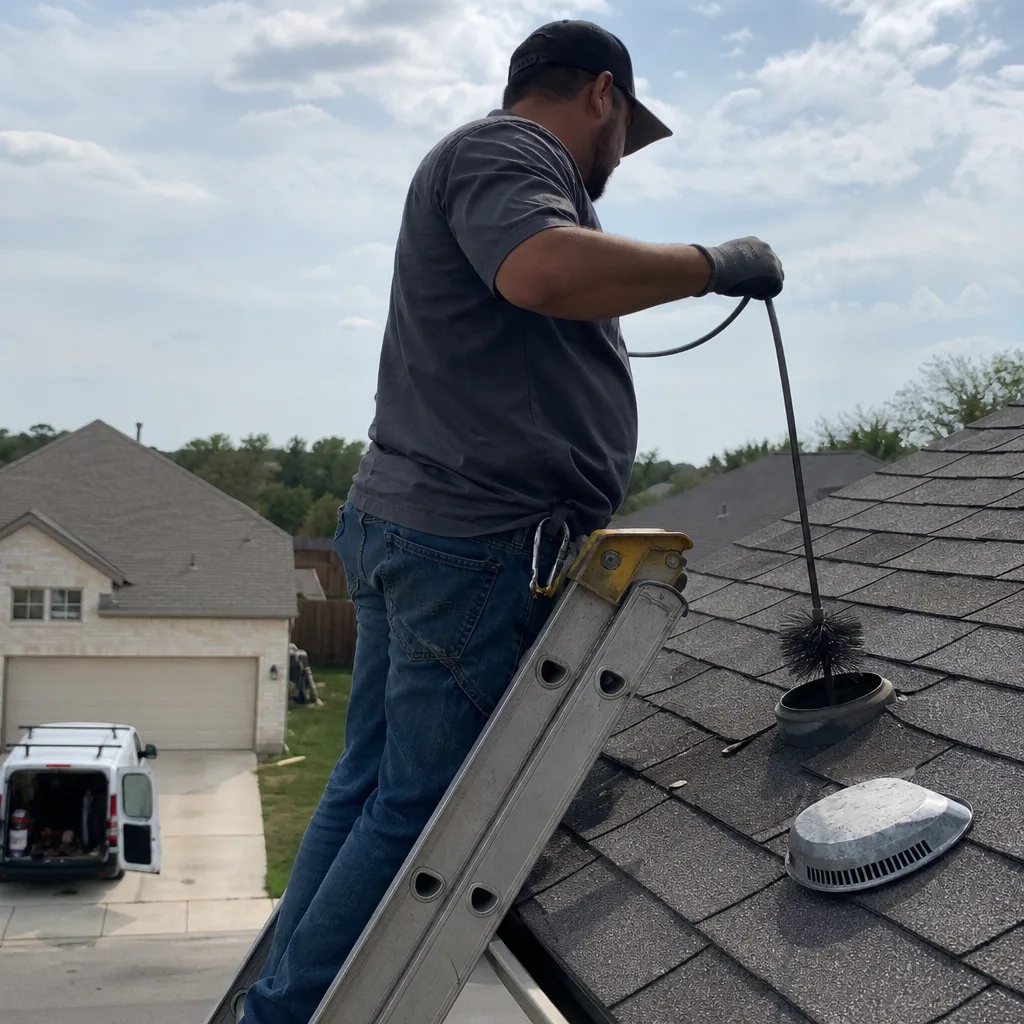
CleanRun has been operating in San Antonio since 2013, and the pricing model has not changed: written price before work starts, documented photo record when the crew leaves, 365-Day Done Right Promise backing every job in writing. Over 52,000 homes served in that time, every one with an upfront written price and a before-and-after photo record included as a standard deliverable, not an upgrade.
The promise behind the 365-Day Done Right guarantee is specific: if the work is not right, CleanRun makes it right. Not “subject to manager approval” – the written guarantee is the whole statement. That applies to dryer vent cleaning the same as it applies to a full air duct cleaning on a 4,000-square-foot home in the Dominion.
Tomas Reyes, who leads CleanRun’s operations in San Antonio, built the company on one premise: that a customer who can see what was found, see what was done, and hold a written guarantee in their hand does not need to be sold to. The work either matches the written standard or it does not, and if it does not, the company corrects it. That is not a marketing position – it is the operating procedure.
All technicians working under the H.A.V.E.N. Standard are background-checked, arrive in uniform, and are identified by name before they arrive at your home – Haven Standard Clause 3: Verified Crews. Equipment on every dryer vent job includes Rotobrush rotary brush systems and Nikro extraction units. Customers can look up both product lines independently before agreeing to a price.
Find the full service overview on our home page, or go directly to the service detail to see what’s included and what’s not.
FAQs – Dryer Vent Cleaning Cost in San Antonio
How much does dryer vent cleaning cost in San Antonio?
Most dryer vent cleanings in San Antonio cost between $99 and $199, with the majority of single-family jobs landing between $129 and $169. The price depends primarily on vent run length, number of direction changes, and whether an obstruction like a bird nest is present. CleanRun delivers a written price before any work starts – call (726) 600-7155 for a free estimate at your specific address.
How often should a dryer vent be cleaned in San Antonio?
For most San Antonio households, every 12 to 18 months is the right interval. The city’s spring humidity and summer heat cause lint to compact more aggressively than in drier climates, and San Antonio’s spring bird activity means vent cap obstructions are common between March and June. A household of four doing six or more loads per week should lean toward 12 months. A household of two with lighter laundry volume can reasonably go to 18 months between cleanings.
Is dryer vent cleaning worth the cost?
Yes – and the math is not complicated. A restricted vent can add 30 to 60 minutes to every drying cycle. At average San Antonio electricity rates, that is a measurable addition to your monthly utility bill, and it compounds over months of use. The bigger cost is dryer component wear: the thermal limit switch, heating element, and motor all run harder against a restricted vent. A $129 cleaning that extends dryer life by two or three years pays for itself clearly. The fire risk reduction is a separate and non-negotiable argument entirely.
Can I clean my dryer vent myself?
The lint trap and the first 12 to 18 inches of the transition duct behind the dryer can be cleared with a dryer vent brush kit available at any hardware store, and doing that between professional cleanings is useful. What a DIY brush kit cannot do is agitate and extract lint from a 30-foot run with two elbows, confirm a clear duct with camera verification, or reach a vent cap two stories up on a pitched roof. For those sections of the duct, professional rotary brush and negative-pressure extraction equipment is the correct tool. The DIY approach is a maintenance supplement, not a replacement for a full cleaning.
What happens if I don’t clean my dryer vent?
The most immediate effect is a dryer that takes progressively longer to dry a load – often two full cycles where one used to finish the job. Behind that, the thermal limit switch begins cycling the dryer off mid-load as the duct heat builds, which most people misread as a failing dryer. The actual mechanical failures – heating element burnout, motor failure – come next, and they are expensive: $200 to $400 in appliance repair, often for a machine that a clear vent would have run correctly. The fire risk is the final and most serious consequence: lint is highly combustible, and the U.S. Fire Administration data on residential dryer fires consistently points to failure to clean as the leading cause. In San Antonio, where summer heat accelerates lint drying and compaction in attic-routed vents, that risk is not theoretical.
Does CleanRun charge extra for a camera inspection on dryer vent jobs?
No. The borescope camera inspection – before and after the cleaning – is included on every CleanRun job at no additional charge. It is part of the Documented Photo Record that every customer receives as a standard deliverable, and it is the basis for the written price you receive before work starts. A company that charges extra for documentation of the work it claims to have done is telling you something about how it treats evidence.
Written by Tomas Reyes, Owner at CleanRun Air Duct Cleaning San Antonio, serving San Antonio since 2013.
Pricing reflects the San Antonio market as of 2026. CleanRun Air Duct Cleaning San Antonio offers free estimates – call (726) 600-7155.
What Our Customers Say
"My allergies genuinely improved. They also told me the ducts did not need sealing, which I had been quoted for elsewhere."
- Petra K."They found a disconnected duct in the crawl space that had been dumping conditioned air under the house for years. Photographed it, quoted the repair, fixed it."
- Devon A."The before and after photographs of each run are the reason I used them. You cannot argue with what came out of the return."
- Marguerite O.