
Whole-system duct and dryer vent check with before-and-after photos - you see exactly what came out of your vents
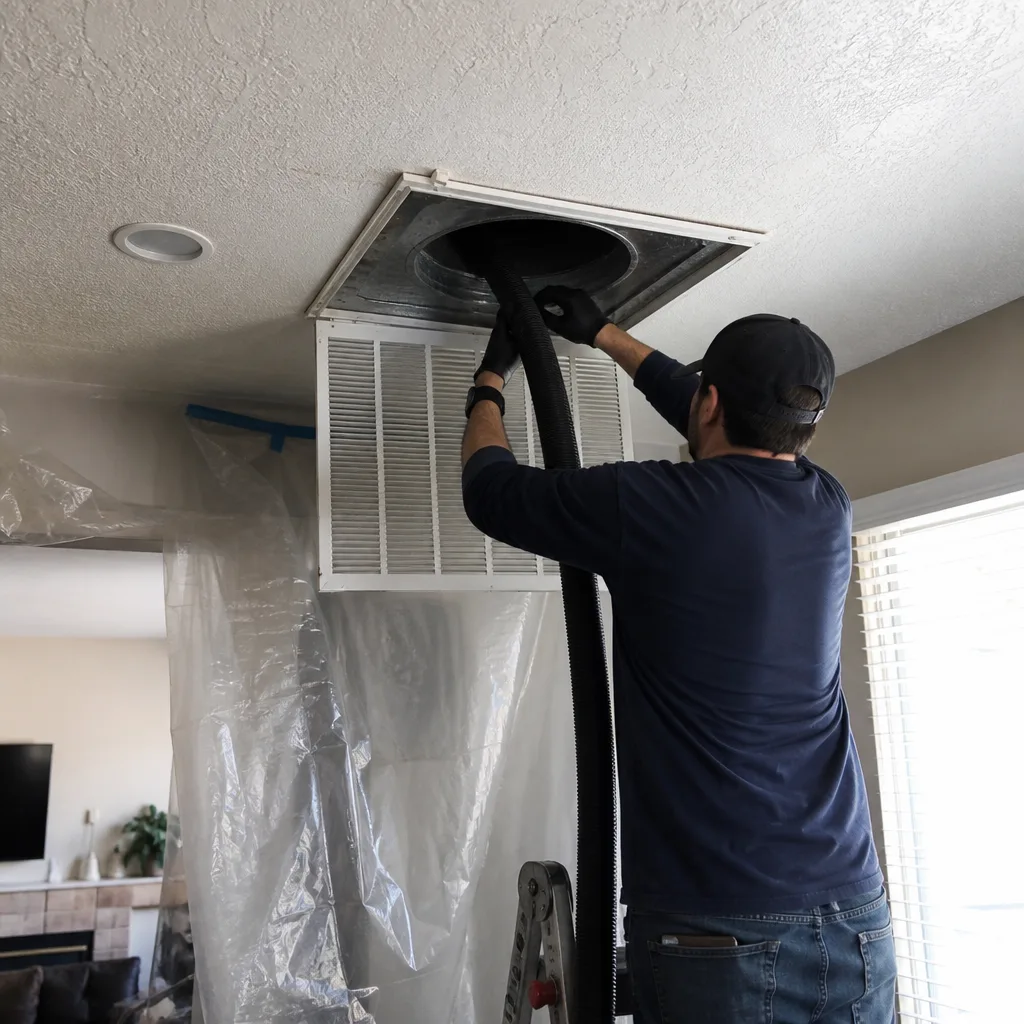
That "$99 whole-house special" is a bait ad - the real number appears once they are in your hallway, or the "clean" is a shop-vac at the register. We photograph the inside of your ducts before and after instead.

 Before
 After
After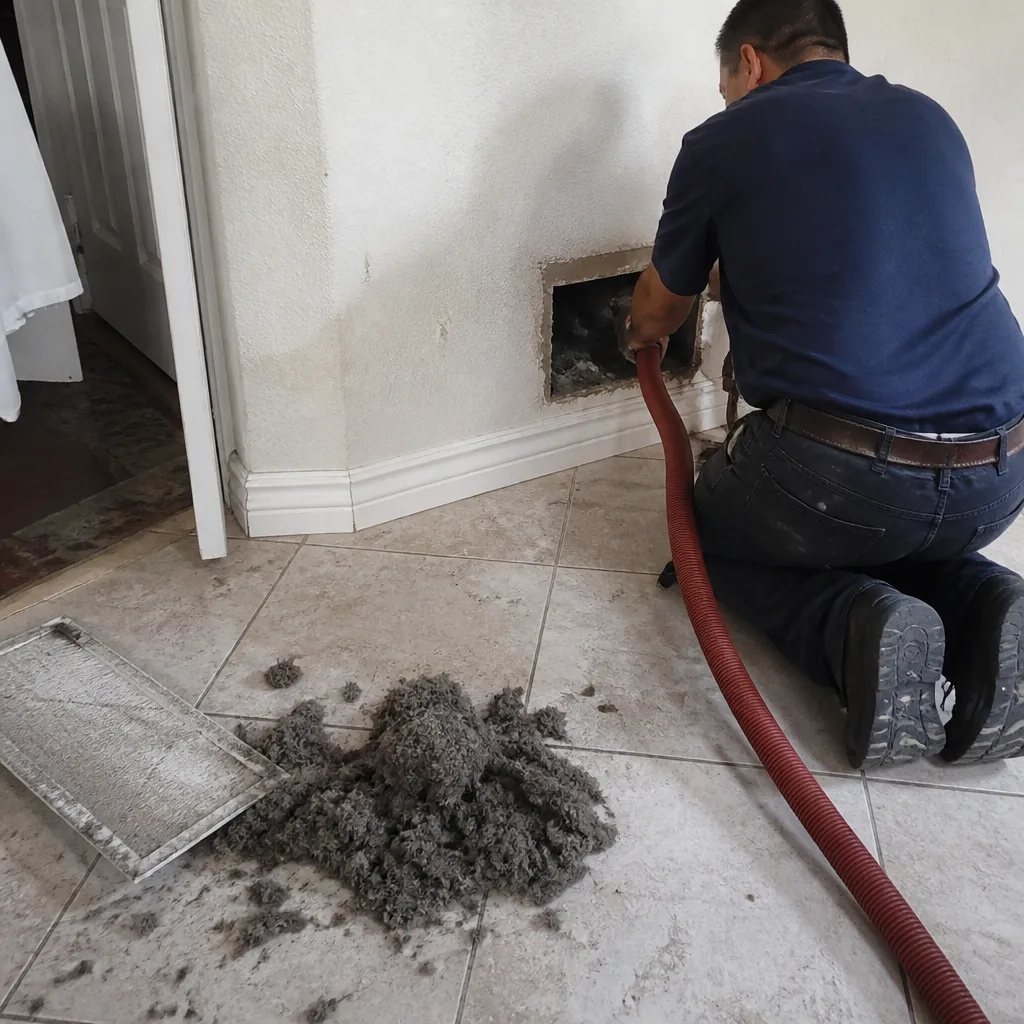 Before
 After
After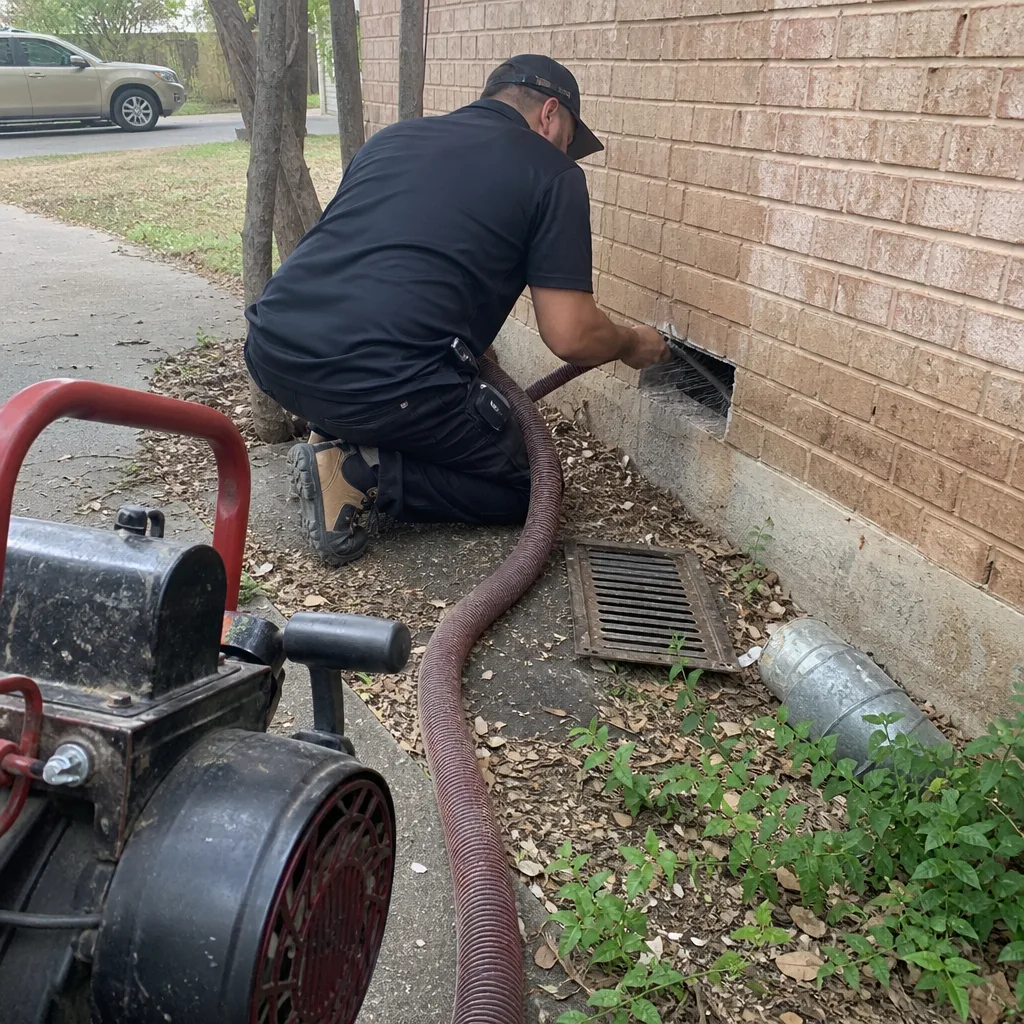 Before
 After
AfterVent Cleaning in San Antonio, TX
Our Dryer Vent Cleaning services in San Antonio typically run between $89 and $175 for a standard single-story run, and the job is almost always completable the same day you call. CleanRun Air Duct Cleaning San Antonio photographs the inside of every vent run before and after each job, so you see exactly what was removed – not a vague before-and-after story, but an actual image of the lint accumulation point, the elbow condition, and the terminal cap. If you want to skip ahead, call (726) 600-7155 and a live person will pick up.
This page covers vent cleaning as a focused service: what it involves, what the camera typically finds inside San Antonio homes, what it costs, and how the CleanRun process works from driveway to documented photo record. If you want the broader picture – including dryer vent cap replacement, transition hose inspection, and exhaust flow testing – the full Dryer Vent Cleaning in San Antonio page has all of it.
Tomas Reyes has led the CleanRun crew since 2013. Over 52,000 homes served across the metro, every one quoted with a written price before a single panel came off. San Antonio’s specific housing stock – slab foundations, interior laundry closets, long horizontal vent runs through cabinetry, and the particular combination of high summer humidity and cool-season dew point swings – creates lint compaction patterns we see constantly. That field record is what informs the process below.
—
When You Need Vent Cleaning
The dryer vent system in most San Antonio homes runs longer than homeowners expect. A utility room on the interior of the home, tucked behind the kitchen or in a central hallway, can mean 15 to 25 feet of ductwork making one or two 90-degree bends before it reaches the exterior wall. That geometry traps lint. Here are the situations where vent cleaning moves from optional to necessary.
- Drying cycles are running long. A standard cotton load should dry in 35 to 45 minutes. If you’re running 60 to 75-minute cycles and the drum is heating normally, restricted airflow through the vent is the most common explanation. In Alamo Heights and Olmos Park, where older homes were retrofitted with interior laundry rooms, we regularly find the vent run exceeds manufacturer-rated length by 30 to 40 percent once the elbow equivalents are counted.
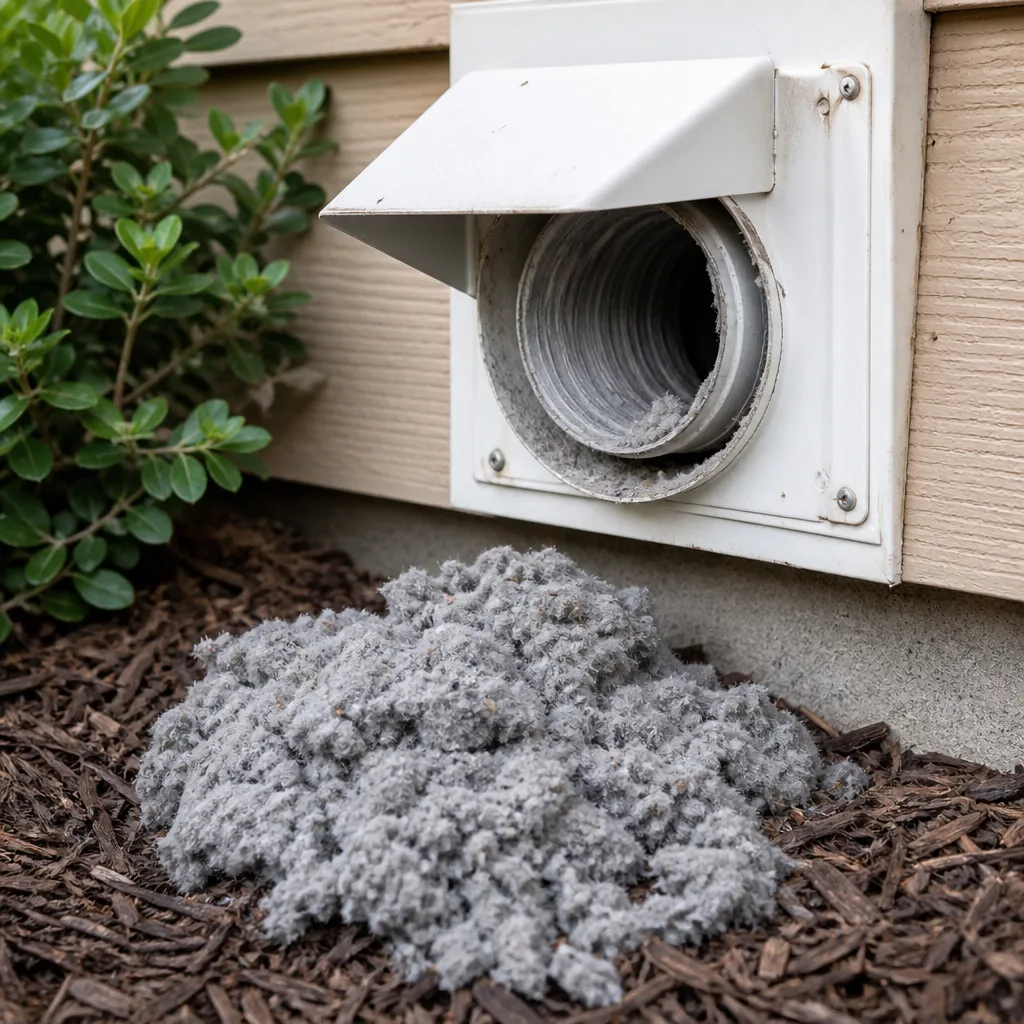
- The exterior vent cap is showing lint accumulation. A small fringe of lint around the cap flap is normal. Lint packed into the louvers, matted against the screen, or visible from two feet away means the duct interior has been shedding debris for a while. This is common in Stone Oak and Helotes-area homes where the exterior cap faces prevailing south wind and partially blocks during high-pollen months.
- The laundry area feels warm or humid during a cycle. The dryer expels hot, moisture-laden air through the vent. When that path is restricted, the pressure backs up and the heat has nowhere to go. A warm laundry closet during a dry cycle – not just at the dryer itself, but in the surrounding cabinetry – points to partial blockage or a disconnected section of transition hose.
- It’s been more than 12 months since the last cleaning. The National Fire Protection Association’s standard 211 recommends annual inspection and cleaning of dryer exhaust systems. In San Antonio’s climate, where air conditioning runs from April through October and interior humidity is managed aggressively, the lint-moisture combination creates compaction faster than in drier climates. Annual service is a floor, not a maximum interval.
- You can smell something musty or scorched near the dryer. A musty odor usually means lint has absorbed moisture and is sitting wet inside the duct. A scorched smell – distinct from normal dryer heat – means lint is getting close to an ignition threshold. Either reading on the camera warrants same-day clearing.
- You’ve recently moved into a home built between 1995 and 2010. This era of San Antonio construction frequently used flexible plastic or foil transition hose in the interior run rather than rigid metal ducting. Plastic flex degrades, sags, and creates low spots where lint collects. If no documentation of prior vent cleaning exists, we treat the vent as if it has never been cleaned – because statistically, it probably hasn’t.
—
Our Vent Cleaning Process
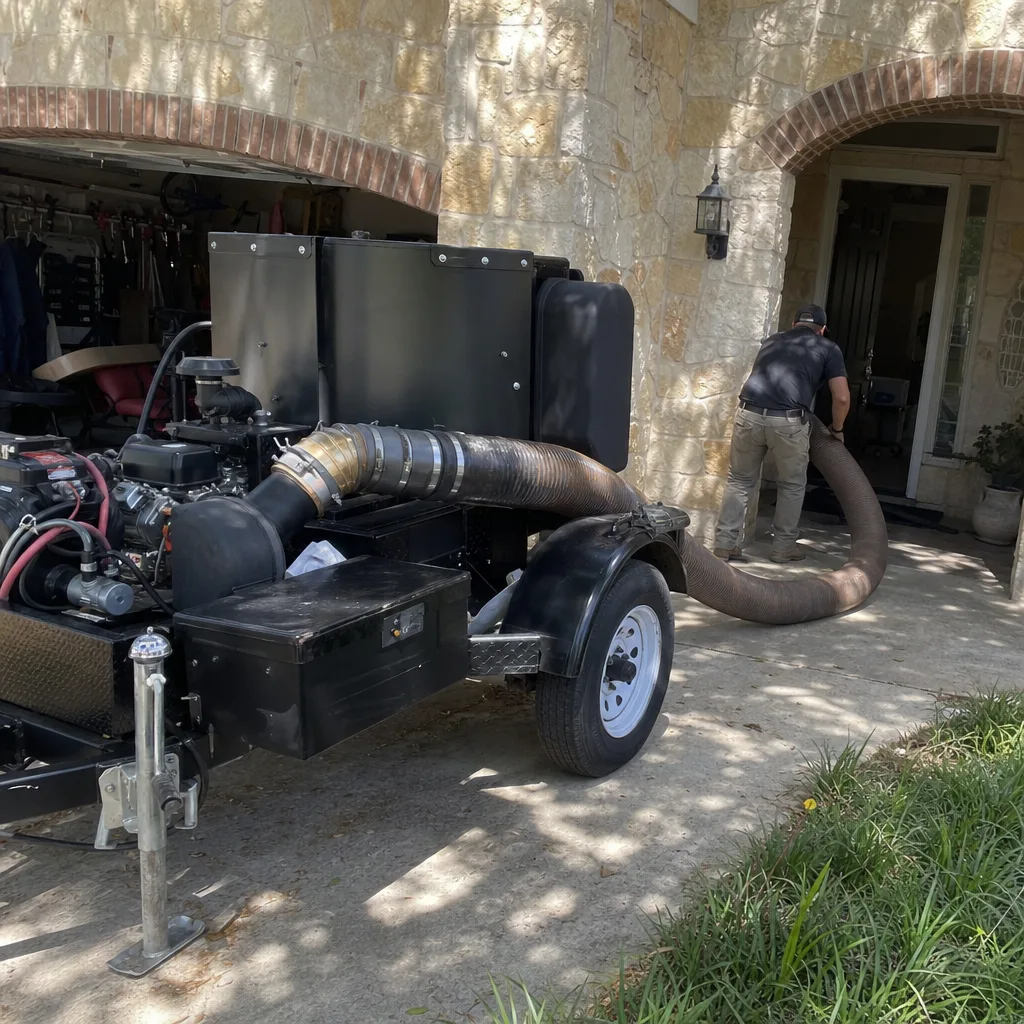
The process is the same on every job – not because it’s a script, but because the steps exist for documented reasons. Skipping the camera pass to save 10 minutes is how you miss the 3-inch lint mass at the second elbow that the shop-vac never reached. Here’s how a CleanRun vent cleaning goes from start to finish.
- Written price before anything else. Haven Standard Clause 1 is non-negotiable: you receive a written price before a single panel comes off or a single tool comes out. The price accounts for vent length, number of elbows, cap style, and any visible exterior issues identified from a quick walk-around. If something changes once the camera goes in, we stop and revise the quote before continuing. No surprises on the invoice.
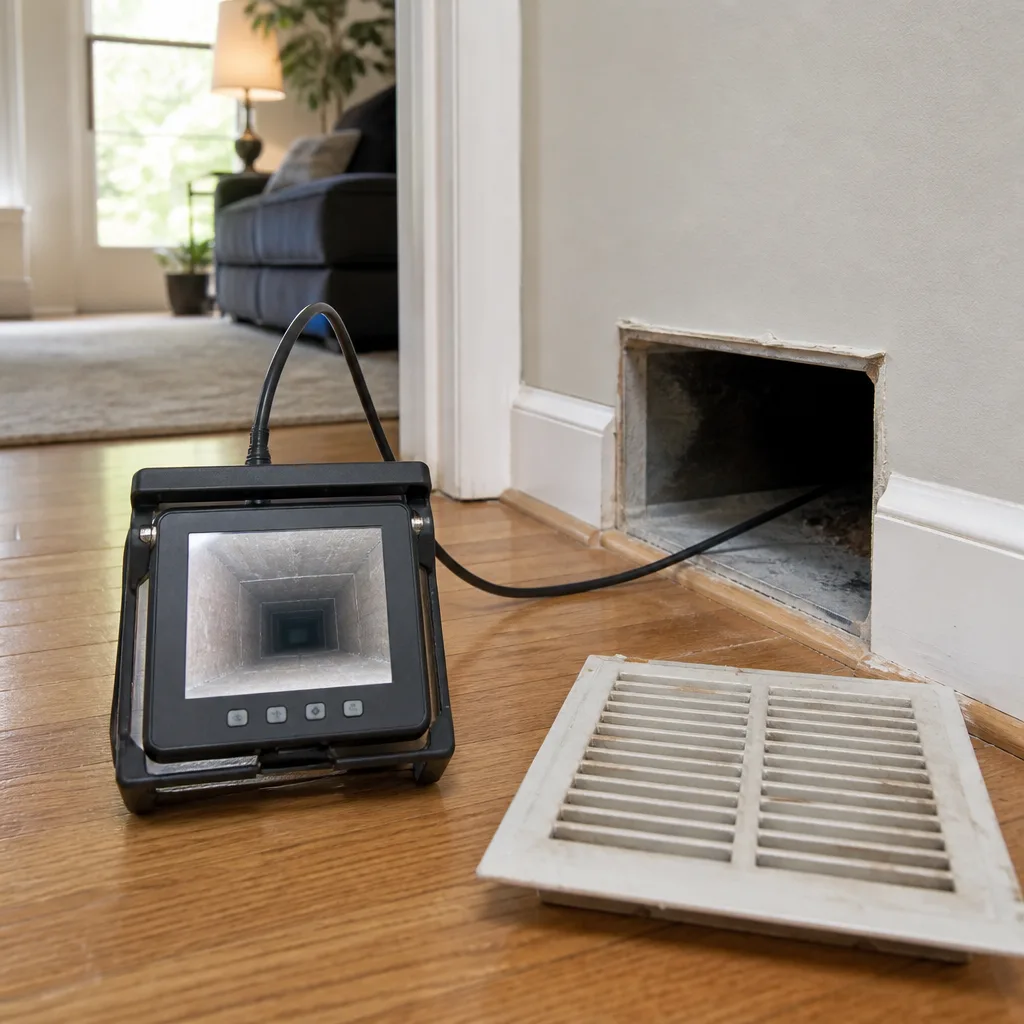
- Pre-cleaning camera inspection and photo record. A flexible camera goes into the vent at the dryer connection point and travels the full run to the exterior cap. Every condition we find – lint build-up locations, elbow condition, transition hose type, cap flap operation – is photographed. This is the “before” portion of the documented photo record that every CleanRun customer receives as a standard deliverable. You see what’s in your duct before we say anything about what needs to happen.
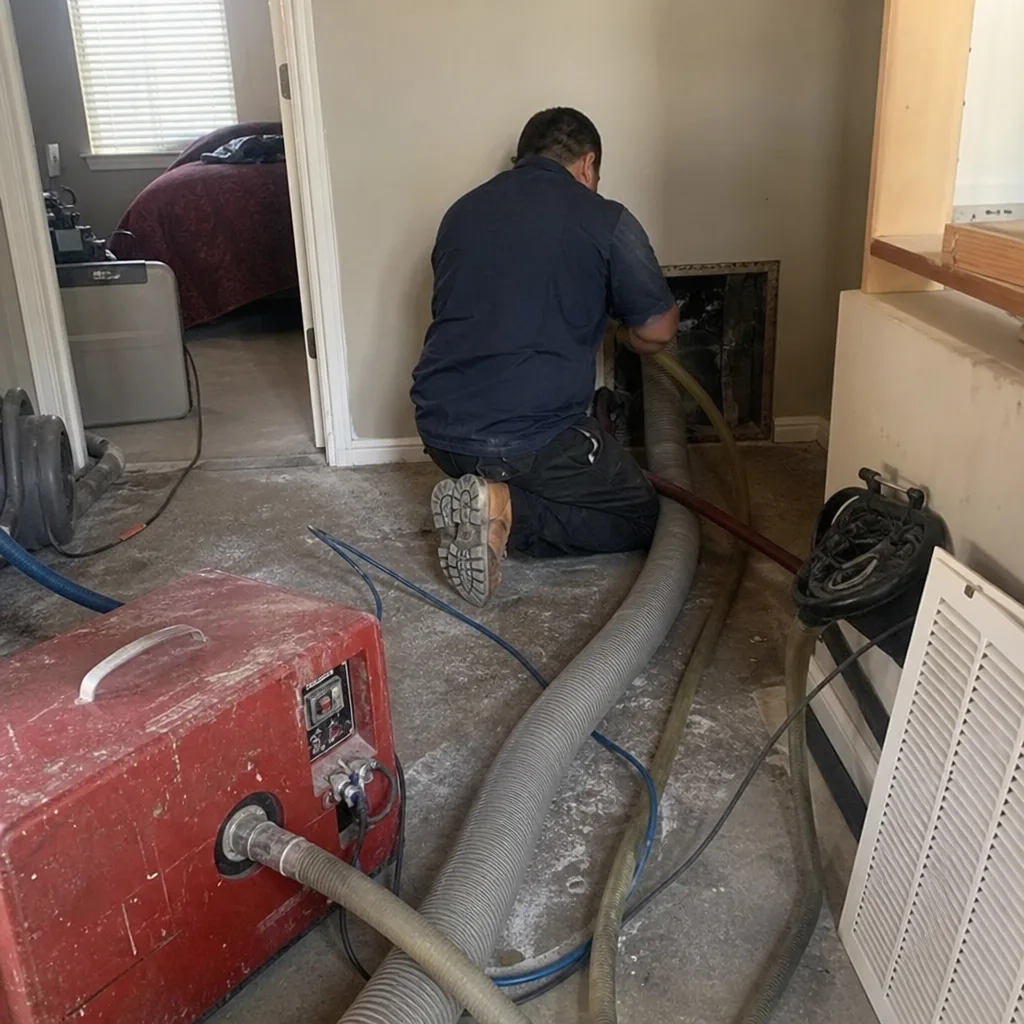
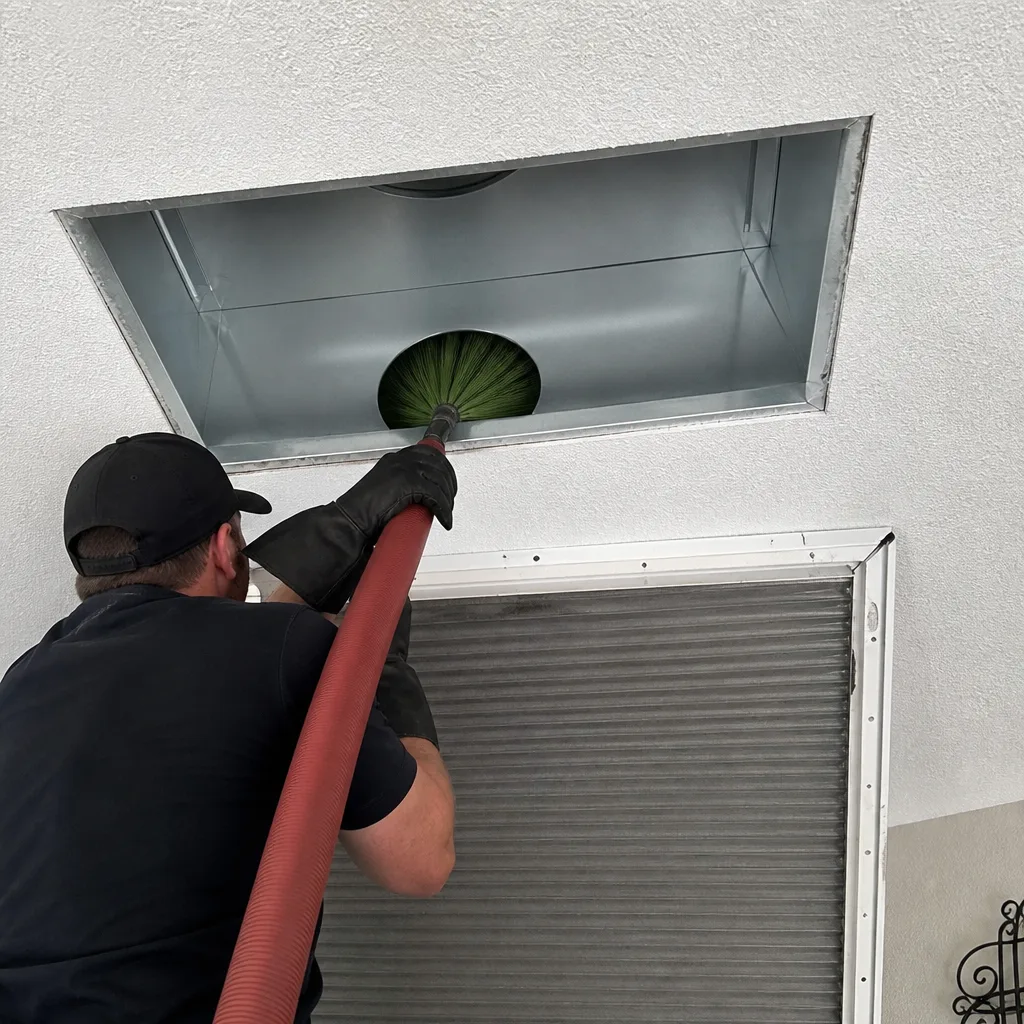
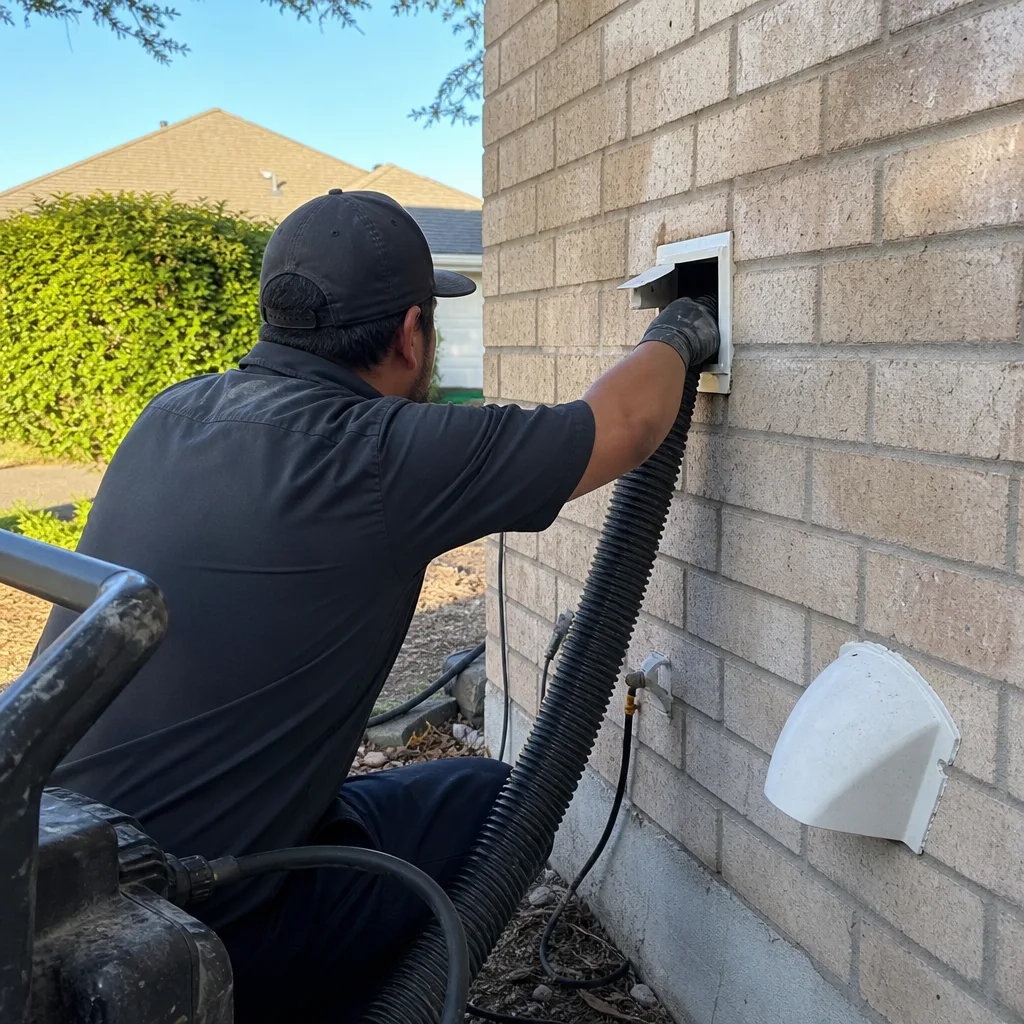
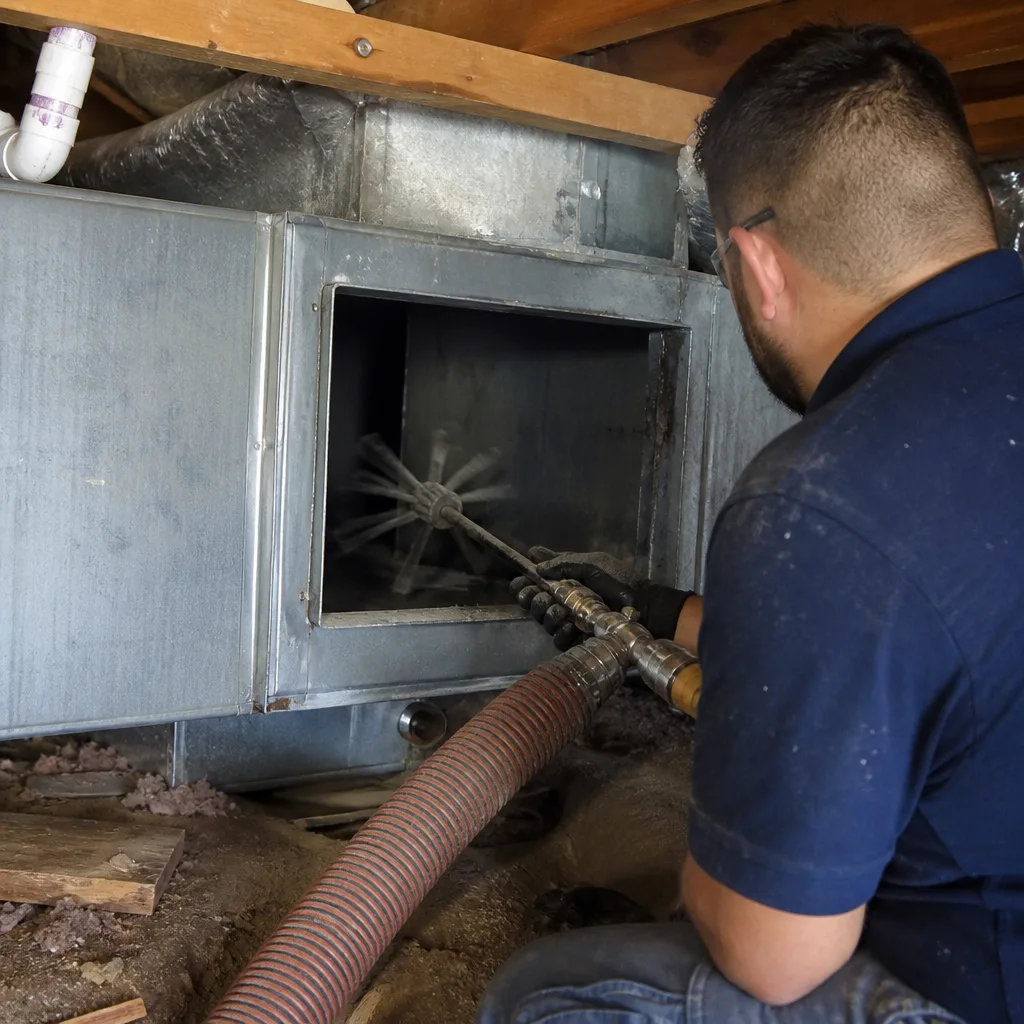
- Negative-pressure extraction with rotary brush agitation. Negative-pressure extraction means we create a sustained suction field through the duct run while a rotary brush – typically Rotobrush equipment – agitates compacted lint away from the duct wall. The combination pulls debris toward the collection point rather than pushing it deeper into the line or back into the laundry room. For runs over 20 feet with multiple elbows, we work in sections, repositioning the brush anchor to maintain contact pressure at each bend.
- Cap and terminal hardware inspection and clearance. The exterior vent cap is where airflow either exits cleanly or doesn’t. We remove the cap, clear any lint packed behind the louver or screen, check the flap mechanism for free movement, and inspect the cap mounting for gap sealing. In San Antonio’s summer storm season, a cap that’s cracked or improperly seated lets moisture into the duct interior. If the cap needs replacement, that’s a separate line item – quoted in writing before we proceed.
- Post-cleaning camera pass and airflow verification. After clearing, the camera goes back in. The post-cleaning images go directly into your documented photo record alongside the pre-cleaning images. We also check exhaust velocity at the cap – a measurable indicator of whether airflow has actually improved, not just an assumption. If the camera shows any remaining debris or the flow reading is still restricted, we keep working until it’s clear.
- Documented photo record and 365-Day Done Right Promise. You leave with a written record: before images, after images, a description of what was found and what was done, and the 365-Day Done Right Promise in writing. If the vent isn’t performing correctly within a year of the job, CleanRun makes it right. That’s not a policy subject to manager approval – it’s written into the job record before the truck leaves.
—
BeforeAfterVent Cleaning Pricing in San Antonio
How Much Does Dryer Vent Cleaning Cost? (2026 Price Guide) - San Antonio, TX: vent cleaning in San Antonio runs $89 to $175 for most single-story residential jobs. The range exists because vent runs vary significantly in length and complexity across the metro’s housing stock. A straightforward 8-foot run through an exterior wall in a newer Southside home is a different job than a 22-foot run making two 90-degree turns through interior cabinetry in a mid-century Terrell Hills property.
Every price is delivered in writing before work starts – Haven Standard Clause 1, every time. There is no “call for a quote” at CleanRun. The written price you see before the job starts is the price on the invoice when the job ends.
| Scenario | Typical Price Range |
|---|---|
| Standard single-story vent run (up to 15 ft, 1-2 elbows) | $89 – $119 |
| Extended run (15-25 ft, 2-3 elbows, interior routing) | $119 – $155 |
| Two-story or attic-routed vent system | $145 – $175 |
| Cap inspection and clearance (standalone or add-on) | $25 – $45 |
| Exterior cap replacement (if needed, parts + labor) | $55 – $95 |
What moves the number inside those ranges: total linear feet of ductwork, elbow count (each 90-degree elbow adds friction equivalent to roughly 5 additional feet of straight run), cap style and condition, whether the transition hose from the dryer to the wall connection is rigid metal or flexible accordion material, and whether the exterior cap is accessible without ladder equipment. If ladder access is needed, that’s noted in the written scope.
If you’ve received a written quote from another company, bring it. CleanRun offers a free second opinion on any written estimate – we put our number next to theirs in writing, and you decide. Call (726) 600-7155 for a free estimate and a written price before any work begins.
—
FAQs – Vent Cleaning
How much does vent cleaning cost in San Antonio?
Vent cleaning in San Antonio costs between $89 and $175 for most single-story homes, depending on duct length, elbow count, and cap condition. Two-story or attic-routed systems with longer runs typically land in the $145 to $175 range. CleanRun delivers the exact written price before starting – not an estimate that adjusts after the work is done. Call (726) 600-7155 and we’ll put a number on paper before anything else happens.
How often should dryer vents be cleaned in San Antonio?
Once per year is the minimum for most San Antonio households. Homes with high laundry volume – four or more people, or frequent pet bedding and towel cycles – often benefit from cleaning every 8 to 10 months. San Antonio’s humidity accelerates lint compaction compared to drier Texas markets like El Paso, so the annual floor that applies nationally is a real floor here, not a conservative overstatement. If your last cleaning was more than 12 months ago and you can’t locate a photo record proving the job was actually done, treat it as overdue.
Can vent cleaning be done the same day I call?
Same-day service is available most days across San Antonio and surrounding neighborhoods including Leon Valley, Castle Hills, and Converse. All calls are answered by a live person. The constraint is crew availability, not a booking system that defaults to next week. Call (726) 600-7155 in the morning for the best chance of a same-day appointment – afternoon calls can often still land a late-day slot.
Is it safe to clean a dryer vent myself?
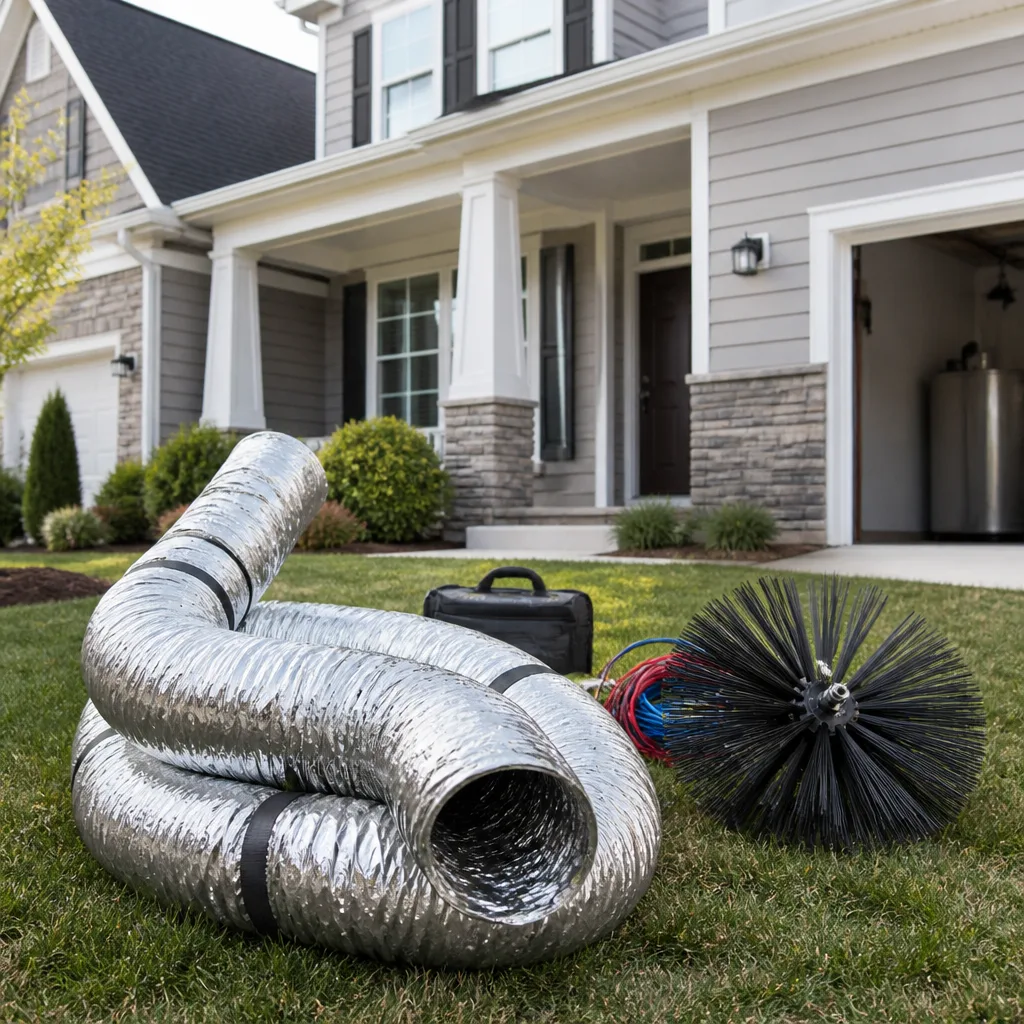
Consumer dryer vent brush kits can clear loose lint from the first few feet of duct – the section directly behind the dryer. They don’t reach compacted lint at elbow points, they don’t capture the debris they loosen (it often redistributes inside the duct), and they give no information about cap condition, transition hose integrity, or whether the duct has any disconnected sections. DIY brushing on a duct you haven’t inspected first can push a partial blockage into a full one. For anything beyond pulling the dryer out and checking the immediate transition hose, a Dryer Vent Inspection first – before any agitation – is the approach that actually tells you what’s in the duct. CleanRun’s process starts with that camera pass every time.
—
Why CleanRun for Vent Cleaning in San Antonio
San Antonio’s dryer vent cleaning market has no shortage of $79 coupon offers. The standard play is a flat-rate visit, a shop-vac at the dryer connection, and an invoice that reflects a trip fee, not a documented job. CleanRun has run against that model since 2013 by doing three things those operators don’t: putting the price in writing before the work starts, photographing inside every duct run before and after, and backing the result for 365 days in writing.
The equipment matters too. Nikro and Rotobrush are trade-recognized brands – you can look up the specifications independently before agreeing to a price. Professional-grade rotary brush systems do work that a shop-vac’s suction port, held at the dryer connection, physically cannot do at an elbow 15 feet away. That’s not a marketing claim; it’s a geometry problem.
Tomas Reyes has been running CleanRun jobs in San Antonio since 2013. The 365-Day Done Right Promise exists because the documented photo record makes accountability possible – if the after photo shows a clear duct and the duct isn’t performing a month later, there’s a record of the job to work from. That accountability is written into every job before the truck leaves.
All technicians operate under Haven Standard Clause 3: Verified Crews – background-checked, uniformed, and identified by name before arrival. The home page has the full H.A.V.E.N. Standard description for anyone who wants to review it before scheduling.
To book a vent cleaning in San Antonio or get a written price for your specific duct run, call (726) 600-7155. A live person answers every call. The written price comes before any work starts – not after the technician has already pulled the dryer out.
—
Written by Tomas Reyes, Owner at CleanRun Air Duct Cleaning San Antonio, serving San Antonio since 2013.