
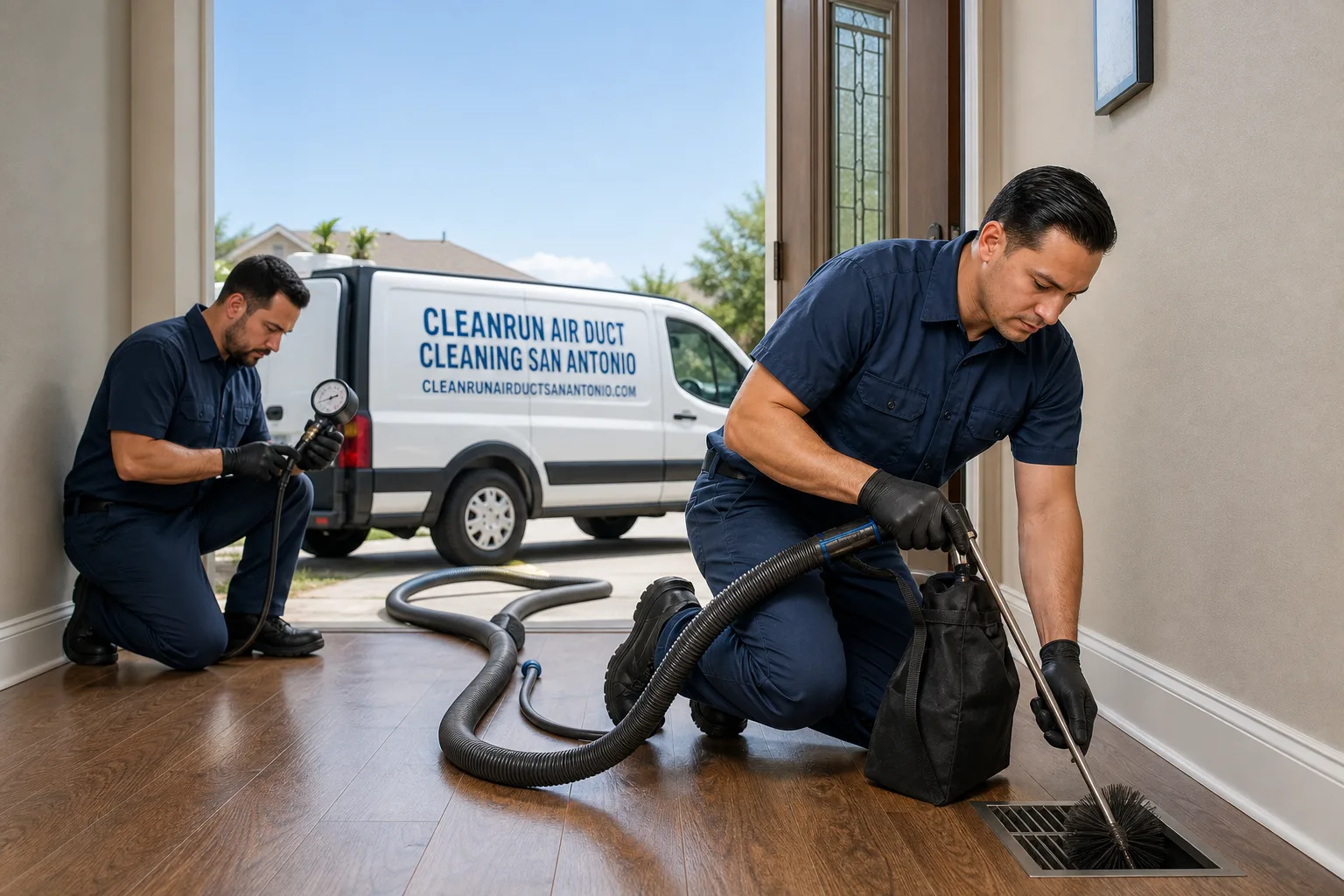
Whole-system duct and dryer vent check with before-and-after photos - you see exactly what came out of your vents
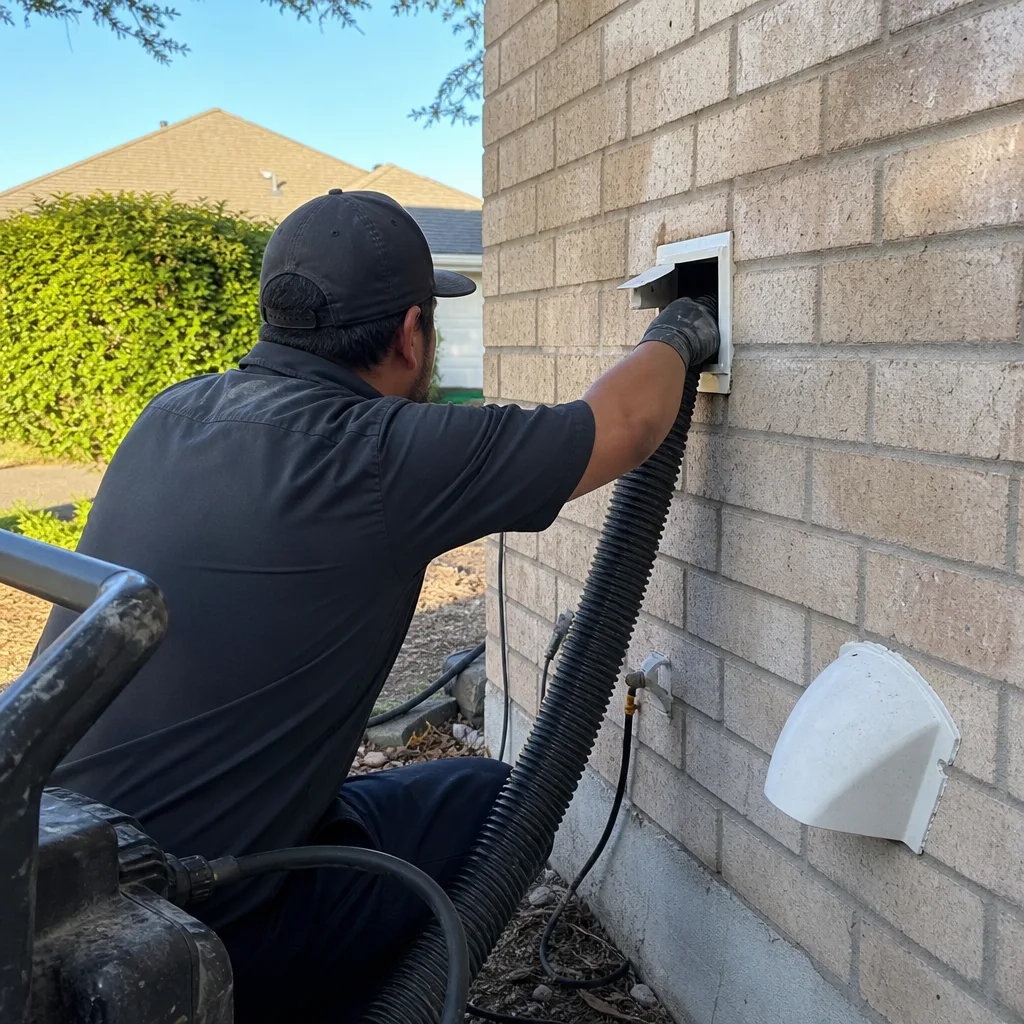
That "$99 whole-house special" is a bait ad - the real number appears once they are in your hallway, or the "clean" is a shop-vac at the register. We photograph the inside of your ducts before and after instead.
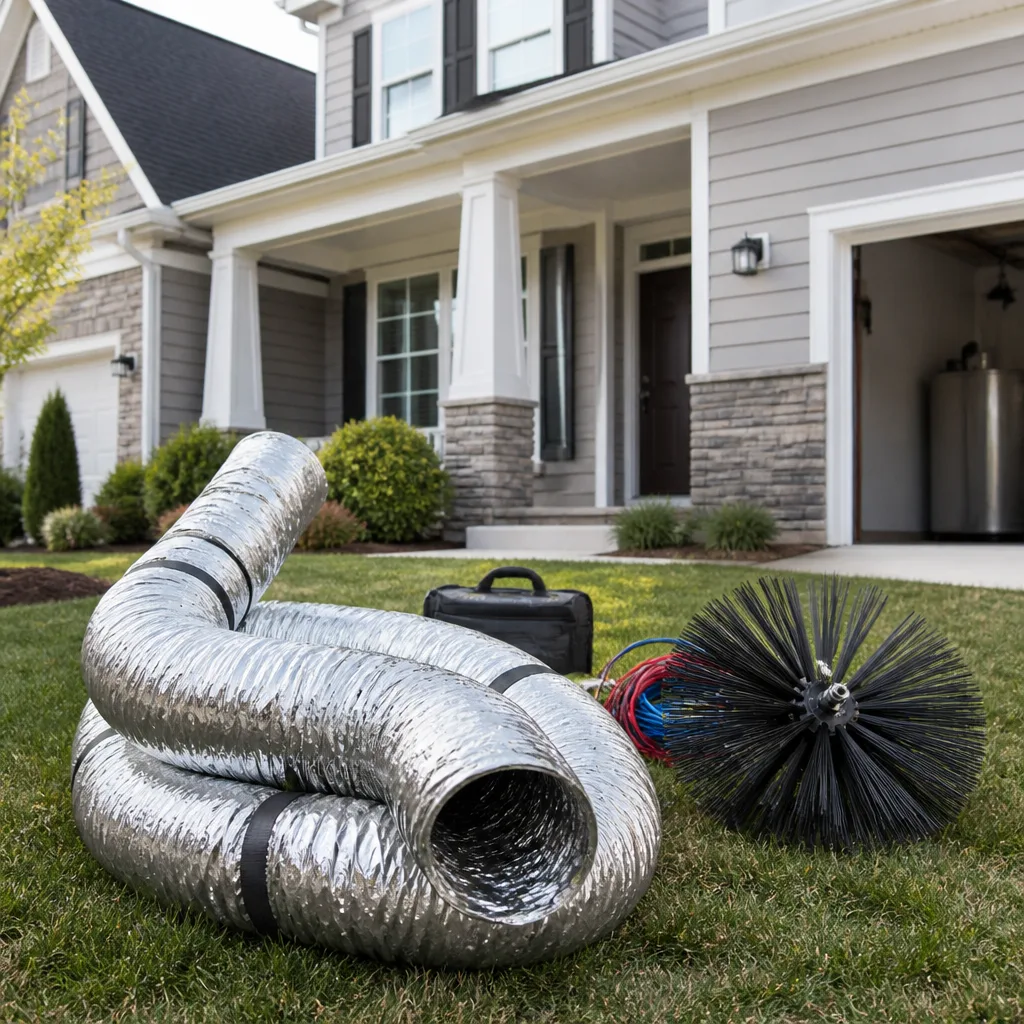

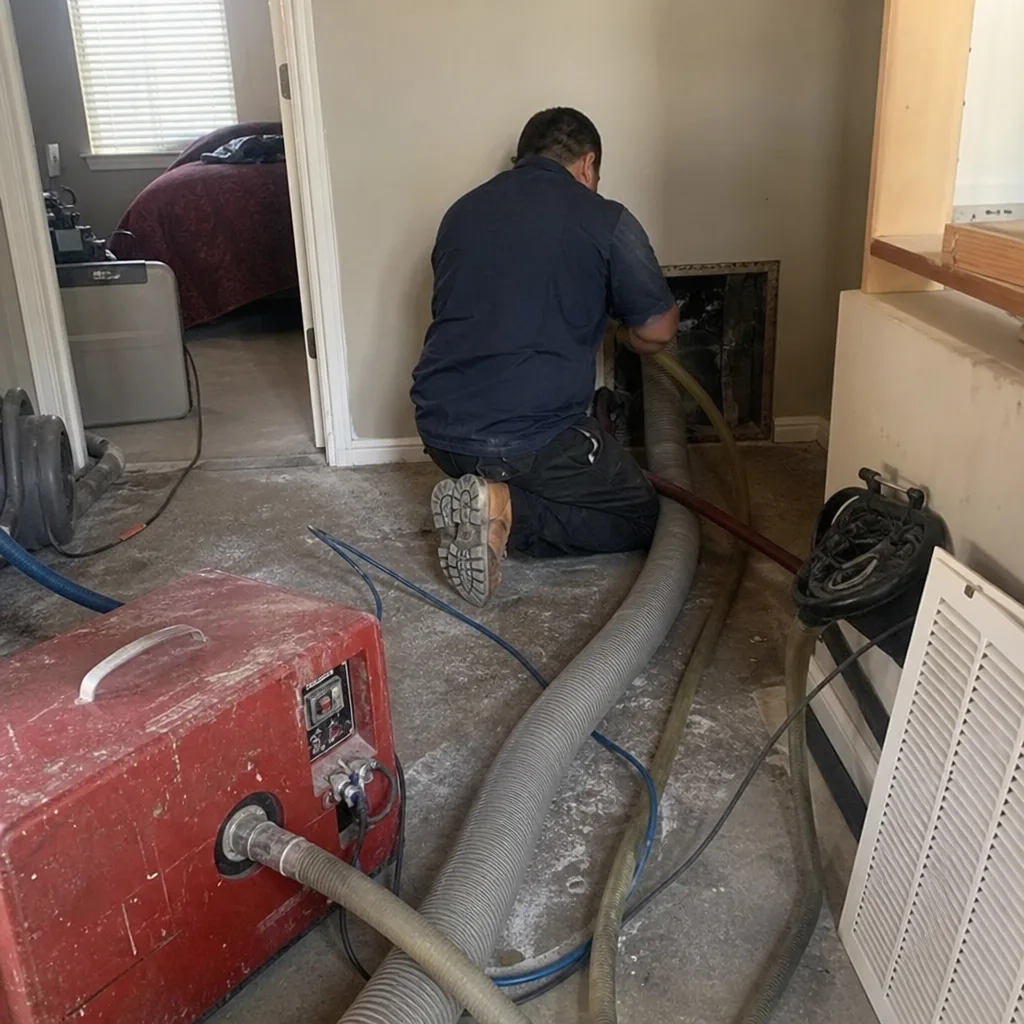 Before
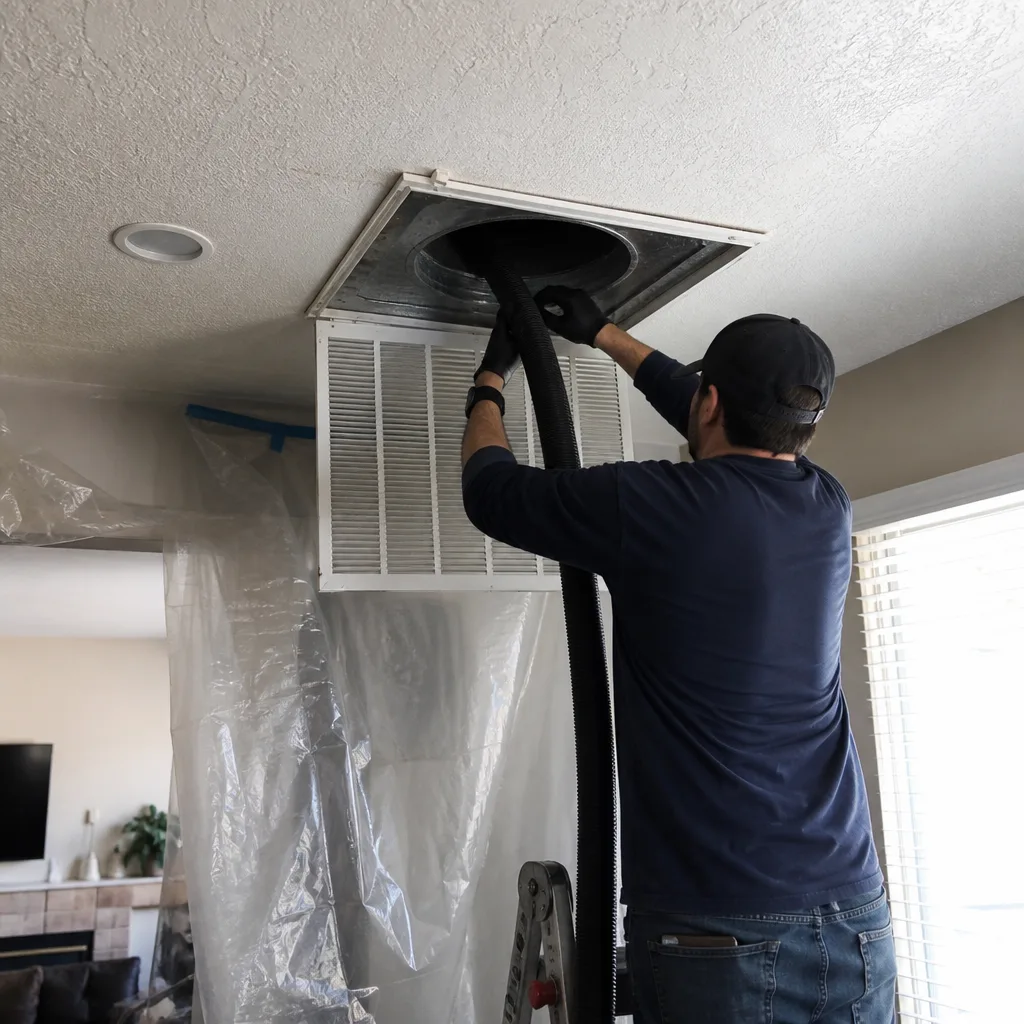 After
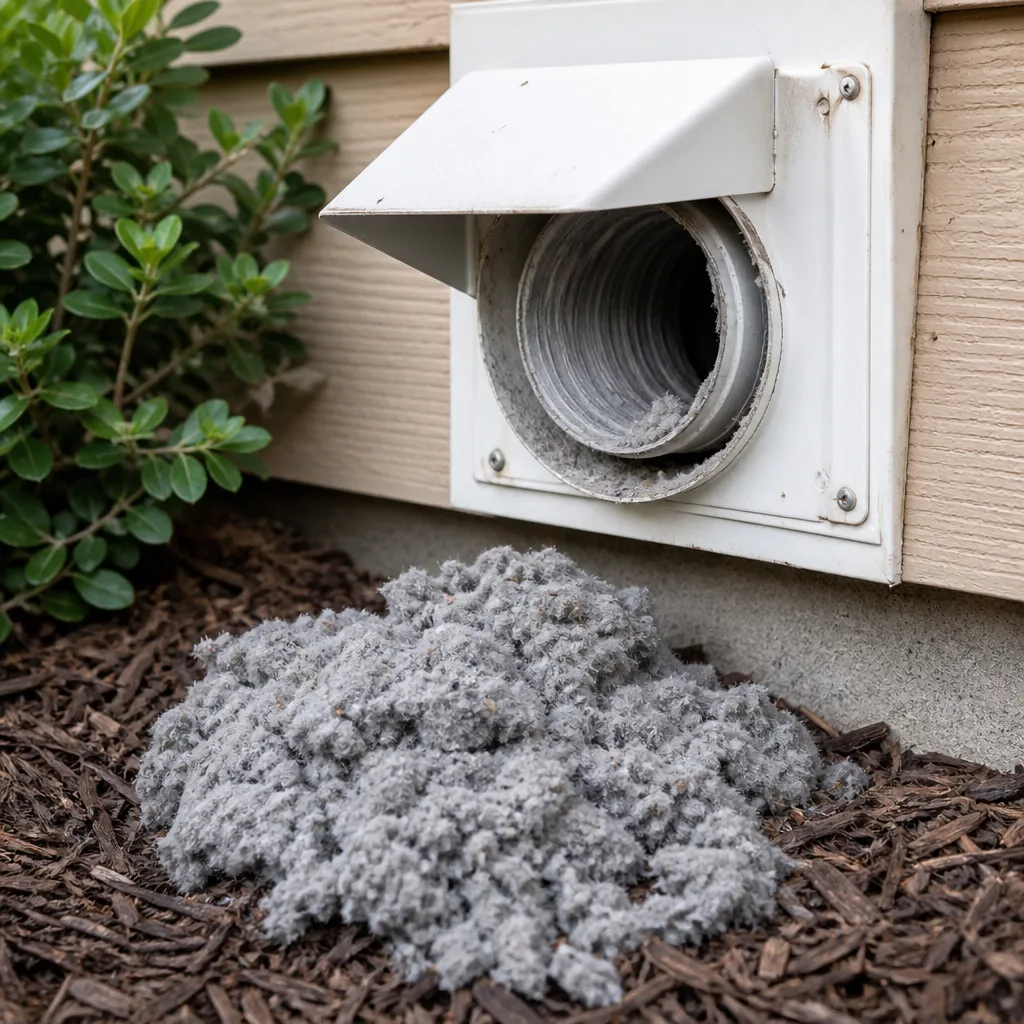
After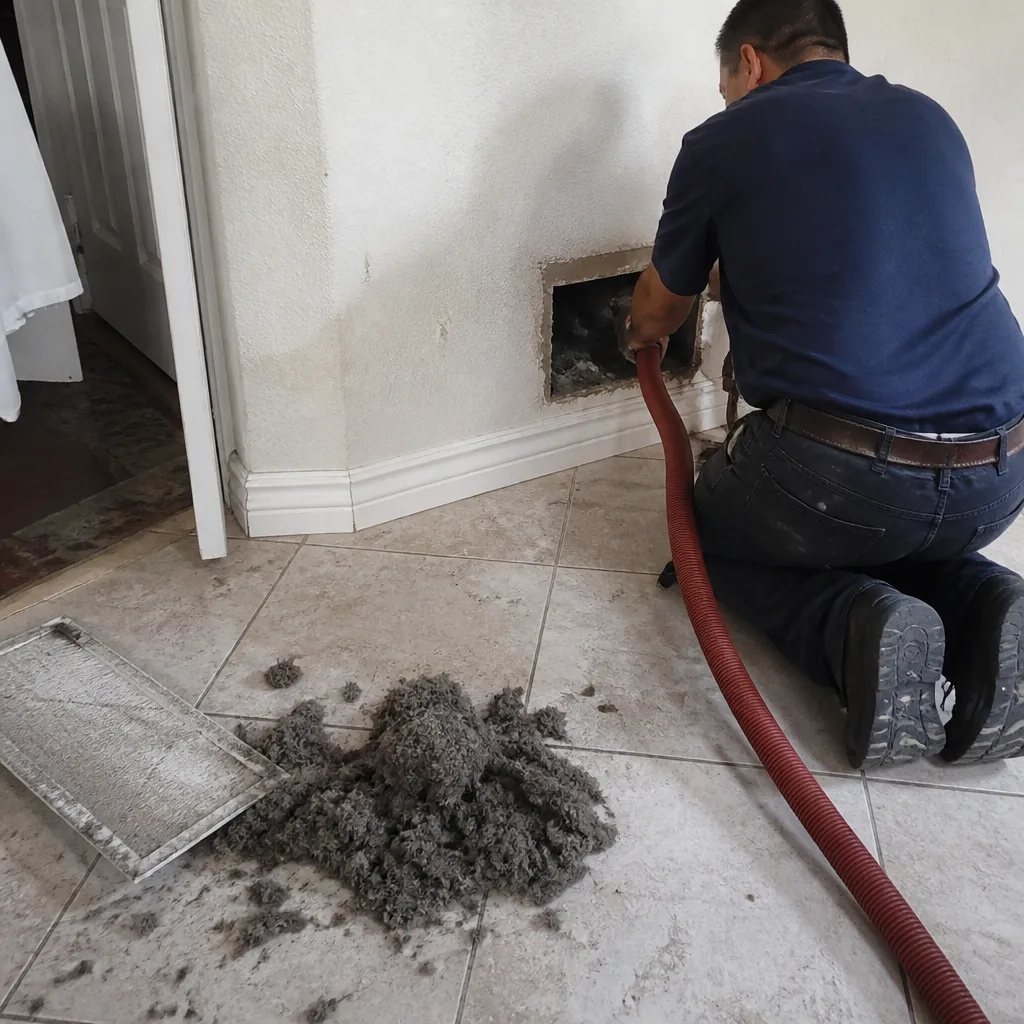 Before
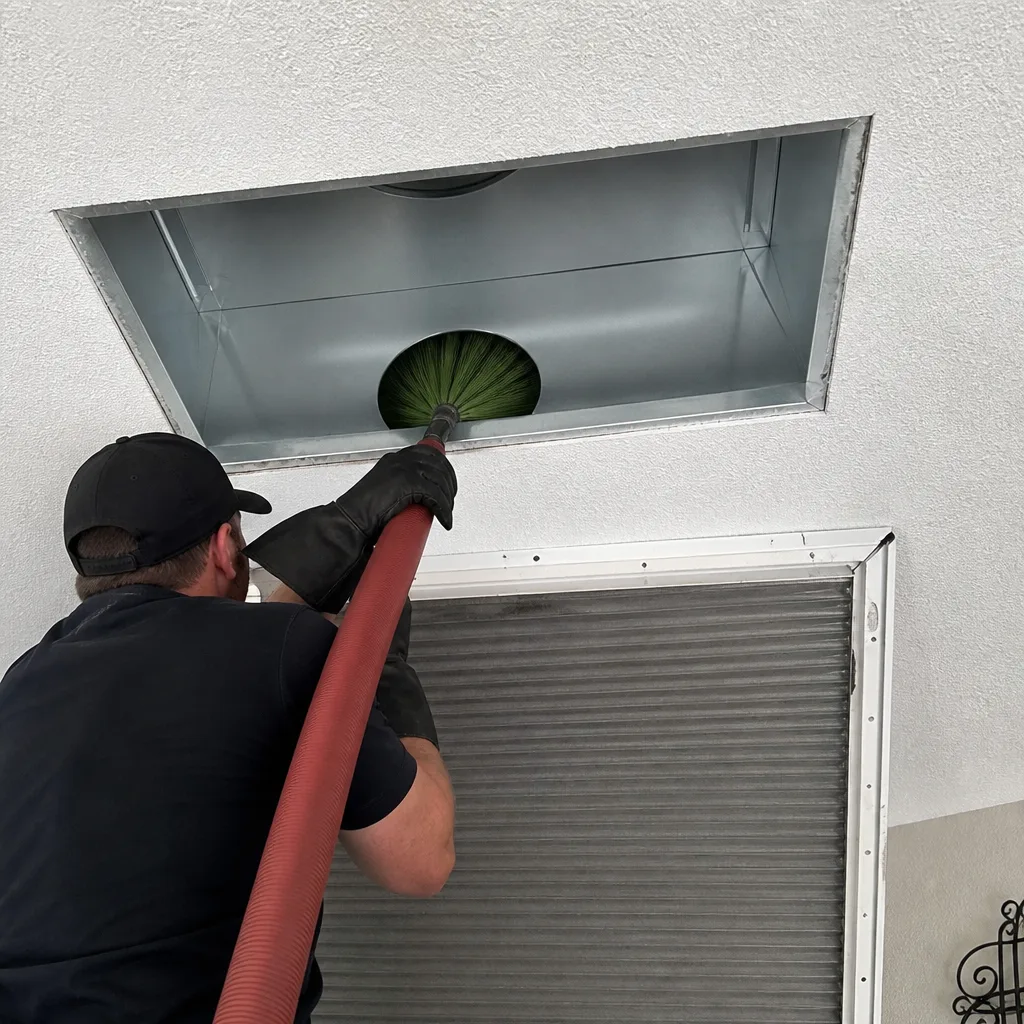 After
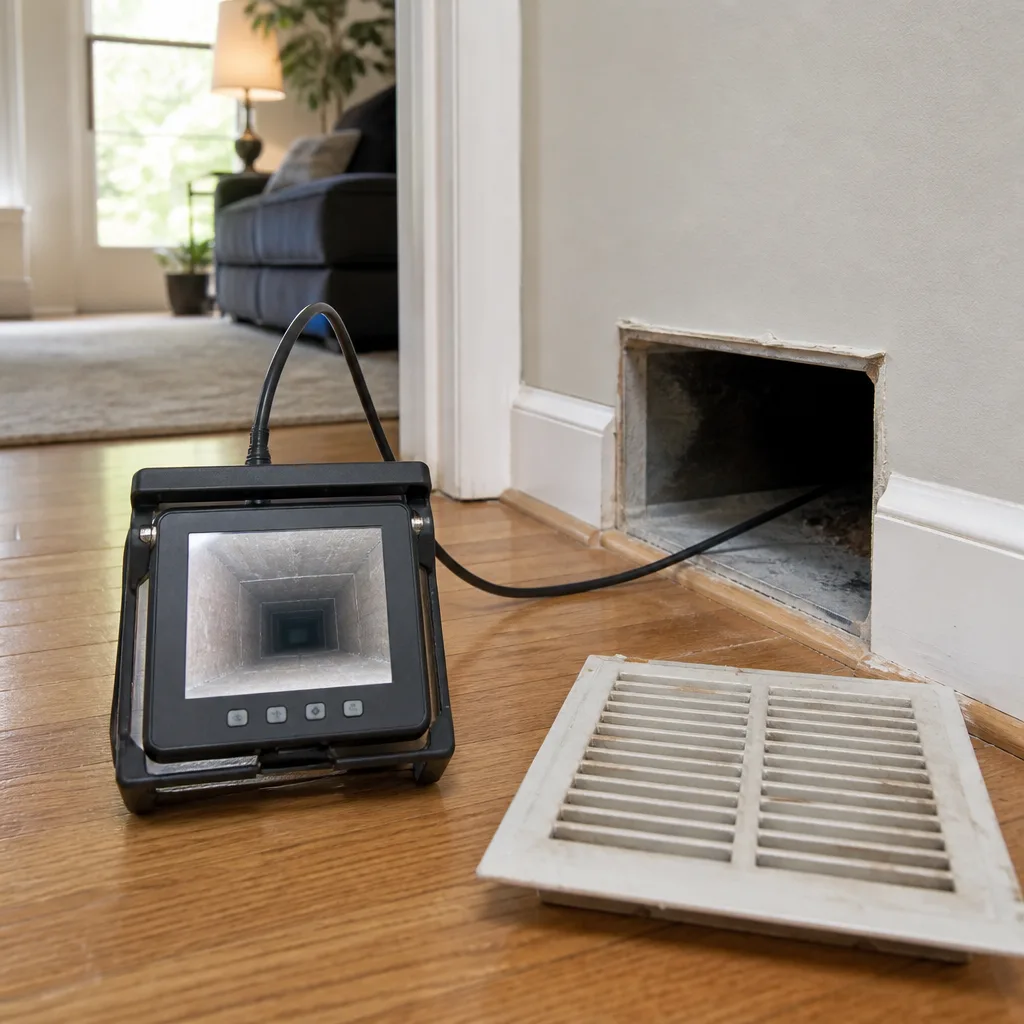
After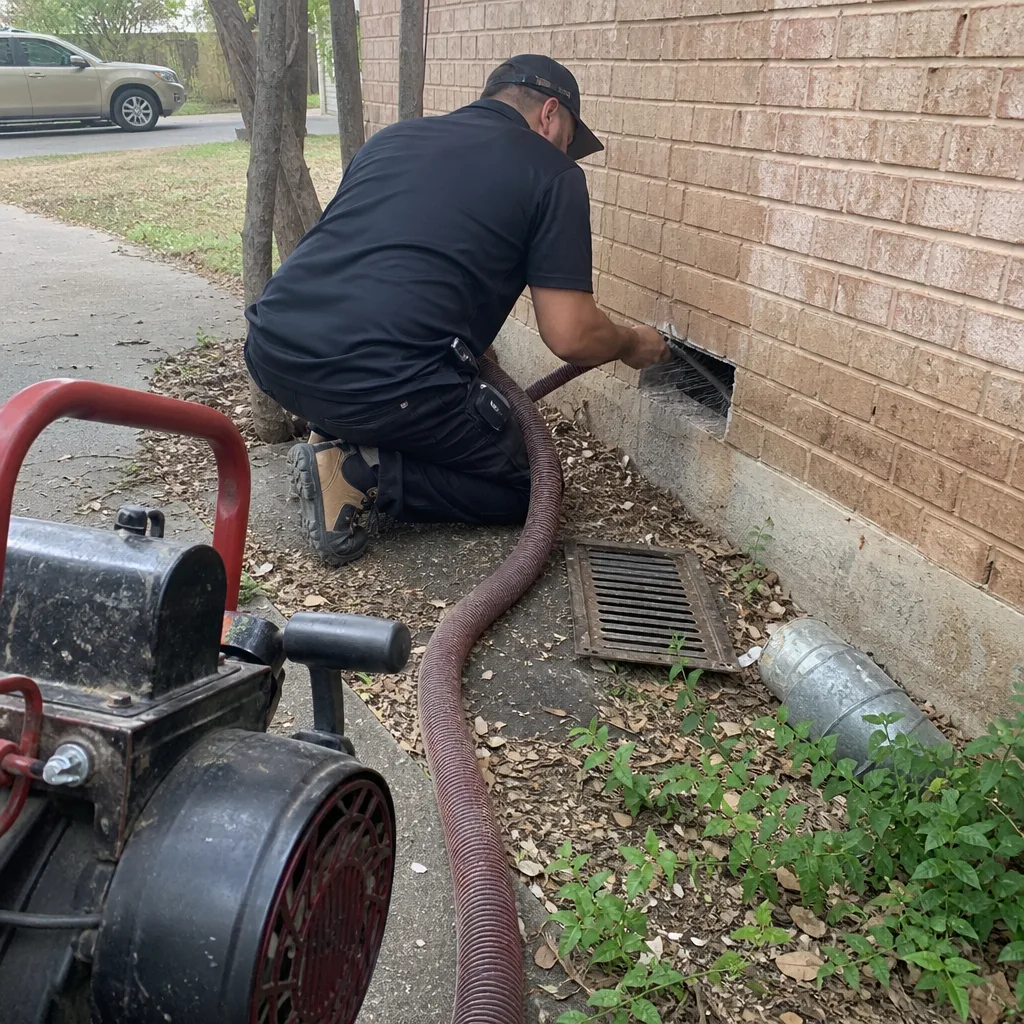 Before
 After
AfterHow Much Does Duct Repair & Sealing Cost in San Antonio?
Our Duct Repair & Sealing services in San Antonio typically cost between $350 and $1,200 for a standard single-family home, with most jobs landing in the $450-$750 range depending on the number of runs, access difficulty, and what the camera finds inside. Aerosol-based sealing systems like Aeroseal run higher, generally $1,500-$2,500 for a whole-home application. At CleanRun, every price is written down before a single panel comes off – no exceptions, no “call for a quote.”
Duct Repair & Sealing Cost Breakdown (2026)
The table below reflects what San Antonio homeowners are actually paying in 2026. These are real market ranges – not national averages padded with disclaimers. Prices vary based on access, duct condition, and materials, but this gives you a working number to hold any quote against.
| Service | Typical Range (San Antonio) | Notes |
|---|---|---|
| Mastic sealant application (per duct run) | $35-$75 | Most common for joints and seams at registers and plenums |
| Foil tape repair (minor gaps, per run) | $20-$45 | Short-term fix; mastic is more durable in South Texas heat |
| Flex duct replacement (per run) | $95-$180 | Price includes labor and material; varies by run length |
| Sheet metal duct repair (per section) | $120-$250 | Access difficulty in attic or crawl space affects this most |
| Plenum repair or reseal | $150-$400 | Plenum = the main distribution box off the air handler |
| Whole-home duct sealing (manual method) | $350-$1,200 | Covers all accessible joints, seams, and connections |
| Aeroseal whole-home injection sealing | $1,500-$2,500 | Pressurized aerosol finds leaks that hands can’t reach |
| Duct leak test (blower door / duct blaster) | $150-$300 | Quantifies leakage before and after; often bundled with sealing |
| Register boot seal or replacement (per boot) | $30-$80 | Boots are where flex duct meets the floor or ceiling register |
| Full duct system replacement (whole home) | $3,500-$8,000+ | Only when repair is no longer cost-effective; separate scope |
What Pushes the Price Up
A 2,100-square-foot home in Alamo Ranch with an attic that hits 140°F in July and a 20-year-old flex duct system is a different job than a 1,600-square-foot home in Terrell Hills with accessible ducts in a conditioned space. In San Antonio’s climate, attic temperatures drive material degradation faster than in most U.S. markets – what looks like a minor joint gap at the register boot is often a symptom of a duct run that has been cooking and contracting for two decades.
Jobs get more expensive when duct runs are buried under blown insulation in tight attic decks (common in Stone Oak and Sonterra subdivisions built in the mid-2000s), when the flex duct inner liner has collapsed or torn rather than just separated at a connection, or when the original installation used standard duct tape instead of mastic – standard tape fails in South Texas heat cycles within five to seven years, leaving gaps that show clearly on camera.
What Keeps the Price Down
A newer home with a well-documented duct layout, accessible attic, and isolated leaks at two or three identifiable seams can be addressed in a few hours at the lower end of the range. Combining duct repair with an air duct cleaning visit – which CleanRun photographs before and after on every job – often reduces total cost compared to scheduling each service separately, since the system is already opened, documented, and under negative-pressure extraction during the cleaning phase.
What Affects Duct Repair & Sealing Pricing in San Antonio
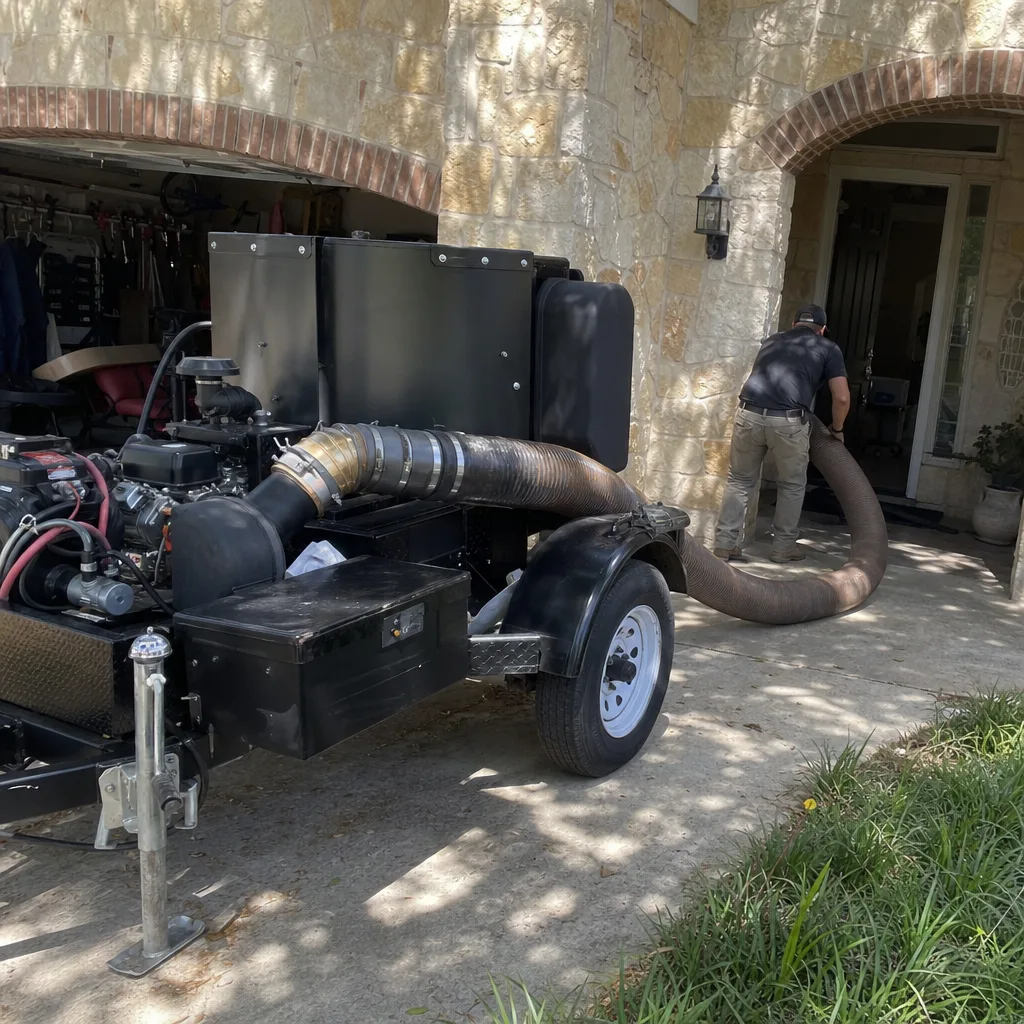
- Attic access and temperature conditions. San Antonio attics routinely hit 130-145°F during summer. Technicians working in those conditions work in shorter rotations, and the heat itself accelerates material wear – flex duct that might last 25 years in a conditioned crawl space often shows liner degradation in San Antonio attics within 15 to 18 years. Both factors affect labor time and scope.
- Duct material type. Flex duct (the most common material in San Antonio residential installs from the 1990s through the 2010s) is cheaper to repair but prone to kinking, tearing, and separation at boots and plenums. Sheet metal runs are more expensive per section to repair but hold up better under South Texas conditions. Fiberboard duct board – found in some older Helotes and Converse builds – absorbs moisture and is often a candidate for replacement rather than repair once it degrades.
- Number and location of leaks found on camera. CleanRun photographs every duct run before quoting repair work – what the camera shows determines the written price. A system with two separated boot connections is a different job than one with seven runs showing joint gaps, collapsed inner liners, and loose plenum seals. The written scope reflects what was actually found, not an estimate extrapolated from square footage.
- Age and layout of the duct system. Homes built before 2000 in Lackland Terrace, Windcrest, and similar older San Antonio neighborhoods often have duct layouts that weren’t designed for today’s higher-efficiency air handlers. Retrofitting sealing around a system that wasn’t originally balanced adds time and occasionally reveals that some sections need replacement before sealing makes economic sense.
- Whether aerosol injection sealing (Aeroseal) is appropriate. Aeroseal works by pressurizing the duct system and injecting a polymer aerosol that finds and seals leaks from the inside – useful when leaks are too small or too numerous to seal manually. It adds significant cost but can reduce duct leakage by 90% or more in systems where manual access is limited. In San Antonio, it tends to make financial sense on homes over 2,500 square feet with high utility bills and no prior sealing history.
- Permit requirements for large-scale duct work in San Antonio. Minor repair and sealing – patching joints, resealing boots, applying mastic at connections – does not typically require a City of San Antonio Development Services permit. However, if the scope involves replacing a substantial portion of the duct system or modifying the duct layout, San Antonio’s mechanical code may require a permit and inspection. Any quote you receive for large-scale duct replacement should address this in writing; CleanRun’s written scope identifies whether permit requirements apply before work begins.
BeforeAfterSan Antonio Market Context: Why Local Prices Differ from National Averages
National duct repair averages published by home services aggregators typically cite $300-$700 as a median range. That number is pulled from markets where attics stay below 110°F, duct systems were installed under stricter code enforcement, and labor rates reflect a different cost-of-living baseline. San Antonio pricing runs slightly higher on the labor side for attic work because of heat conditions and slightly lower on material cost because flex duct replacement is a routine job here, not a specialty.
One pattern that shows up specifically in San Antonio subdivisions built during the 2003-2012 building boom – areas like Alamo Ranch, Potranco, and the far northwest side near Helotes – is duct systems installed with inner liner that was spec’d for a shorter service life than the home’s expected lifespan. Those systems are now 14-22 years old and are showing liner collapse and joint separation at a predictable rate. If your home was built during that window and you haven’t had the ducts inspected on camera, you’re likely losing conditioned air to your attic right now.
In neighborhoods like Monte Vista and Mahncke Park, where the housing stock is significantly older (1920s-1950s), duct systems were often added as retrofits in the 1970s and 1980s. The duct routing in those homes is less predictable, and repair scopes tend to be broader – but the upside is that those homes usually have accessible attics or crawl spaces that reduce labor time per run.
Repair vs. Replacement: How to Know Which One Makes Sense
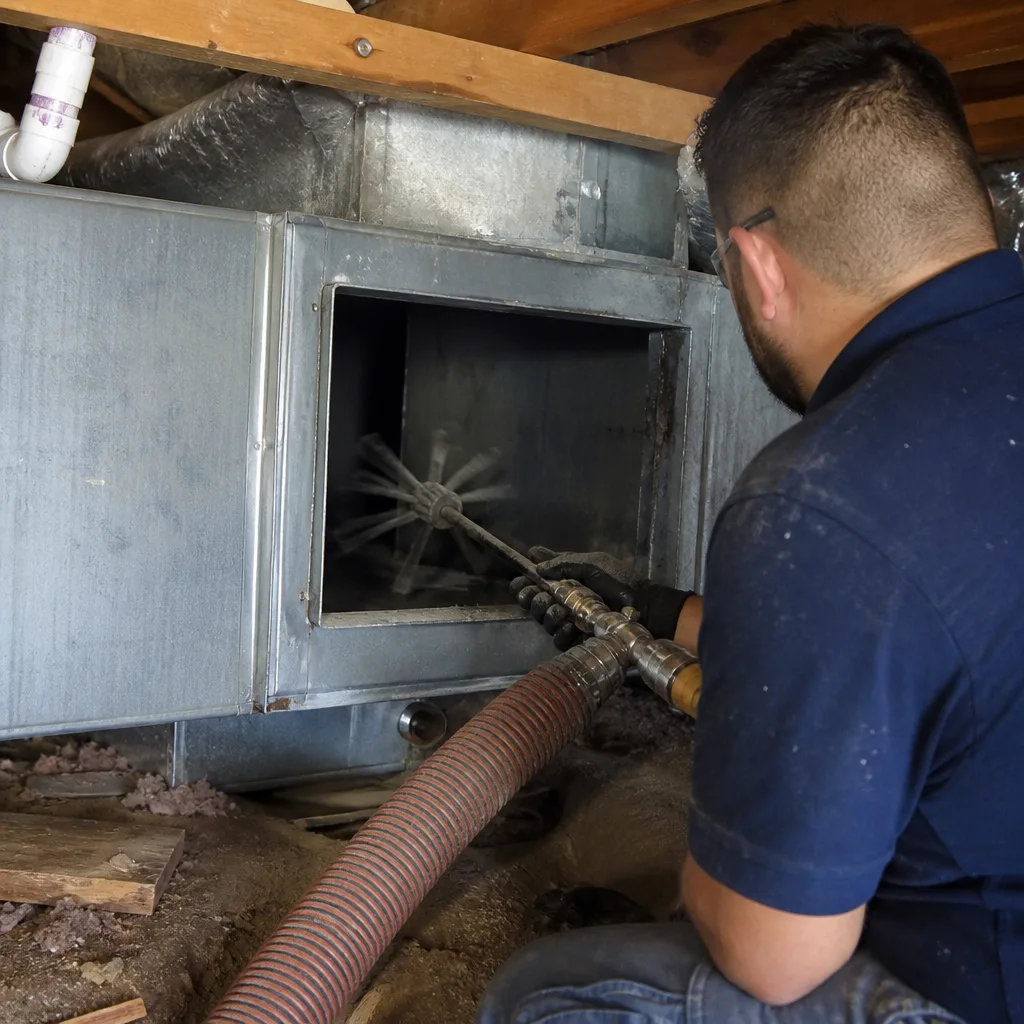
The decision comes down to what the camera shows and what the math says. A duct system where 70% of the runs are in good condition with isolated seam failures is a repair candidate. A system where the flex duct inner liner has collapsed in multiple runs, where mold growth is documented at the liner surface, or where the layout itself is causing airflow problems is a replacement candidate.
A practical guideline: if the estimated repair cost exceeds 50% of the replacement cost for the same duct system, and the existing system is more than 15 years old in a San Antonio attic, replacement usually wins on a 10-year cost basis. Repaired duct joints fail again. New material installed correctly with mastic at every connection, properly supported and insulated to R-8 (current Texas Energy Code requirement for attic duct insulation), lasts 20-25 years.
CleanRun will put both numbers in writing, side by side, so you’re comparing actual costs rather than a vague recommendation. That’s not a sales tactic – it’s just how a documented record works. You can also bring a competitor’s written estimate and we’ll put our number next to it at no charge, under the Free Second Opinion policy.
What CleanRun Delivers That a Price Alone Doesn’t Show
Every Duct Repair & Sealing in San Antonio job that CleanRun performs begins with a camera pass through every accessible duct run. What the camera shows is documented in photographs – before the quote is written, before any work starts. Those photos are delivered to you as a standard job record when the crew leaves. Not on request. Not as an upgrade. As part of the job.
The written scope, the written price, and the 365-Day Done Right Promise are each documented on paper. The 365-Day Done Right Promise means that if the repair doesn’t hold – if a sealed seam opens, if a flex duct connection fails, if a boot isn’t seated the way the photo shows it should be – CleanRun makes it right. In writing. Not subject to manager approval, not contingent on a follow-up service call upsell. The promise is on the paperwork you receive the day of the job.
Technicians are background-checked and uniformed, identified by name before arrival – Haven Standard Clause 3. Equipment used on duct repair and sealing work includes professional-grade tools from Rotobrush and Nikro for inspection and cleaning, with Guardsman sealants where applicable – brands you can look up independently before you agree to anything.
If you want to understand what we do and how it fits into a broader air quality and duct health picture, the home page covers every service we offer in San Antonio, including air duct cleaning, dryer vent cleaning, HVAC cleaning, and air quality and sanitizing – all documented the same way.
How to Save on Duct Repair & Sealing
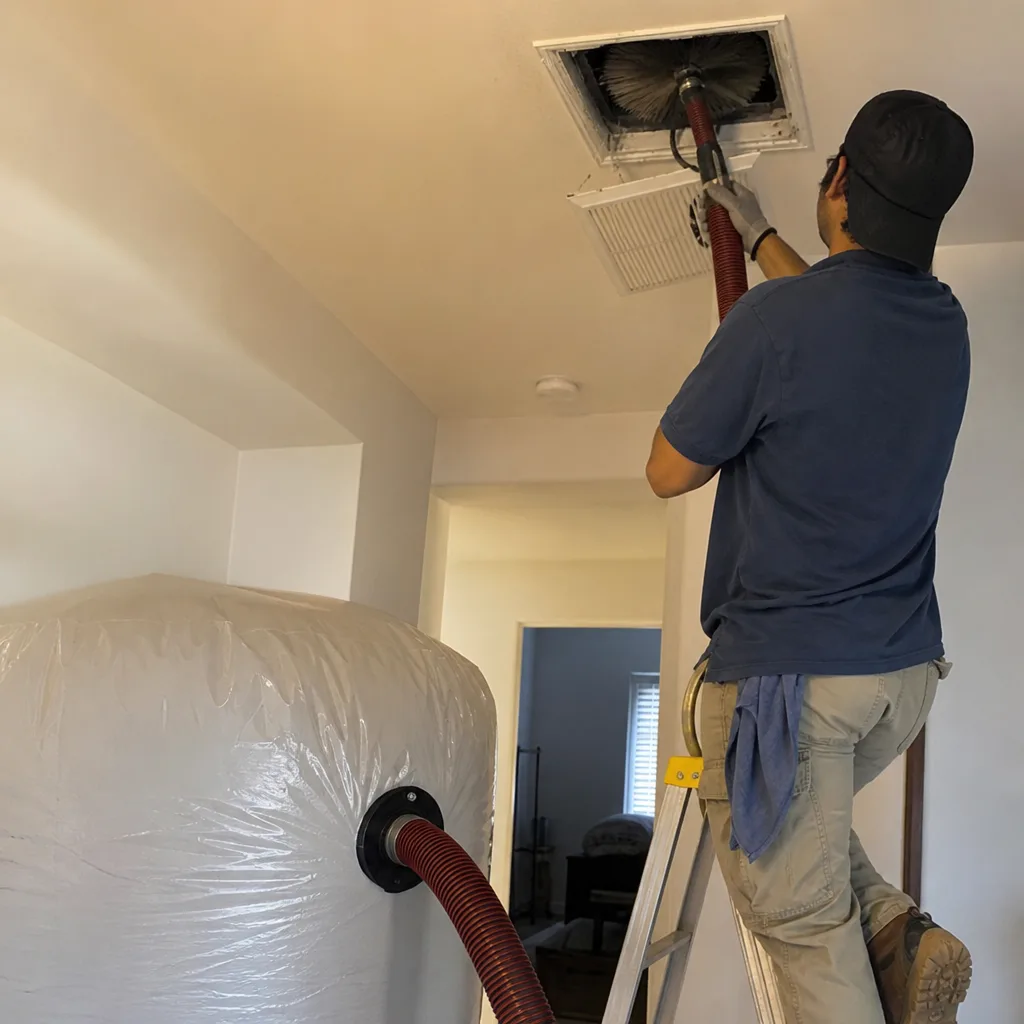
The most effective way to reduce the cost of duct repair is to catch problems early. A duct system that has one separated flex duct connection is a one-run repair. The same system, given two more years of San Antonio heat cycles, often has three separated connections and a liner that’s starting to collapse. The scope – and the price – grows with the damage.
- Bundle with duct cleaning when possible. If the system is already opened for a documented cleaning, adding a repair pass during the same visit eliminates a separate mobilization cost. CleanRun can quote both services together in writing before either begins.
- Get a duct leak test before committing to Aeroseal. A duct blaster or blower-door test quantifies exactly how much leakage your system has. If measured leakage is low, manual sealing at identified gaps is more cost-effective than a whole-home aerosol application. If leakage is severe and distributed, Aeroseal earns its price. The test data drives the recommendation – not the other way around.
- Use the Free Second Opinion before agreeing to any large-scale scope. If another company has quoted you a whole-system replacement or a multi-thousand-dollar aerosol sealing job, bring that written estimate to CleanRun. We’ll put our number next to it in writing, at no cost. The comparison is yours to keep regardless of what you decide.
- Check for applicable utility rebates. CPS Energy, San Antonio’s municipal utility, has periodically offered rebates for duct sealing work that improves home energy efficiency. Rebate programs change annually – ask your technician to confirm current eligibility on the day of the estimate. CleanRun will note applicable programs in the written scope if they apply to your job.
- Don’t let a $79 coupon be the deciding factor. The duct cleaning industry in San Antonio has a documented pattern of low entry prices that expand significantly once a crew is inside. A written price before any panel comes off is the only protection against that pattern. Call (726) 600-7155 and get a real number before agreeing to anything.
FAQs – Duct Repair & Sealing Cost in San Antonio
How much does duct sealing cost in San Antonio in 2026?
Duct sealing in San Antonio costs $350-$1,200 for a manual whole-home application using mastic sealant at joints, boots, and plenum connections. Aeroseal injection sealing runs $1,500-$2,500 for a whole-home treatment. Individual runs or isolated repairs start at $35-$75 per run for mastic application. The exact number depends on what the camera finds – CleanRun photographs every run before writing the price. Call (726) 600-7155 for a written estimate specific to your home.
Is it cheaper to repair or replace ducts in San Antonio?
Repair is cheaper when the duct system is structurally intact and failures are isolated to joints and connections. Replacement becomes more cost-effective when the inner liner of flex duct has collapsed in multiple runs, when the system is over 15 years old and showing widespread failure, or when estimated repair cost exceeds 50% of replacement cost. In San Antonio’s attic conditions, that threshold arrives faster than in markets with milder climates. CleanRun will quote both options in writing so you have a documented comparison before making any decision.
Can you come the same day for duct repair in San Antonio?
Same-day and next-day availability depends on current scheduling, but CleanRun answers every call with a live person – no automated systems, no callback queues. If the job requires a camera inspection before a price can be written, that inspection visit can often be scheduled within 24 to 48 hours. Call (726) 600-7155 and a real person will give you the current availability.
How do I know if my ducts actually need repair?
The clearest indicators in a San Antonio home are uneven room temperatures (one side of the house significantly warmer or cooler than the other), higher-than-expected CPS Energy bills during summer cooling season, visible dust blowing from registers at startup, and musty or dusty odors that started before the last HVAC filter change. A camera inspection confirms what’s actually happening inside the system – CleanRun photographs every run and shows you the images before quoting any work. A visual inspection report of that kind is the only way to know for certain what you’re dealing with.
What is the 365-Day Done Right Promise and does it apply to duct repair?
The 365-Day Done Right Promise applies to every job CleanRun completes in San Antonio, including duct repair and sealing. If a repair doesn’t hold – a sealed seam re-opens, a boot connection fails – CleanRun returns and makes it right at no additional charge. The promise is documented in writing on the job paperwork you receive the day of the visit. It is not subject to internal review or conditional on purchasing additional services. Call (726) 600-7155 if you have a question about a specific repair scope and we’ll confirm what the written guarantee covers before you book.
Do I need a permit for duct repair in San Antonio?
Minor duct repair and sealing – mastic application, boot resealing, flex duct connection repair – does not typically require a City of San Antonio Development Services permit. Large-scale duct replacement or layout modification may require a mechanical permit and inspection under San Antonio’s current building code. CleanRun’s written scope identifies whether permit requirements apply to your specific job before any work begins. If a permit is required, that cost and process is disclosed in the written price – not added after the fact.
Why does duct repair cost more in San Antonio than national averages suggest?
National averages don’t account for San Antonio’s attic conditions. Attic temperatures in the 130-145°F range during summer require shorter technician rotations and drive faster material degradation – both of which affect labor time and scope. San Antonio also has a large inventory of homes built in the 2003-2012 period with flex duct systems that are now showing predictable age-related failure. Labor rates for attic work in this climate are slightly higher than markets with milder summers. The national number is a starting point, not a budget.
Key Takeaways
- Most San Antonio duct repair and sealing jobs cost $350-$1,200; Aeroseal whole-home sealing runs $1,500-$2,500.
- San Antonio’s attic heat conditions (130-145°F in summer) drive faster duct degradation than national averages reflect – local pricing and scope reflect that reality.
- Homes built in the 2003-2012 building boom (Alamo Ranch, Potranco, far northwest side) are showing predictable flex duct failures at the 14-22 year mark.
- Camera documentation before any quote is how real pricing works – a written price based on what the camera shows, not on square footage.
- The 365-Day Done Right Promise is in writing on every job, covering the repair after the truck leaves – not just on the day of the visit.
- A Free Second Opinion on any written competitor estimate is available at no charge – call (726) 600-7155 to set it up.
Ready to get a real number? Call CleanRun Air Duct Cleaning San Antonio at (726) 600-7155. A live person answers every call, a written price is delivered before any work starts, and every duct run is photographed so you can see exactly what was found and what was fixed. Free estimates, no callbacks, no “call for a quote” – just a written number and a documented job record when the crew leaves.
Written by Tomas Reyes, Owner at CleanRun Air Duct Cleaning San Antonio, serving San Antonio since 2013. Pricing reflects the San Antonio market as of 2026. CleanRun Air Duct Cleaning San Antonio offers free estimates – call (726) 600-7155.
What Our Customers Say
"The before and after photographs of each run are the reason I used them. You cannot argue with what came out of the return."
- Marguerite O."Flat price agreed up front, no per-vent add-ons at the end. That was the whole reason I did not call the coupon company."
- Suzanne B."The dryer vent was almost completely blocked with lint. They showed me the photograph and I understood immediately why the dryer had been running twice."
- Lucia M.